
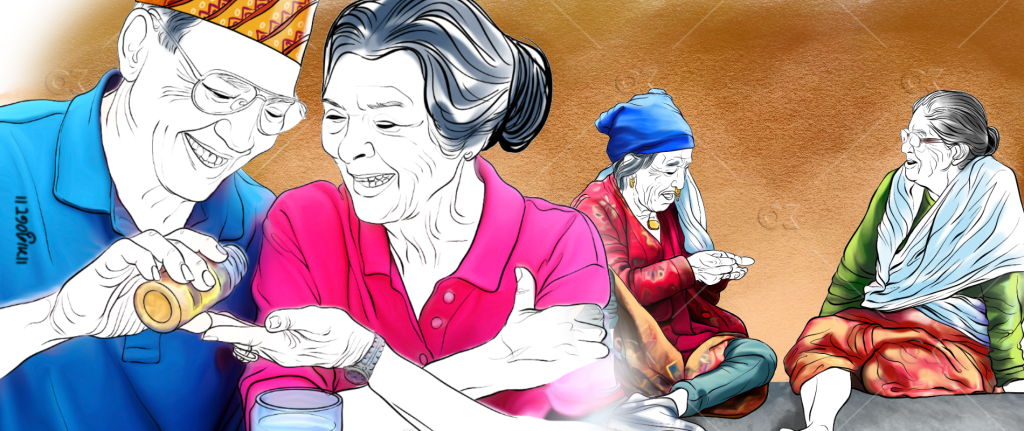
Nepali people pride themselves on being part of a society that respects its elders. We bow. We use honorific language. We often describe them as the backbone of society. During dinner, if someone uses coarse language, we immediately say, “Hajurbuwa ko agadi testo nabola!” While this may be well-intentioned, beneath it lies an uncomfortable truth: many elderly people in Nepal are routinely treated like children, even though they are the oldest version of an adult.
Having experienced far more than we have, it seems undignified to exclude them from decisions and assume that ageing automatically makes them incapable. This contradiction forces us to ask: why does a society that claims to honour its elders so often patronise them?
Care without consent
In many traditional households, caring for the elderly is framed as a moral duty. The patriarch handles financial responsibilities, while women ensure older family members are well-fed and cared for. Yet decisions about healthcare, finances, and living arrangements are often made on their behalf.
Younger family members justify this by believing they know better in a rapidly modernising society. However, elders are rarely consulted. Once the head of the household, wise and authoritative, they are reduced to passive dependents.
Phrases like “they won’t understand” or “it’s too much for them” reinforce the idea that age diminishes cognitive ability. In reality, many elders have endured hardships unimaginable today. What appears as care quietly becomes control.
The joint family system, considered a strength of Nepali society, can unintentionally encourage “babying” the elderly. As younger generations gain economic and social power, elders lose decision-making roles. Financial dependence is often mistaken for emotional dependence.
As a result, elders are treated merely as recipients of care rather than active participants in family life, even when they remain mentally sharp and physically capable.
Double marginalisation of older women
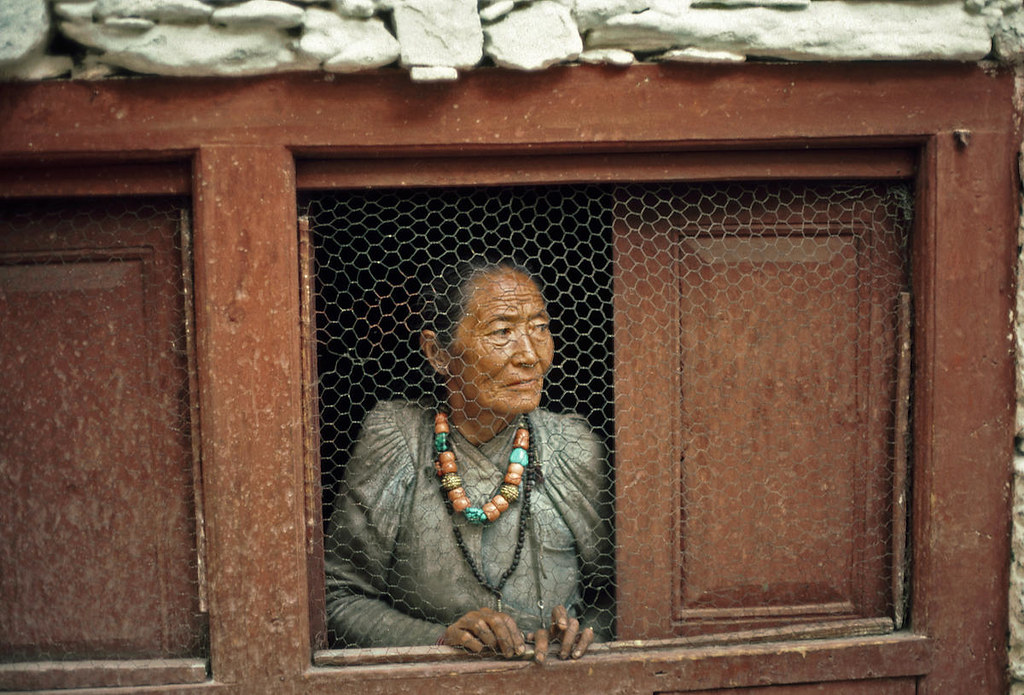
Ageism in Nepal often hides behind affection. Overprotective behaviour restricts movement and discourages work. Younger family members decide what is “safe” without discussion. Constant protection sends a subtle message: you cannot be trusted with your own life.
Older women are especially vulnerable. While elder men may retain some authority, grandmothers, after lifetimes of unpaid labour, often face double marginalisation: first by gender, then by age.
True respect is not unquestioned obedience or overprotection. It is listening, inclusion, and trust. Elders should be free to make their own choices without being infantilised.
If Nepal truly wishes to honour its elders, it must move beyond symbolic gestures and confront the subtle practices that limit their independence. Older people do not need to be treated like children to be cared for; they need to be treated like adults who have lived full lives and continue to have value.