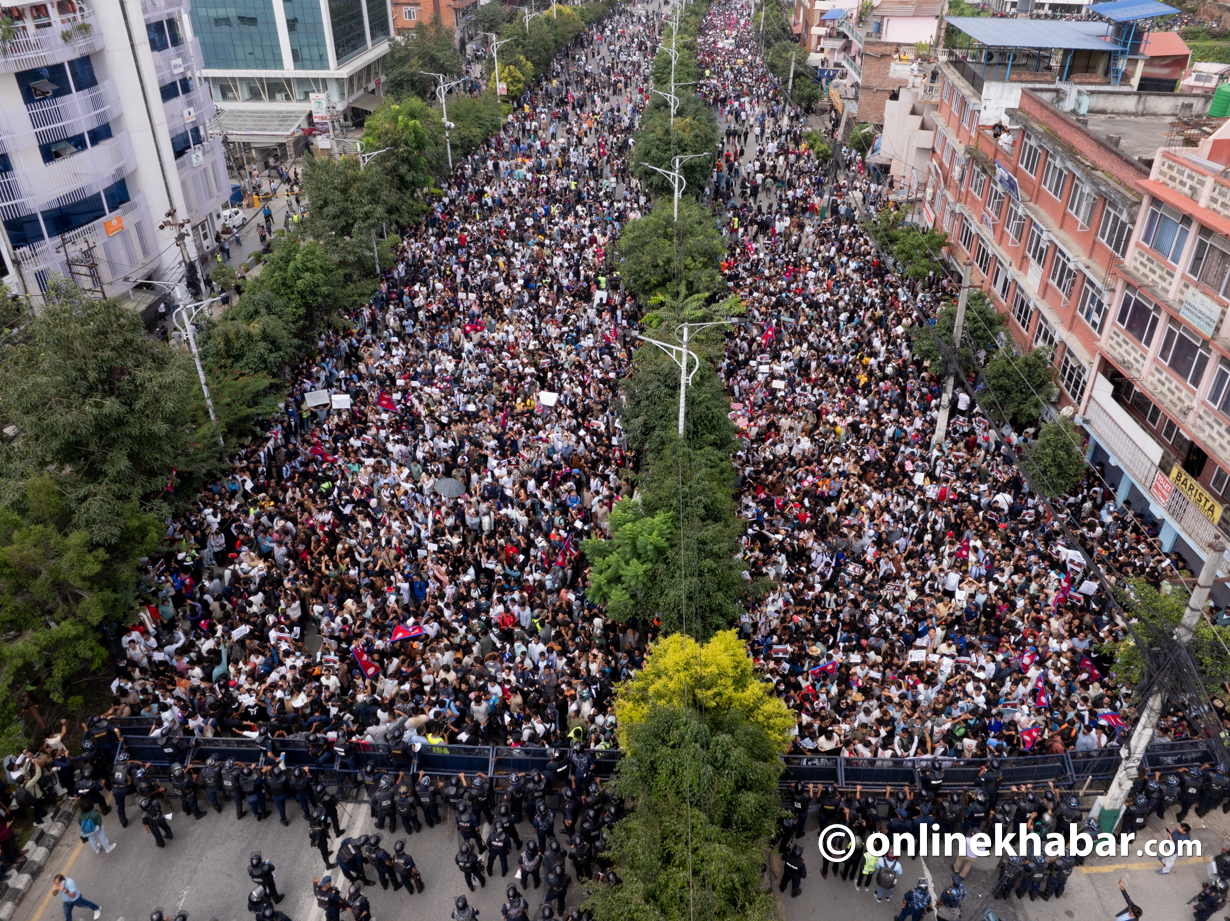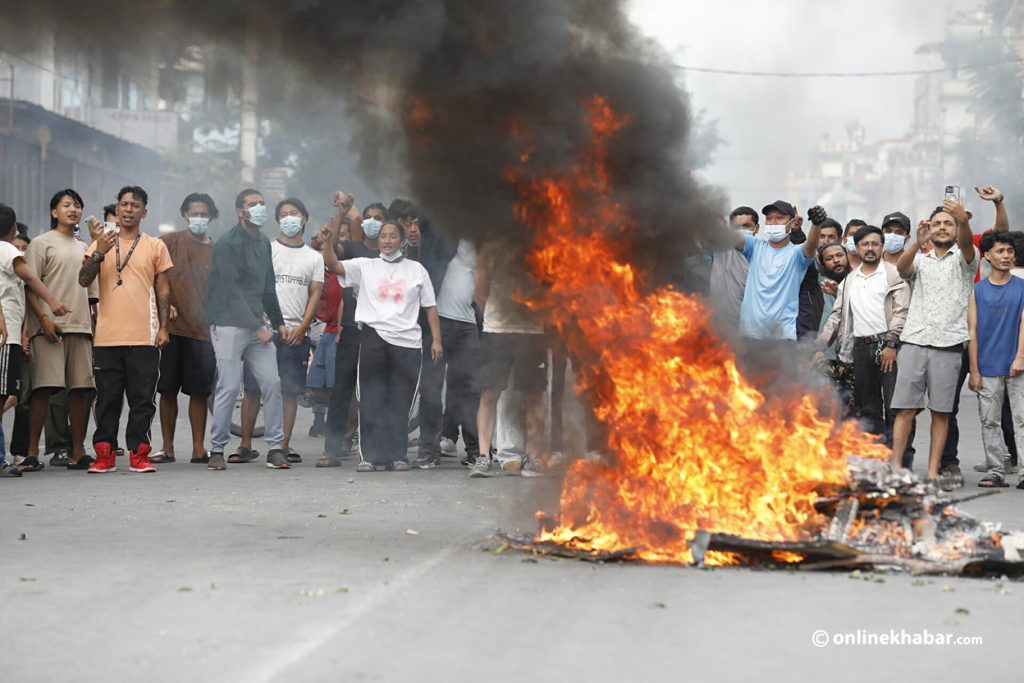

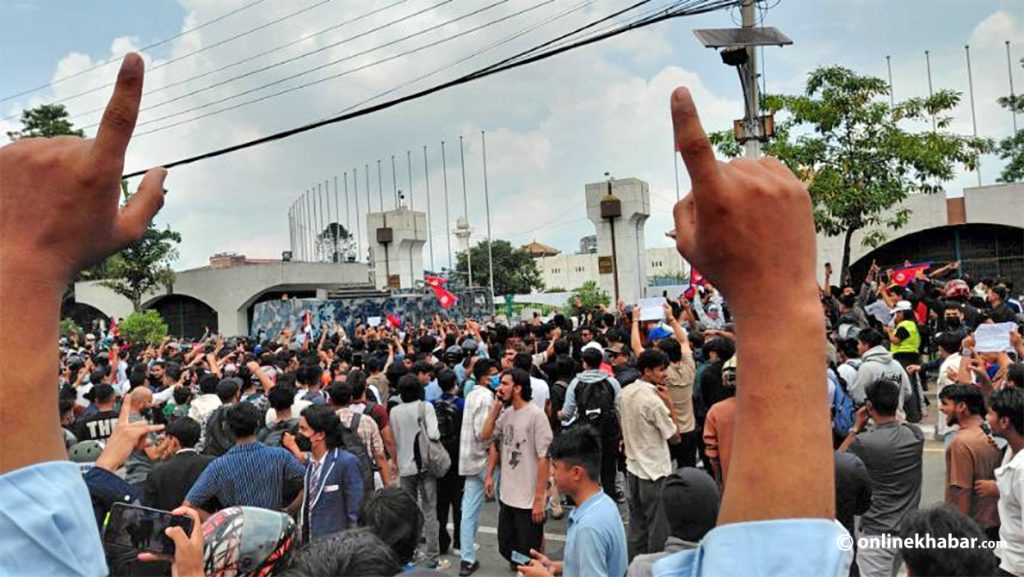
The Gen Z protest in Nepal declared that the voices of citizens would not be silenced, and it is the state’s fundamental duty to respect them. It institutionalised the voices of Gen Z youth and brought the expectations of citizens to the forefront. The protest credited to the Gen Z age group was a collective citizen frustration, something that wasn’t resisted by this generation. A generation criticised for remaining on screen and lacking civic consciousness came out in the streets with information and technology, with eyes seeking accountability, transparency and reflection from the government. A generation of first-time protesters took to the streets with only one thing on their mind: it’s high time we stop resisting and start reacting. The nation looked in awe at them, the protest in no time made the state pause, all state power supposedly in a state of vacuum. While the spontaneity and determination are something to be proud of, the results of September 8 & 9 were unprecedented.
As the chants faded and the fire started dying, the aftermath made us stand before an uncomfortable and undeniable truth: what next? We are now in the quiet period, one where our discomfort and vulnerability of civic consciousness has entered the frame. A period of reflection where we are surrounded by the real question. What did we achieve? What changed? And what didn’t change? Have we transitioned towards the governance we demanded, or is it just a cosmetic change? Or is it a political plot for heroes to enter?
With all these questions around us, we are heading towards an election with the belief that it will bring an end to the former kleptocratic and kakistocratic system with inclusivity and social well-being at its heart. As the warm-up for elections has begun, it is significant for both revolutionaries and reformists and for old and new ones. As citizens, we stand at this crossroad of hope and scepticism. There are heroes in the political frame claiming the patronage of revolution. The charisma and energy that’s around them gives hope and are necessary for building a popular consciousness. But the protest was never imagined for heroes; it only demanded accountability and transparency. Now heading into a peaceful and sustainable transition, we need to figure out how and who takes the objective of the protest forward. We didn’t recalibrate the political situation of our country to hand over the state authority; we never imagined different metrics of accountability and transparency for anyone.
This is a historical tendency post-revolution, visibly seen after the French Revolution, the rise of Maximilien Robespierre in France after the abolishment monarchy is classic. Robespierre, a symbol of the revolution and the hero who helped knock down the old system, became a liability in no time. Why couldn’t a hero of the people deliver instant stability and perfect leadership? It wasn’t Robespierre at fault, but the sudden immunity of citizens from accountability and uncontrolled power corrupted him at heart. His principles and virtue were suspended by his power, his disillusion that the mandates of the revolution and his self-righteousness soon troubled his legacy. In no time, Robespierre became a cosmetic face with the same narcissism and power hunger as the king. The love for heroes and charismatic leadership is not hidden historically in Nepal, with episodic heroes rising to national politics in every decade. This fatalistic tendency is very well reflected in Nepal, as we are moving forward, and we are suspending collective ownership of the protest itself. The accountability and transparency that we demanded from the old system are being toned down for the heroes who have come forward. Heroes or villains, new or old, our standards and expectations shouldn’t be based on double standards. We don’t have the liberty to settle on the bare minimum at this critical juncture. As citizens, this double standard towards the heroes and prioritisation of heroics in political leaders after each transition is fatal. The faces that rise after revolution, despite their importance, should not remain heroes post-revolution, as the situation demands them to be one of us who is accountable and seeks accountability and not be a hero forever. Heroes are bold, idealistic and charismatic but also mysterious and out of reach of the general public. This divinity, mysteriousness and out of reach of leaders, politicians and monarchs is what motivates protests and revolution from France to Nepal.
The Gen Z revolution that stepped up in a similar nuance recalibrated our political situation now, with our double standards, heroic idolising gives a clear message that we have not reached the ideal point. It’s better to assume this transition period as a beginning because we have to reflect back and rebuild. The achievements of this protest are engagement, awareness, and questioning for accountability. Our achievements are not limited to waves of faces, ideologies and heroics. This kind of wave of heroism is episodic in Nepal, so instead of running after the wave, we need to institutionalise the habit of questioning and relentlessly demanding accountability from each and everyone.
The sustainability and results of our generational uprising will only be visible once we have a single standard for accountability for everyone. The day you make gods and heroes out of politicians, that’s the day you lose your agency as the sovereign. Let’s not get lost in the transition for searching heroes because ‘not all heroes wear capes and not all post-revolutionary cape wearers are heroes’