
Photo: Gallery 108
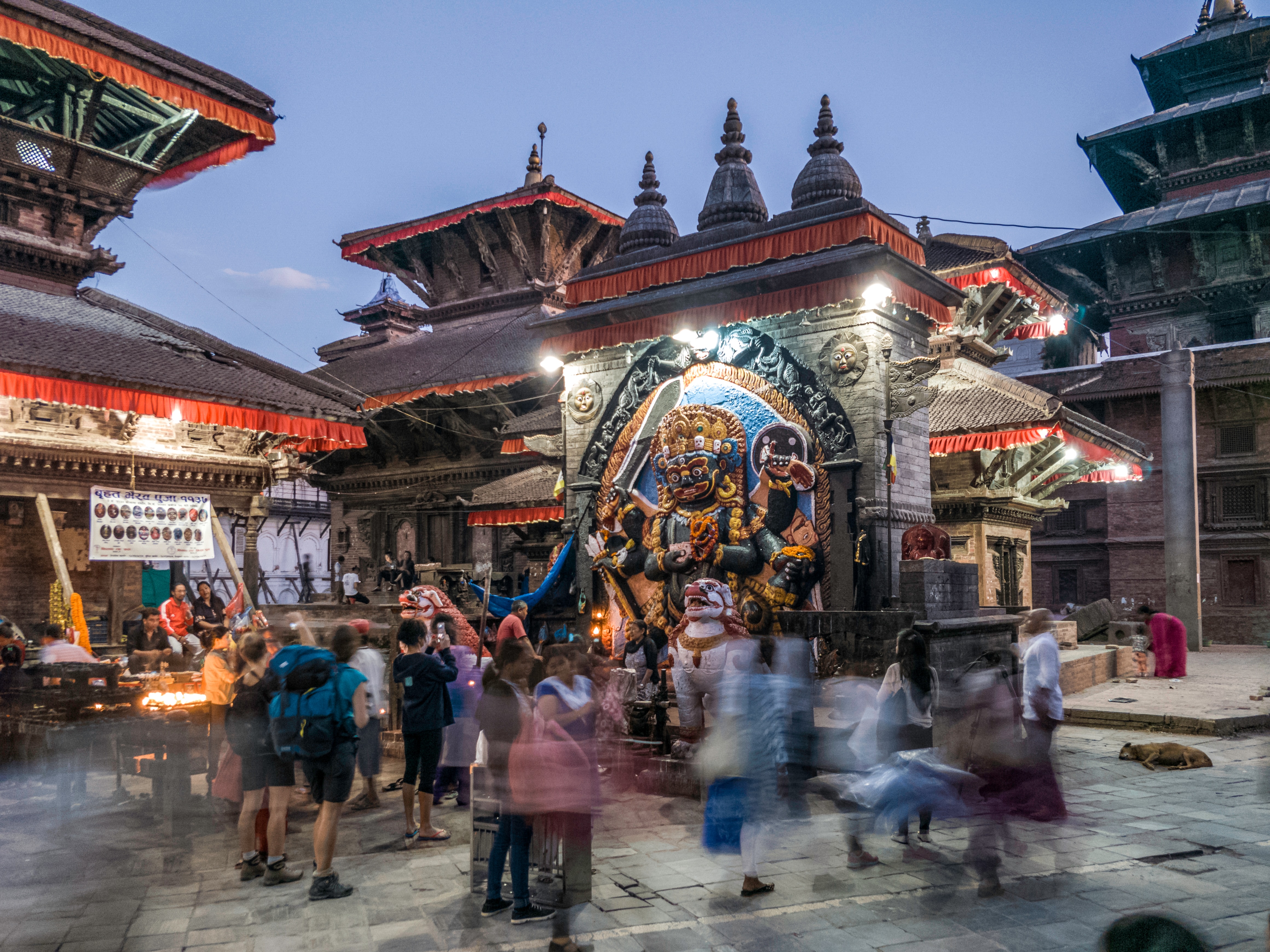
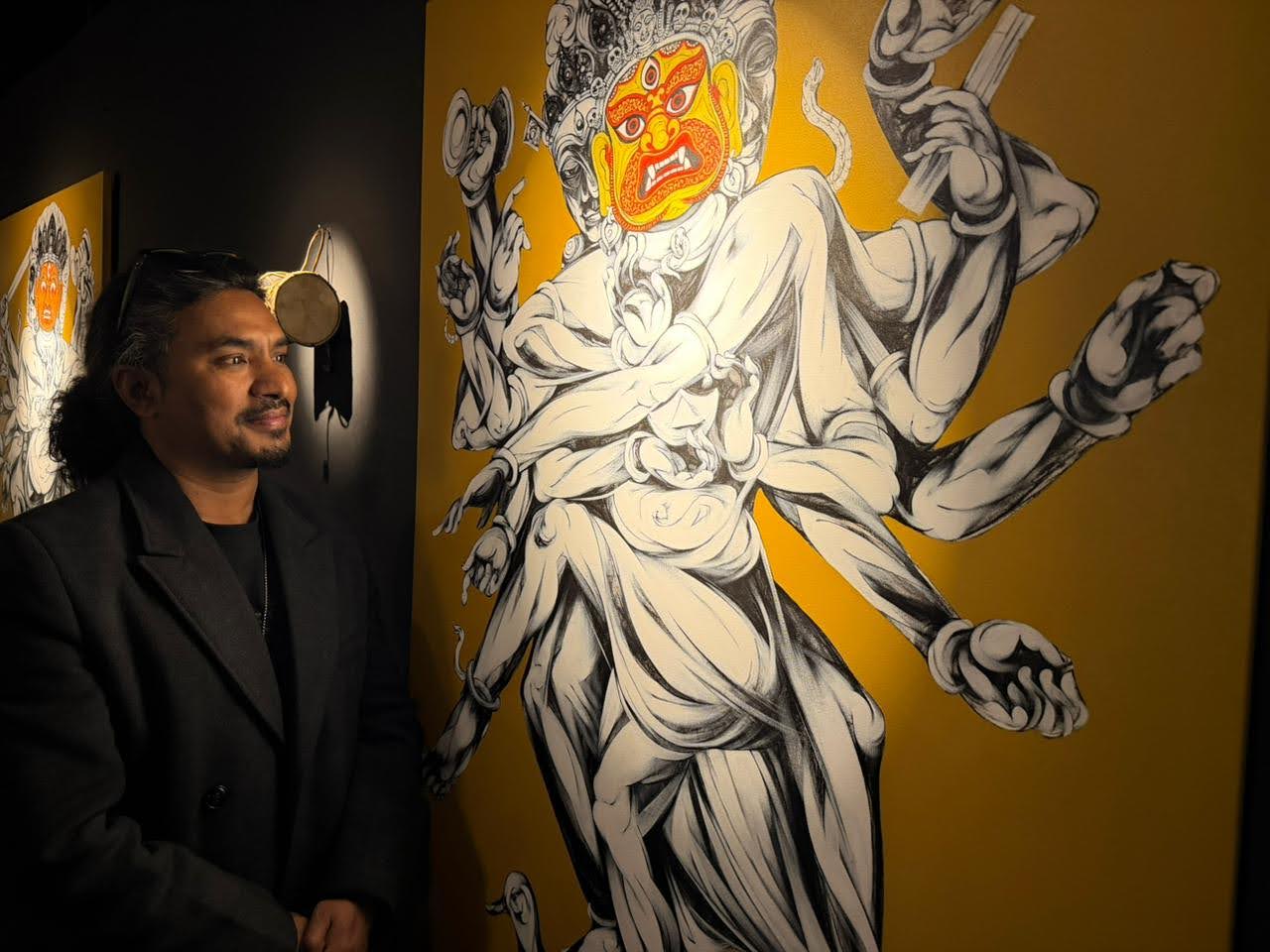
The exhibition, “Bhairav Bhav” by artist Mukesh Shrestha, currently on display at Gallery 108, explores the fierce manifestation of Lord Shiva, Bhairav, not merely as a figure of terror, but as a complex symbol of protection, peace, and the choice between destruction and creation.
Shrestha believes artists play a vital role in society by reflecting social realities through creative expression. With three decades in the art world, he says artists serve as mirrors of society, capable of conveying messages and raising awareness through their work.
“The environment also influenced my paintings. When I was working on these pieces, the Gen Z movement was unfolding. It was a time of chaos, and many young people lost their lives. Society was restless and in pain. I felt anger and an inner urge to respond, and the paintings in Bhav Bhairav became the medium through which I expressed those emotions,” says artist Mukesh Shrestha.
As such, inspired by the raw energy of the “GenZ” protests, Shrestha’s work bridges the gap between the divine myths of Nepal and the “greedy and aggressive” realities of contemporary leadership.
Bhairav as the central motif
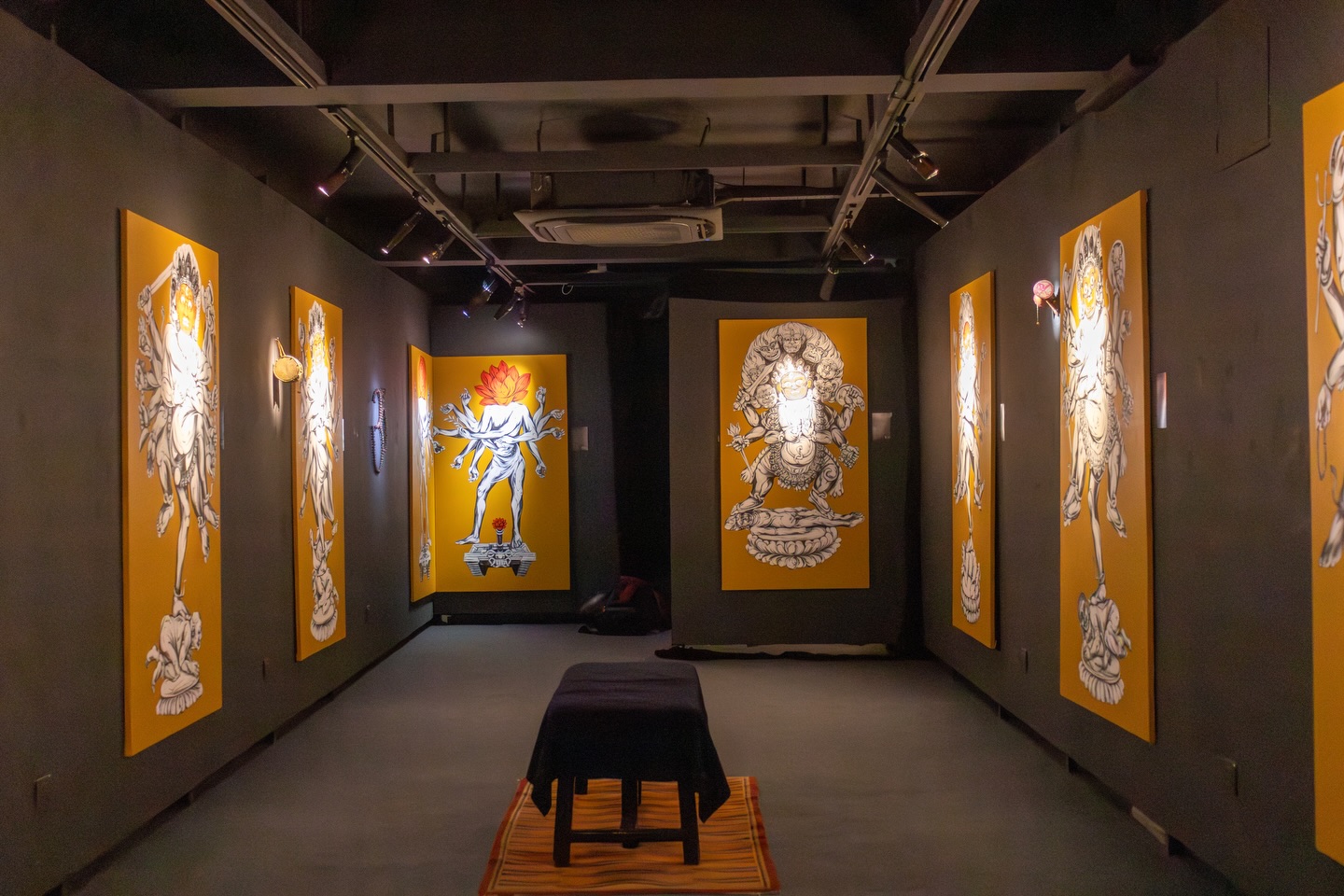
The title of the exhibition signals its focus on Bhairav, though the artist explores the deity through multiple perspectives. Explaining his choice of motif, Shrestha says Bhairav represents a guardian force that dispels negativity and offers protection. The works in the exhibition reference the eight major Bhairavs of the Kathmandu Valley.
Executed largely in black and white, with accents of yellow ocher, the paintings in the exhibition are marked by Shrestha’s signature technique—flowing, molten forms and confident linework that create rhythm and movement across the canvas.
The restricted palette distils the figures to their core energy, allowing form and symbolism to take precedence over ornamentation. In several works, Shiva and Bhairav merge into composite deities, juxtaposing serenity with ferocity and suggesting the inseparable duality of destruction and compassion.
While the imagery carries the intensity associated with Bhairav, the exhibition’s underlying message moves towards peace and reflection.
Juxtaposition of the divine and the narratives
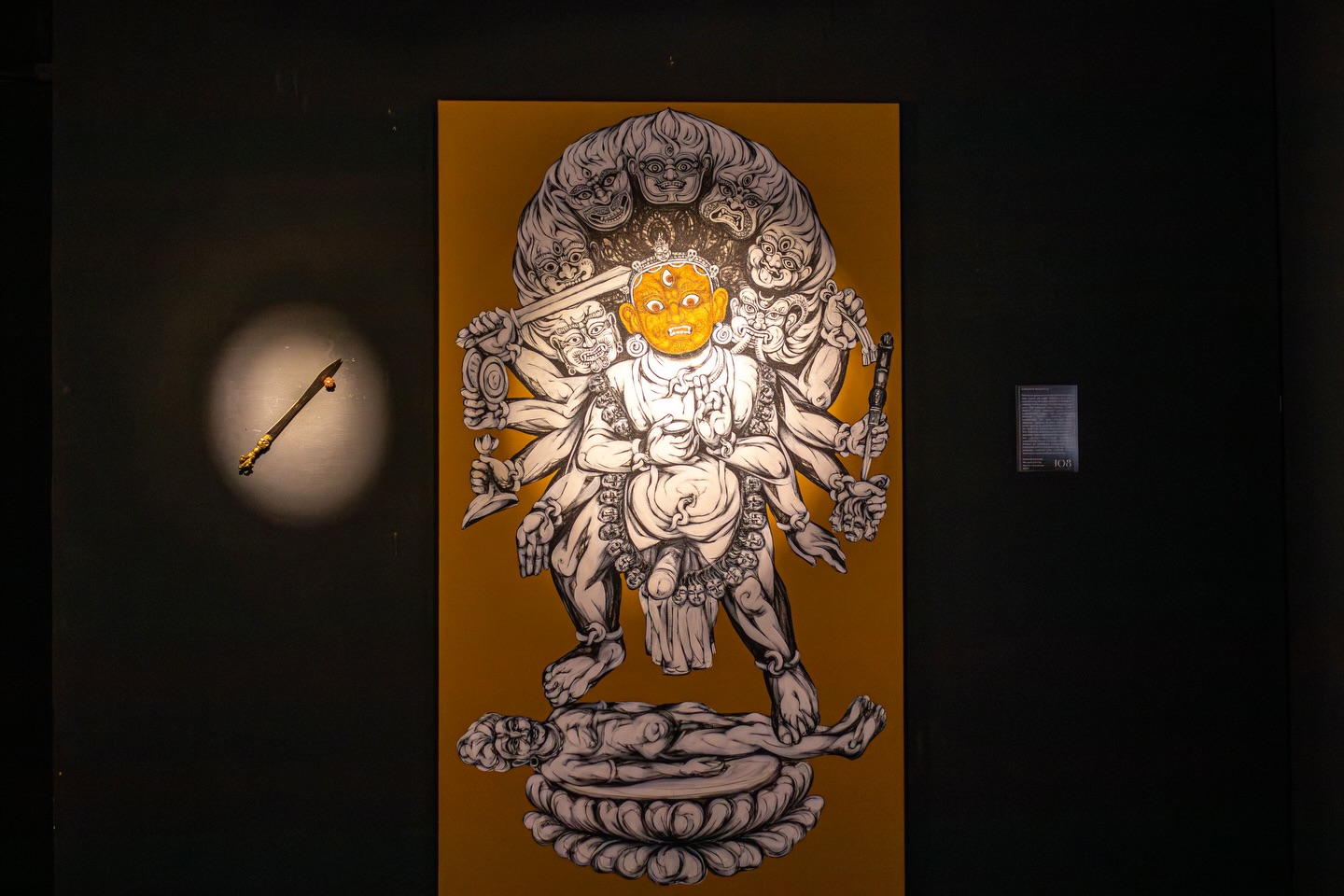
The exhibition Bhav Bhairav, which took nearly five months to complete, presents multiple forms of Bhairav. Executed in an expressionist style, the works feature confident, bold lines and subtle colours shaped by the artist’s imagination. The paintings draw on Shrestha’s technical skill as well as his understanding of local mythological narratives surrounding Lord Bhairav.
In ‘Shwet Bhairav’, Shrestha has portrayed the face of Shwet Bhairav that resembles the Shwet Bhairav in Kathmandu Durbar Square. However, his Shwet Bhairav also includes the body parts—on the front, Nataraj’s body (incarnation of Shiva), and at the back, there are the feet of Goddess Bhramayani standing on her vehicle duck.
“I witnessed at the Nava Durga Gana’s ritual that Goddess Bhramayani welcomes Bhairav. It is believed that this form of Bhairav was allowed in the valley only after Goddess Bhramayani welcomed him. Hence, I painted Bhramayani’s feet and her vehicle duck parallel to the body of Nataraj, where he stands victorious over a prostrate apasmara (demon of forgetfulness), emphasising his role as the protector who dispels ignorance and worldly delusion,” says Shrestha.
Bhav Bhairav stands as a convergence of ritual memory, personal response, and artistic expression. Rooted in Newa mythology yet shaped by contemporary social unrest, Mukesh Shrestha’s paintings present Bhairav as a composite force—fierce yet protective, destructive yet compassionate.
Through an expressionist language and restrained palette, the exhibition reframes Bhairav not as a figure of fear alone, but as a guardian presence responding to both mythic tradition and the turbulence of the present.
If you want to experience different forms of Bhairav under one roof, visit the exhibition, which continues till January 31.