Being fit does not only mean building big muscles, nor does exercising two hours a day at the gym automatically make you healthy. For the body to be truly healthy, there must be balance in the body, mind, and daily routine.
The World Health Organization says, “Good health is not merely the absence of disease; it is complete physical, mental, and social well-being.” In Nepal, over the past 15 years, obesity has increased fourfold, diabetes sixfold, and heart disease threefold. The main reasons behind this are unhealthy eating habits, limited physical activity, and stress.
The good news, however, is that if ordinary Nepali lifestyle habits are followed scientifically, anyone can transform themselves to become strong, agile, and disease-free within 6 to 12 months. Here’s five things to pay attention to become strong and fit as suggested by Dr Narendra Lamichhane, who is an MD-certified acupuncture specialist serving at Gandaki Ayurveda Hospital.
1. Balanced Diet
Nutrition is the foundation of fitness. It is said that we become what we eat. Around 70–80 per cent of good health depends on what’s on the plate. This means eating 5 to 9 servings of fruits and vegetables every day. The more colourful your plate with natural foods, the better.
A breakfast plate that includes red tomatoes, carrots, green spinach, broccoli, yellow lemon, corn, purple cabbage, and beetroot provides all the vitamins and minerals the body needs.
Similarly, muscles cannot grow without protein. A person weighing 60 kg needs 100 to 130 grams of protein per day. This can easily be achieved in a typical Nepali kitchen: mung beans, lentils, chickpeas, kidney beans, eggs, small local fish, milk, yogurt, cottage cheese, soybeans, soymilk, cashews, almonds, and walnuts should be consumed adequately.
Carbohydrates are also necessary but in the right form. Millet, buckwheat, barley, maize, sweet potatoes, and brown rice provide energy without spiking blood sugar.
Healthy fats are essential for hormone production. Ghee, mustard oil, flaxseed, walnuts, fish oil, and coconut oil should be used regularly. Sugar, refined flour, instant noodles, cheese balls, chips, packaged juices, Coke, and Fanta should be eliminated as much as possible. Drink at least three to four litres of water daily.
Drinking two glasses of warm water with lemon and honey on an empty stomach in the morning cleans the gut and boosts metabolism.
2. Physical Exercise
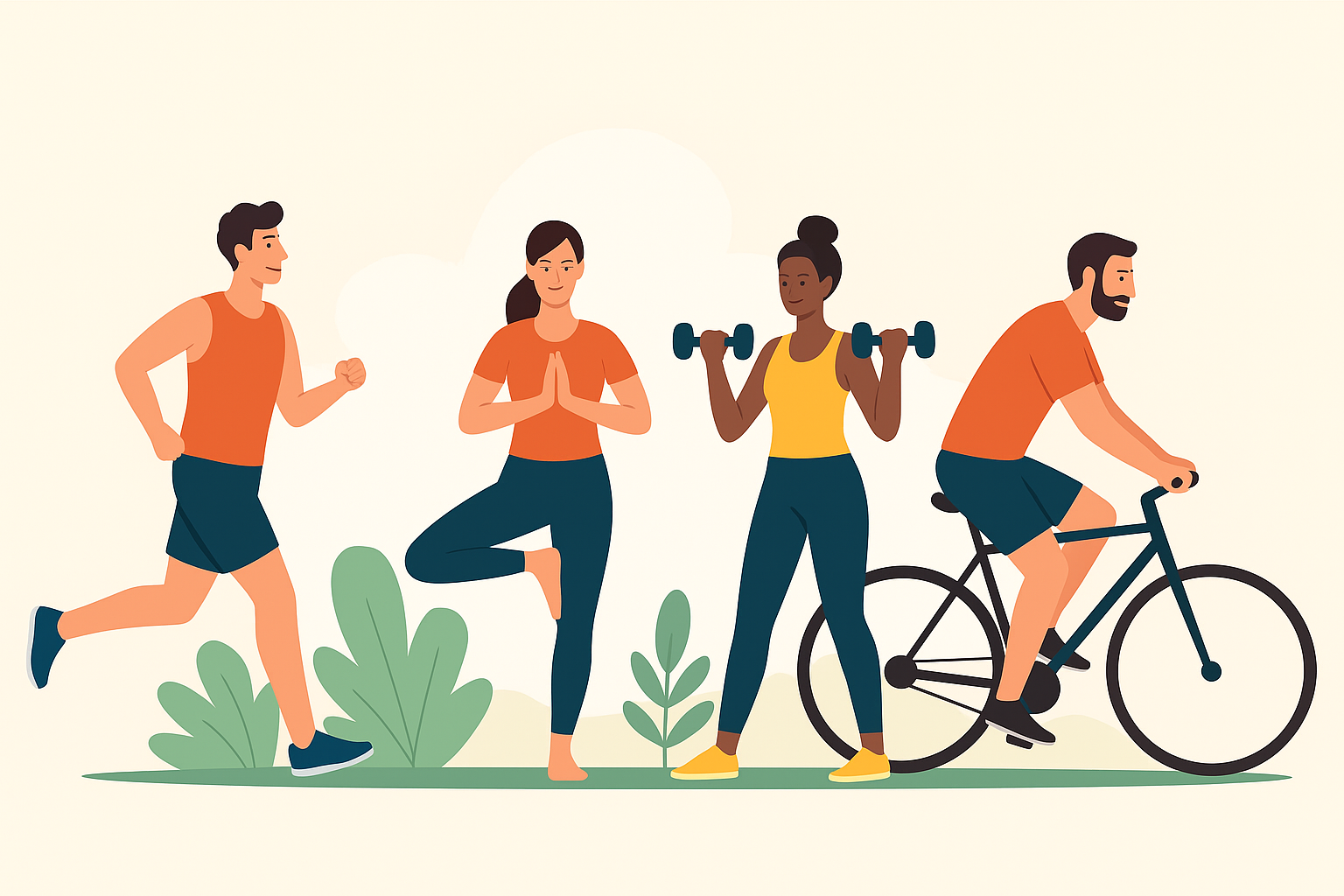
The body does not become strong without exercise. One must do at least 150 minutes of moderate exercise or 300 minutes of light exercise per week. The body needs three types of exercise.
First, cardio, which strengthens the heart and reduces fat.
Fast walking, running, skipping rope, cycling, and swimming are good cardio options. Fast walking for 45 minutes daily can reduce 2 to 4 kg of fat in a month.
Second, strength training, which builds muscles.
Push-ups, squats, planks, and pull-ups can be done using your own body weight. In the gym, compound exercises like deadlifts, squats, bench press, and overhead press can be done. Doing this 3 to 5 days a week is enough.
Third, yoga and stretching are necessary for flexibility and balance.
Surya Namaskar, Vrikshasana, Tadasana, Bhujangasana, and Trikonasana help make joints flexible and prevent injuries.
A routine of 45 minutes of fast walking, 12 rounds of Surya Namaskar, and 10 minutes of skipping rope for three months can reduce waist size, broaden shoulders, brighten the face, and boost confidence.
3. Sleep
Sleep is the greatest medicine. Without 7 to 8 hours of deep sleep at night, hormones become imbalanced. During deep sleep, growth hormone, testosterone, and melatonin are released abundantly, these help build muscles, burn fat, and strengthen immunity.
One should develop the habit of sleeping before 10 pm. Mobile phones, laptops, and TV should be turned off at least one hour before bed because blue light reduces melatonin levels by up to 50 per cent.
Drinking a glass of warm milk with turmeric and pepper before sleeping improves sleep quality.
4. Stress Management
Stress is the biggest enemy of muscle growth and the main reason fat accumulates around the stomach. When stress increases, the hormone cortisol rises, which stores fat around the waist and breaks down muscles.
Meditation, anulom-bilom, bhramari pranayama, or kapalbhati for 10–15 minutes daily reduces stress. Walking in nature, talking with friends, laughing, and pursuing hobbies improve mental health.
5. Avoid Smoking and Alcohol
Smoking and alcohol are the biggest enemies of health. It is best to quit them completely, or reduce them drastically if quitting is difficult. Also, using mobile phones late at night disturbs both sleep and hormones.
Many people in Nepal are deficient in Vitamin D and B12. Sitting in the sun for 15–20 minutes produces Vitamin D. Eggs, fish, milk, and yogurt provide Vitamin B12. Annual blood tests should be done to check sugar, cholesterol, thyroid, and vitamin levels.
Fitness cannot be achieved by practicing these methods for just one day. Habits form in 21 days, changes appear in 90 days, and a completely new body forms in one year. Improving just one per cent every day results in a 70-fold improvement in a year. With consistency and patience, a strong, fit, and confident life is guaranteed.
_________________________________________________________________________________________________________
Originally published on December 11, 2025.