Kathmandu, September 28
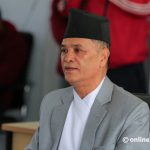
Former Chief Justice Cholendra Shumsher Rana was taken from his Maharajgunj residence in the early hours of Sunday and released into the custody of his family roughly 12 hours later.
Police initially confirmed that Rana had been detained. Later, however, they said he had not been arrested and had instead been taken to a safe place after receiving information about a security threat.
The government and police have not publicly disclosed the nature of the threat, who allegedly posed it or why Rana had to be taken from his home.
SSP Santosh Khadka of the Criminal Investigation Office, Teku, said police had received information that Rana could be at risk.
“After learning that there was a security threat to him, we brought him to our office at night because something could happen,” Khadka told Onlinekhabar.
Rana’s brother, Prabhu Shumsher, gave a different account of the circumstances. He said police told Rana that there was a threat to him from Gen Z protesters.
According to Prabhu Shumsher, Rana did not know about any such threat and instead asked police to strengthen security at his residence.
Police nevertheless took him to the Criminal Investigation Office in Teku.
The National Human Rights Commission also sent a team to the police office to check on Rana. The team waited for around 45 minutes but was not allowed to meet him. The NHRC later objected to the police conduct, saying it was contrary to its constitutional and legal authority.
The episode therefore raises an immediate question: why was Rana taken from his home, and what exactly was happening behind the police operation?
The plan was made before midnight
According to sources familiar with the developments, the decision to take Rana into custody had already been discussed on Saturday evening.
A police team from the Crime Investigation Office reached his residence at around 12:30am.
Rana initially refused to accompany the officers.
According to police sources, officers spent around an hour and a half trying to persuade him. A team of about a dozen plain-clothes personnel had reached the residence under the command of a DSP.
Rana was eventually taken to the Crime Investigation Office in Teku at around 2am, where he was kept in the office of SSP Santosh Khadka.
Police have said no criminal case was being pursued against him and that the purpose of taking him into custody was his own protection.
But another question remains unanswered.
If Rana was being protected, why was he taken away from his residence rather than provided additional security there?
That question has been raised by legal professionals as well as Rana’s family.
No arrest warrant
Sources familiar with the matter said police had not obtained a court-issued arrest warrant before taking Rana away.
The legal basis for holding him therefore became an immediate issue.
Onlinekhabar’s reporting found that police had not publicly disclosed any criminal charge against Rana. Police have also not identified the specific security threat or the person or group believed to have posed it.
Nepal Bar Association president Professor Dr Bijay Prasad Mishra also questioned the government’s decision.
The Bar, he said, does not support corruption or wrongdoing, but that does not mean the state can ignore legal procedures.
The question, therefore, is not whether Rana should be investigated if there are grounds for doing so. It is whether the state followed the law in taking a former chief justice from his home in the middle of the night.
Why was the government watching Rana?
The immediate security explanation is only one part of the story.
In recent weeks, Rana had become increasingly active after the Supreme Court effectively cleared the way for him to emerge from the shadow of his long-running impeachment dispute.
Sources close to the government say his activities had attracted growing attention.
According to sources, Rana was becoming active on two fronts.
The first was political.
The second was judicial.
Sources claim that Rana had begun taking an unusual interest in political developments and had started discussing the possibility of a future political role.
They also allege that he was meeting people connected to cases pending before the courts and attempting to influence judicial proceedings from behind the scenes.
These are allegations from government and judicial sources and have not been established by a court.
But they help explain why Rana’s movements and political contacts had become a concern within Prime Minister Balendra Shah’s team.
Bansbari becomes a meeting point
After the Supreme Court ruling that removed the immediate legal obstacle to his return to public life, Rana’s residence became increasingly active.
People from different political camps were reportedly visiting him.
RSP leaders and lawmakers were among those visiting Rana. He was also reportedly meeting leaders associated with the Nepali Congress and CPN-UML chair KP Sharma Oli.
Sources close to the government claim that the number of visitors to Rana’s residence had increased significantly and that his political activity was being monitored.
According to one source, the government became concerned that Rana was attempting to influence the judiciary while simultaneously expanding his political contacts.
An RSP source cited in the reporting went further, saying the detention was intended to send a message to RSP leaders that the government knew whom they were meeting.
That claim could not be independently established.
But it reflects the growing tension surrounding Rana’s political contacts.
Rana and the RSP
Rana’s relationship with the Rastriya Swatantra Party appears to have been one of the issues that particularly concerned people around the Prime Minister.
According to sources, Rana had begun referring to the RSP as “our party”.
He was also reportedly presenting himself as a possible future presidential candidate.
At the same time, his contacts were not limited to the RSP.
He was meeting members of the Sher Bahadur Deuba camp in the Nepali Congress and was also in contact with UML chair KP Sharma Oli.
This placed Rana in an unusual position.
A former chief justice who had spent years at the centre of a bitter political and judicial controversy was once again meeting leaders from different political camps at a time when Nepal’s political system was undergoing another major realignment.
The Congress connection
Rana’s meetings with Congress leaders also became significant in the eyes of government sources.
According to the reporting, Rana had increased his meetings with leaders outside the Congress establishment before a Supreme Court full bench headed by Chief Justice Manoj Kumar Sharma issued an order allowing a review of a case concerning the Nepali Congress’s special general convention.
Sources viewed the timing of Rana’s meetings and developments in court with suspicion.
There is, however, no established evidence that Rana influenced the court’s decision.
The significance of these meetings lies in the perception within political circles that Rana was attempting to regain influence over both politics and the judiciary.
The Oli connection and the idea of restoring Parliament
Rana was also reportedly discussing the political possibility of restoring the House of Representatives.
According to the reporting, he had been in contact with UML chair KP Sharma Oli and had discussed a concept paper concerning the restoration of Parliament.
Oli later spoke publicly about the possibility of restoring the House.
Whether there was a direct political understanding between Rana and Oli remains unclear.
But sources close to the developments viewed Rana’s political activity as part of a broader attempt to shape the country’s political direction.
Some sources also claimed that Rana was trying to persuade Nepali Congress leader Sher Bahadur Deuba to support such a political course.
These claims remain part of the political accounts surrounding Rana and have not been independently established.
Why Rana’s return mattered
To understand why Rana’s recent activity attracted so much attention, it is necessary to go back to his time as chief justice.
Rana became a permanent Supreme Court justice in 2014 after a controversial parliamentary hearing process.
His judicial record had already attracted criticism.
In 2001, while serving at the Biratnagar Appellate Court, Rana was part of a bench that acquitted defendants in a gambling case. The bench held that the card game involved was based on skill and therefore did not amount to gambling.
In 2006, while serving at the Special Court, Rana was part of a bench that dismissed a corruption case against former Home Minister Govinda Raj Joshi on the grounds of limitation.
The Supreme Court later overturned that decision, and the corruption case against Joshi was ultimately established.
Rana went on to become chief justice in January 2019.
His tenure coincided with some of Nepal’s most consequential constitutional and political disputes.
The dissolution battles
During the political crisis surrounding the dissolution of the House of Representatives, the Supreme Court under Rana became one of the central institutions in the political struggle.
The court restored the House in February 2021.
It later issued another landmark ruling ordering the appointment of Sher Bahadur Deuba as prime minister.
Rana’s role in these cases became a subject of intense political debate.
His critics accused him of becoming too closely involved in political bargaining, while his supporters maintained that the court was simply exercising its constitutional authority.
The controversy eventually reached Rana’s own position as chief justice.
The Hamal episode
In October 2021, Deuba appointed Gajendra Hamal as Industry, Commerce and Supplies Minister.
Hamal was related to Rana by marriage.
The appointment triggered immediate controversy.
Hamal resigned roughly 40 hours later.
The episode further intensified pressure on Rana, with the Nepal Bar Association beginning protests against him.
Judges at the Supreme Court also stopped appearing before his benches.
By then, Rana’s position as chief justice had become increasingly untenable.
The impeachment motion
On February 13, 2022, lawmakers from the Nepali Congress and CPN-Maoist Centre registered an impeachment motion against Rana.
He was suspended from his position.
But Parliament never completed the impeachment process.
The motion remained unresolved for years, even as parliamentary terms changed.
This created an unusual constitutional situation.
Rana had retired while the impeachment motion remained pending, but Parliament had not either removed him or acquitted him.
For years, his legal status remained contested.
The Supreme Court ruling that changed everything
The issue returned to the Supreme Court this month.
A Constitutional Bench led by Chief Justice Manoj Kumar Sharma dismissed petitions challenging the Federal Parliament Secretariat’s position on Rana’s suspension.
The ruling cleared the way for Rana to receive pension benefits and other facilities and effectively removed the legal obstacle that had kept his status in limbo.
That decision changed Rana’s position dramatically.
After years of suspension and political isolation, he was once again free to move publicly and engage with political actors.
And according to sources, he did exactly that.
Manoj Sharma and Rana
There is another layer to the story.
Chief Justice Manoj Kumar Sharma had been nominated to the Supreme Court while Rana himself was chief justice.
The Nepal Bar had previously raised questions about an alleged discussion involving Rana, Sharma and then High Court judge Nawaraj Thapaliya concerning a case.
The allegations were disputed and did not establish that Sharma had acted improperly.
Nevertheless, the relationship between the two became part of the political and judicial speculation surrounding Rana’s return.
The Supreme Court’s recent decision concerning Rana’s impeachment dispute was delivered under Sharma’s leadership.
That coincidence has also become a subject of political discussion.
Why Balen’s team became concerned
According to sources close to the Prime Minister’s Office, several developments increased concern about Rana’s activities.
These included Supreme Court orders involving property investigations, constitutional matters and a pension-related case concerning Rana.
Government sources also claimed that Rana was attempting to influence the judiciary through personal contacts.
Separately, concerns were reportedly raised after judges at the Special Court complained to Chief Justice Sharma and Supreme Court judges about difficult working conditions.
According to a Supreme Court source, the concerns eventually reached the Prime Minister’s secretariat.
The allegations are significant because they suggest that the government’s concern about Rana was not limited to his political contacts.
It also extended to what officials believed he was attempting to do through the judiciary.
A history of political influence
Rana’s critics have long argued that his career cannot be understood separately from Nepal’s political establishment.
His appointment to the Supreme Court, his decisions during the parliamentary dissolution disputes, the appointment of Gajendra Hamal and the subsequent impeachment motion all became part of a wider debate over the relationship between political leaders and the judiciary.
The current dispute therefore has a long history.
What has changed is that Rana, after years of being suspended and politically sidelined, has once again begun appearing at the intersection of political and judicial affairs.
That is why his Bansbari residence had become significant.
Some in political circles have even described it as a new centre of influence, comparing it with the old political and legal influence associated with former Chief Justice Kalyan Shrestha’s residence in Kupandole.
The phrase “power has shifted from Kupandole to Bansbari” is essentially political commentary, but it captures the perception that Rana’s residence had become an important meeting point.
The question of the RSP and judicial cases
Sources associated with the RSP also claim that there had been increased activity around Rana’s residence by people seeking help in cases involving allegations of money laundering.
They allege that some of those meeting Rana were interested in securing the release of people facing such accusations.
These claims have not been independently established.
But they add to the government’s stated concern about Rana’s recent activities.
The question is therefore not simply why Rana was detained on Sunday morning.
It is also why a former chief justice, after years away from public life, had once again become important enough to attract attention from political parties, government officials and people involved in court cases.
Why was he taken—and why was he released?
This remains the biggest unanswered question.
Police say Rana was taken into protective custody because of a security threat.
But they have not explained the nature of the threat.
They have not publicly identified who posed it.
They have not explained why additional security could not have been provided at Rana’s home.
And they have not clearly explained the legal basis on which police removed him from his residence and held him at the Criminal Investigation Office.
By afternoon, the same police authorities had handed him back to his family.
SP Rameshwar Karki said Rana would be provided security at his residence going forward.
That raises another question.
If the threat was serious enough to require taking a former chief justice from his home in the middle of the night, what changed within those few hours?
The human rights question
The National Human Rights Commission’s experience at the Teku police office has added to the controversy.
The commission sent a team to meet Rana but police prevented the team from entering and meeting him.
The NHRC later said the police conduct was contrary to its constitutional and legal responsibilities and called for an impartial investigation into the incident.
For the Nepal Bar, the issue is equally straightforward.
The Bar has said it does not oppose investigation into allegations against Rana.
But it has also questioned whether a former chief justice can simply be taken from his home without proper legal procedure.
A former chief justice once again at the centre of power
Rana’s latest episode cannot be separated from his history.
He was once the most powerful figure in Nepal’s judiciary.
His tenure as chief justice became entangled with the country’s political crises.
He was suspended following an impeachment motion.
For years, he remained caught in a legal and political limbo.
Then, earlier this month, the Supreme Court ruling effectively cleared the way for his return.
Within weeks, he was once again meeting political leaders, receiving visitors at his residence and, according to sources, discussing the country’s political future.
Then, in the early hours of Sunday, police came for him.
The official explanation is a security threat.
The political background suggests a more complicated picture.
Rana’s reported contacts with the RSP, Nepali Congress and UML, his alleged interest in judicial cases and his reported discussions about the country’s political direction had made him a person of renewed interest to the government.
But whether those activities had anything to do with his detention remains unproven.
What is clear is that the government has yet to provide a full explanation for the operation.
And until it does, the questions surrounding Rana’s brief detention will extend beyond the issue of security.
They will touch the larger question that has followed Rana throughout his career: where does the boundary lie between judicial power, political influence and executive authority in Nepal?