
Nepal is widely recognised for its rich cultural heritage, resilient people, and long-standing reputation as a peaceful nation. Yet beneath this identity lies a persistent crisis, one defined by poverty, unemployment, corruption, and deepening inequality that decades of political transformation have failed to resolve.
After generations of struggle against the Rana regime, the Panchayat system, and the monarchy, Nepal’s 2006 People’s Movement finally ushered in a federal democratic republic. The constitution that followed promised freedom, equality, and justice. But for most citizens, those promises remain unfulfilled. Rather than feeling liberated, ordinary Nepalis feel more frustrated than ever. Faced with a system that consistently fails them, many have chosen to leave, seeking abroad the dignity and opportunities their own country cannot provide.
Political leaders, rather than serving as agents of change, are increasingly seen as symbols of corruption. A small segment of society has accumulated substantial wealth, influence, and access to economic opportunities, while a large portion of the population continues to face serious hardship. The country remains heavily dependent on remittances, foreign aid, and public assistance to sustain basic livelihoods. This growing imbalance has fueled widespread concern about inequality, social justice, and the ability of Nepal’s political and economic systems to deliver inclusive development.
Most ordinary Nepalis have lost faith in political parties and their leaders unless those leaders can offer direct personal benefits. What people truly want is neither complex nor unreasonable. They desire a peaceful and meaningful life, equal access to quality education and healthcare, and the opportunity to contribute to their country while enjoying improved living conditions. These are not grand demands; they are the basics of a functioning society.
This article explores the factors behind the widening gap between Nepal’s wealthy elite and its broader population. It argues that weak governance, unethical political leadership, widespread corruption across both public and private institutions, and the rise of crony capitalism have concentrated wealth and power in the hands of a privileged few. These dynamics have undermined inclusive economic growth, eroded public trust, and denied ordinary citizens the opportunities they deserve. Understanding why these disparities persist requires looking beyond economic indicators alone. It demands a closer examination of the political, social, and institutional structures that determine how resources and opportunities are distributed in Nepal. Without meaningful reform grounded in accountability and integrity, the gap between the nation’s constitutional promises and the daily realities of its people will only continue to grow.
The gap between the richest and the poorest continues to widen at an alarming pace. According to a consortium of development organisations, the richest 10 per cent of Nepalis earn three times more than the poorest 40 per cent and possess more than 26 times their wealth. Recent youth-led protests, particularly those driven by Generation Z, have further demonstrated growing public dissatisfaction and declining trust in both government and political leadership. These protests are not simply expressions of frustration; they are a clear signal that an entire generation has lost confidence in the institutions meant to serve them.
Weak governance lies at the heart of this crisis and is often a direct consequence of unethical political leadership. Political leaders are responsible for shaping the nation’s future and improving the lives of its citizens. However, when leaders engage in corruption, its effects spread throughout society and weaken public institutions at every level. Nepal continues to face serious governance challenges, and recent investigations have revealed that powerful individuals and major public and private companies have been linked to significant corruption scandals. When connections matter more than merit, talent is suppressed, and integrity is compromised. Success comes to depend on political ties rather than fair competition, and the entire system is distorted in favour of those already in power.
In Nepal, favouritism influences the awarding of public contracts, the issuance of licenses, and appointments to senior positions. Corruption becomes an invisible tax on development, as funds intended for roads, schools, and hospitals are siphoned off or misallocated, projects stall indefinitely, and public services deteriorate. This erosion of institutional integrity discourages foreign investment, stifles promising startups, and steadily erodes citizens’ faith in democratic governance. The reach of favouritism extends far beyond business and economic affairs.
Concerns are frequently raised about political considerations shaping appointments to critical positions such as ambassadors, tax authorities, and judicial offices. When such appointments are perceived to be based on political loyalty rather than competence and qualifications, the effectiveness and credibility of these institutions are fundamentally undermined, weakening the state from within.
As a result, many citizens feel that Nepal is not governed by the democratic principle of government of the people, by the people, and for the people. Instead, there is a growing perception that power and opportunity are concentrated among those with close ties to political parties and influential networks. Yet blame cannot rest solely with political leaders. Citizens also share responsibility. Too often, personal comfort and short-term gain are prioritised over collective well-being.
When opportunities arise, many choose to pursue immediate financial gain rather than invest in the country’s future, while patriotism is frequently professed but rarely practised. At the same time, political instability, weak governance, and limited domestic opportunities compel many Nepalis to prioritise survival. The resulting migration for work overseas generates remittances that sustain countless families but also weakens the domestic labour force and long-term national productivity, creating a cycle that is difficult to break.
The combination of inequality, corruption, weak governance, and declining civic values has significantly slowed Nepal’s national progress. Although individual wealth may increase for some, national prosperity cannot be achieved without inclusive development and strong institutions. Strengthening transparency, accountability, and merit-based systems is therefore essential to restoring public trust and promoting development that reaches every level of society.
Nepal can begin to close the gap between private wealth and national poverty by enforcing zero-tolerance anti-corruption measures across public and private sectors, expanding inclusive economic opportunities for marginalised communities, investing in civic education and ethical leadership to renew genuine patriotism, and creating targeted employment and skills-training programs to reduce migration pressures. Multi-stakeholder partnerships that align donor support with national priorities are equally important so that institutional reform, quality education, and broad-based opportunity can converge to deliver sustainable and equitable development for all.
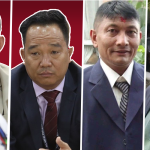
Recent political change, driven by deep public frustration with three decades of poor governance, has brought a new generation of leaders to power. The newly elected young politicians, most of whom are well educated, energetic, and socially conscious, carry both the mandate and the responsibility to deliver meaningful change. The finance minister’s extensive experience and international credibility further strengthen public confidence in the government’s economic direction. Citizens are cautiously optimistic that this leadership will move beyond rhetoric and take decisive action to bridge the widening gap between the wealthy and the marginalised.
The recently announced budget reinforces this hope, with measures spanning tax relief, agricultural support, startup incentives, production-oriented growth, social protection, and human capital investment, collectively reflecting a serious intent to reduce inequality and broaden economic opportunity. Among these measures, job creation through investment, direct support for farmers, and robust social protection are likely to deliver the greatest impact, since sustainable inequality reduction ultimately stems from better employment, higher productivity, and effective safety nets rather than policy announcements alone. The true measure of success, however, will not be found in what is declared but in what is actually delivered.
The real hope for Nepal lies in building a system in which economic opportunities are accessible at every level, not concentrated among elites. Ethical and moral leadership is not optional but essential, as the nation’s progress and the quality of its people’s lives depend profoundly on the intentions, integrity, and character of those in power.
When development is genuinely driven by fairness, inclusion, and accountability, it creates a foundation that uplifts all citizens rather than privileging a few. Leaders who govern with conscience and purpose can transform policy into real and lasting change, while those driven by self-interest will only perpetuate the very inequalities Nepal seeks to overcome. Whether this government fulfils its promise through honest governance, equitable opportunity, and an unwavering commitment to the public good will ultimately define Nepal’s trajectory for the next generation.