
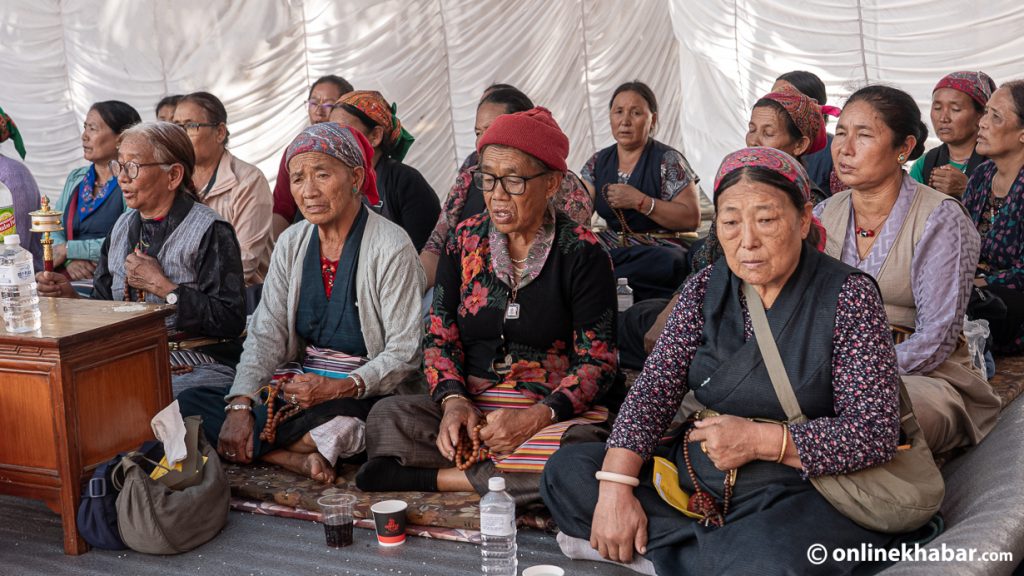
The prayers begin quietly.
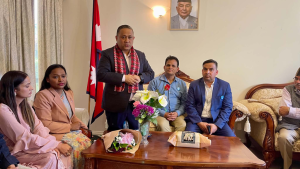
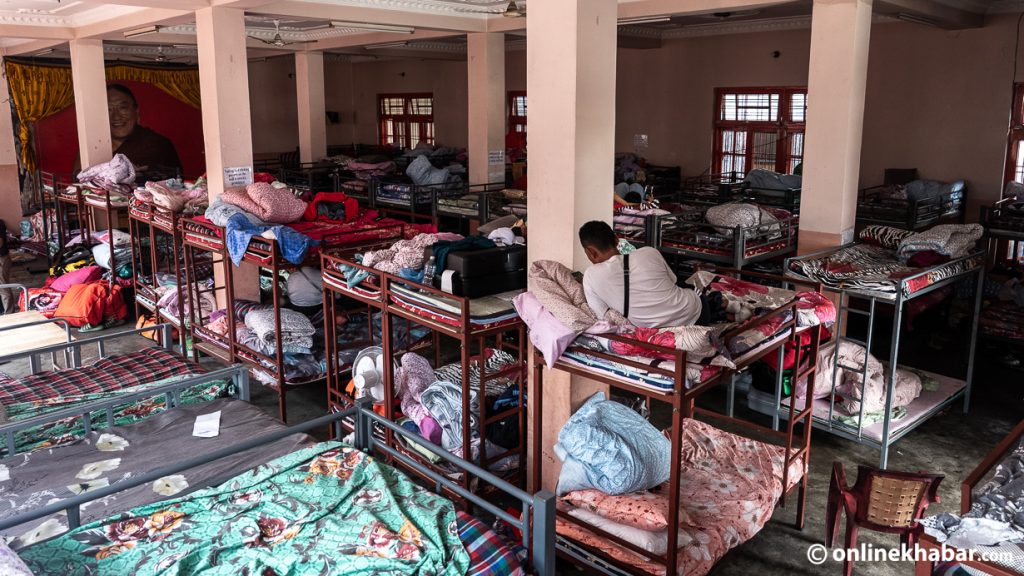
Some people sit with their heads bowed, murmuring mantras. Others are silent. Families who have lost relatives gather for Buddhist rituals, while children and older people sit among the iron beds and mats spread across the floor.
There is grief everywhere, but little certainty about what comes next.
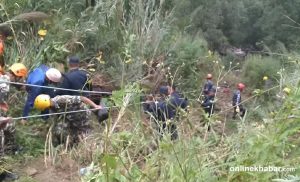
At Mustang Gumba in Swayambhu, Kathmandu, around 250 people from Timure, a settlement near Nepal’s border with China, have found temporary shelter after the Bhotekoshi floods swept through their village on August 26.
They came here after losing homes, possessions and, in many cases, family members.
For 67-year-old Lakpache Ghale, survival came down to chance.
She had gone to a nearby settlement to look after a woman who had recently given birth and her baby. While she was away, the flood tore through Timure.
“Those who could run fled towards the forest. Those who could not were swept away. Many people from Timure were swept away,” she says. “It was something we never imagined. We have suffered such a tragedy.”
Ghale says she has cried so much that her eyes have swollen.
“We are here now, but we do not know where we will go tomorrow,” she says. “Those who were supposed to leave have already gone. We, the survivors, must perform the religious rites for those who have gone.”
That responsibility has become one of the first tasks for the survivors. But even mourning has become difficult.
A village without a village
Before the flood, Timure was a busy settlement on one of Nepal’s important routes to China.
According to the 2021 census, 163 households and 550 people lived there. But the number of people who were actually present when the flood struck was much higher.
Phurpu Dorje Ghale, principal of Nepal Rastriya Basic School in Timure, estimates that more than 250 local residents were in the settlement.
Only about 95 rescued people, he says, made it out.
“Around 145 people are still missing,” he says.
The village had around 200 houses.
“Now they are gone.”
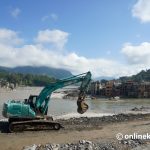
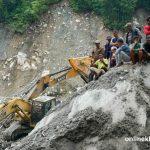
A few houses escaped the full force of the flood, but even those are no longer considered safe to live in.
And Timure was not only home to its permanent residents. It was a border hub crowded with workers, traders, security personnel, tourists and truck drivers. There were seven banks in the settlement, as well as customs and immigration offices, quarantine facilities and offices belonging to Nepal’s three security agencies.
“There must have been around 2,000 people there,” Ghale says.
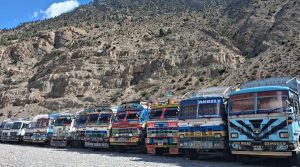
Tourists travelling towards Kailash had been passing through. Between 700 and 800 container trucks were in the area, he estimates, bringing with them drivers and helpers. Hotels were full. There were four or five large hotels in nearby Ghattekhola and another three or four in Timure itself.
“Everyone who was between Timure and the customs office did not survive,” Ghale says.
His own school has been devastated. Twenty-five students and six teachers remain unaccounted for.
“Only 10 students managed to escape and survive,” he says.
The scale of the destruction has made the question of exactly how many people were caught in the flood difficult to answer. But for those now sheltering in Kathmandu, the numbers are personal. Every missing person has a family waiting.
49 days
Inside the monastery, the survivors have begun the traditional Buddhist rituals for those who died. They intend to remain there for 49 days.
“We will stay here for 49 days and perform ghewa for those who died, according to our customs, religion and traditions,” Ghale says.
But they have brought almost nothing with them. Their homes are gone. Their possessions are gone. Many of their relatives are gone. And they say they do not even have enough money to carry out the rituals properly.
“We have to light incense every day and every week. We have to perform prayers. We have no money for that,” Ghale says.
The timing matters, he says.
“If we are given funeral expenses after 49 days, it will have no meaning. If we do not receive support when it is needed, it will be of no use later.”
The government, he says, should take responsibility.
“We can even survive by begging and eating on the streets of Swayambhu,” he says. “But we cannot leave those who have died without performing our religious duties.”
The survivors say the government should provide funeral expenses immediately.
“It has already been three weeks. Only four weeks remain. The funeral expenses should be provided as soon as possible.”
Even the dead remain trapped in bureaucracy
There is another problem, less visible than the destruction of Timure but just as immediate. The missing people left money in bank accounts. Their families cannot easily access it.
“Death registration is required to withdraw the money,” Ghale says. “Our relatives have died. We need money to perform the rituals and meet expenses, but we have not received death registration certificates.”
Without official death registration, he says, families cannot access their relatives’ funds. The survivors are therefore asking the government to create a way to register the deaths of people who disappeared in the disaster. For people who have lost almost everything, the money is not an abstract legal issue. It can mean food, shelter, travel and the ability to perform the rituals that their religion requires.
They do not want Kathmandu
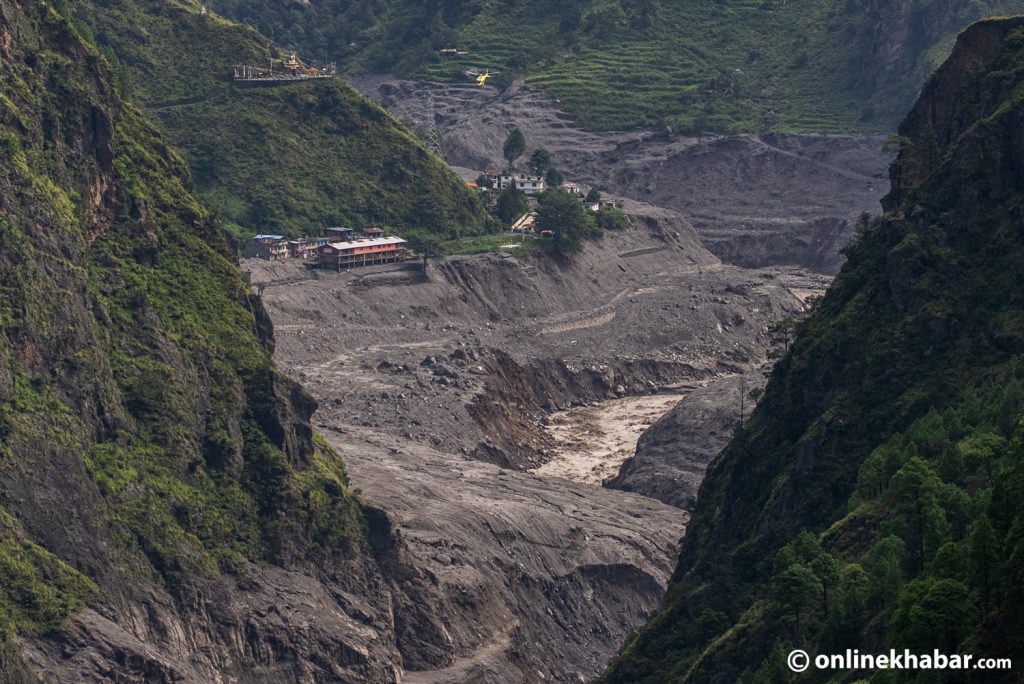
Yet when the conversation turns to the future, the people at the monastery do not speak about staying in Kathmandu. They speak about going home. Not necessarily to the Timure that existed before the flood. They know that the settlement has been destroyed.
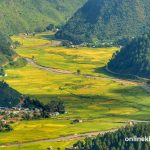
Instead, they want to rebuild further uphill, in Khaidi, an old village about half an hour above Timure. Khaidi, they believe, could become an integrated settlement with several hundred houses.
“We want to return to our own place,” says Ghale. “We have our society there, our customs, our language, religion and culture.”
Without rehabilitation, he fears, more than homes will disappear.
“That culture will collapse.”
For the people of Timure, the desire to return is also tied to a sense of history and responsibility.
Kami Nurpu Tamang, president of the Cross-Border Traders Association and coordinator of the border management committee, describes the community as guardians of the frontier.
“We have our traditions. This is our birthplace,” he says. “We want to protect the history we have had since the Lichchhavi period, as well as the border and boundary pillars that our fathers and grandfathers protected.”
“We are the guardians of the border.”
His demand is simple.
“The government should arrange our rehabilitation as soon as possible.”
A home must be more than a house
Returning to Khaidi, however, will require more than permission. The survivors say the new settlement needs roads, electricity, drinking water, healthcare, education and security.
“There must be guarantees for health, education and security,” Ghale says. “Infrastructure has to be built first. There must be electricity, drinking water and roads.”
Only then, he says, can they begin again.
“We will go there, work there and build our lives there.”
For Chhiring Deki Tamang, staying in Kathmandu is not an option.
“We do not want to stay in Kathmandu. There is no work for everyone here. What will we do?” she asks.
Their livelihoods were tied to the border.
“The government first needs to open the road. Our old village is Khaidi, and that is where we will go.”
The desire to return is not simply about nostalgia.
It is about work, community and identity.
The people now sleeping on mats inside the monastery want to return to the mountains where their families lived, traded and maintained the border for generations.
‘The border must open’
They are also asking the government to reopen the Rasuwagadhi border point, coordinating with China if necessary. For Tamang, the border is more than a local commercial route.
“Damage to the Rasuwagadhi border point is not just a loss for the people of Rasuwa or Timure. It is a loss for the entire country,” he says.
“The border point must be reopened.”
Before the disaster, goods from Chinese companies could reach Kathmandu through the route in 10 to 12 days, he says.
“If they have to be brought by air now, it could take two or three months. The cost of goods will rise, and the burden on ordinary people will become even heavier.”
The flood has therefore taken away more than buildings. It has disrupted a community’s homes, livelihoods, rituals and connection to the border. At the Mustang Gumba, those losses are still being absorbed.
The prayers continue. The survivors wait for news of the missing.
They count the days left in the 49-day mourning period.
And beyond the grief, they are already talking about roads, houses, schools, water and electricity — the things they will need if they are ever to return.
For now, Timure exists mostly in memory. But for those sheltering in Kathmandu, it is still home. And they intend to go back.