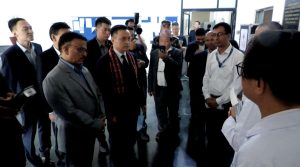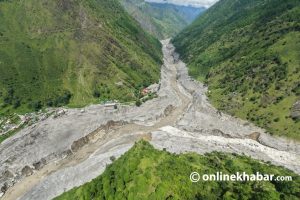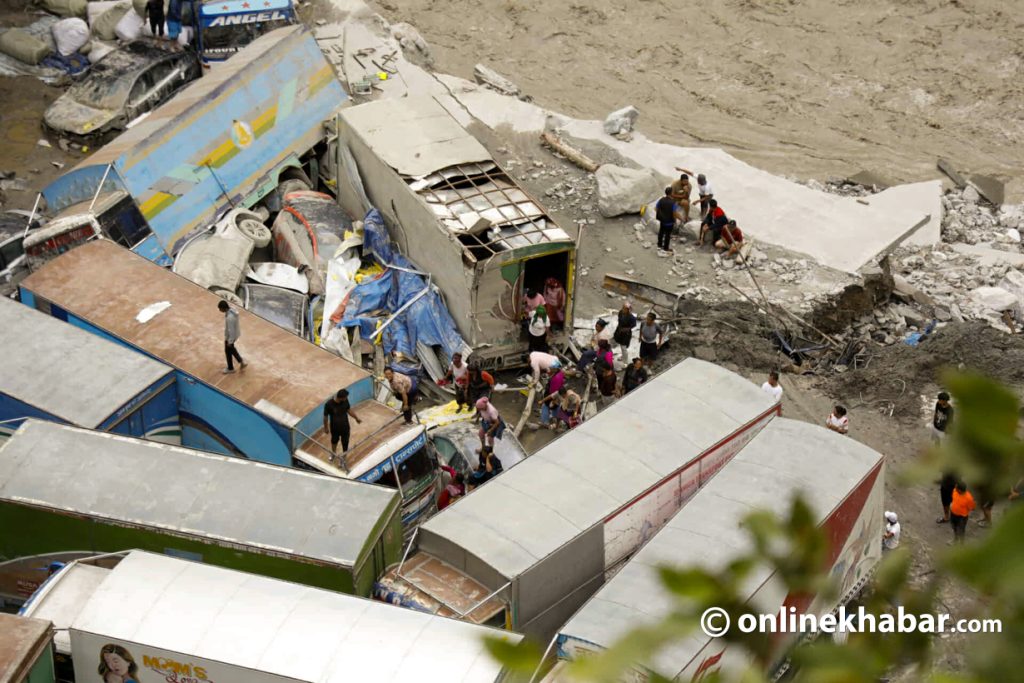


In the aftermath of the devastating Rasuwa flood, identifying disaster victims has presented a significant forensic challenge for Nepal. To bolster local efforts, an Indian forensic team was deployed to Kathmandu to assist with DNA profiling and victim identification.
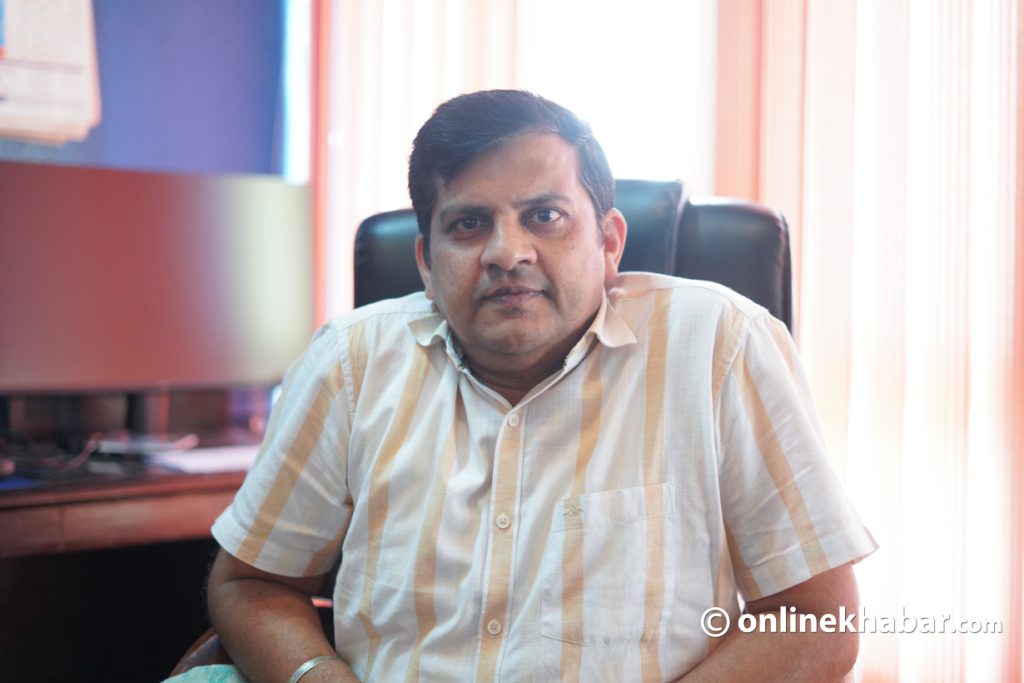
Onlinekhabar spoke with Dr Kamal Chauhan, Assistant Director at the Central Forensic Science Laboratory, Delhi, about his team’s operations in Nepal, the technical aspects of forensic identification, and what grieving families should expect from this complex process.
You and your team have been in Nepal for over two weeks now. What have been some of your primary forensic challenges while examining the bodies?
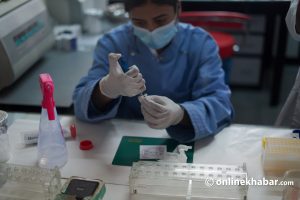
Actually, we are not directly examining the bodies here; our focus is on lab work, specifically DNA profiling. We process reference samples from relatives of the deceased, alongside post-mortem samples received from doctors following autopsies. By generating DNA profiles for both groups, we can match them to establish identifications.
In terms of challenges, our primary bottleneck is operational capacity. The local machinery processes eight samples at a time, whereas equipment capable of handling 24 samples per run would significantly increase our output. Beyond that constraint, the technical infrastructure here is solid, featuring modern machinery comparable to what we use in India.
Having conducted DNA profiling for various disaster scenarios in the past, how does your work in Nepal compare to previous operations?
The sample types are essentially identical, primarily molar teeth and dense bone fragments, which yield the best DNA results. However, the context creates different challenges. In events like air crashes, passenger manifests make victims known, allowing us to source reference samples from families relatively quickly. In a flood disaster, many victims are initially unknown or swept away, making it much harder to gather corresponding reference samples from missing persons’ families.
Why is DNA profiling so crucial in flood disaster recovery?
Because the bodies are often severely decomposed or fragmented, visual identification becomes impossible. DNA provides an objective, foolproof method because everyone possesses a unique genetic profile. Since a child inherits 50% of their DNA from their mother and 50% from their father, direct lineage matching can definitively confirm an identity.
What happens if a victim’s parents are no longer alive? How do you establish a match?
When parents aren’t available, we utilise lineage-specific testing. For male victims with surviving male relatives, such as brothers, paternal uncles, or paternal cousins, we perform Y-STR profiling. Because the Y-chromosome passes intact along the paternal line, male relatives share the same Y-STR profile. For female relatives or maternal lines, we employ equivalent marker systems like X-STR profiling.
How has the experience been collaborating with the Nepalese forensic team?
The experience has been very smooth. We have been working closely with local officials and their team, who have been extremely cooperative. Our primary contribution as an international team of around 14 to 15 DNA experts is scaling up testing throughput. To date, our lab operations have processed over 500 reference samples and approximately 300 post-mortem samples.
Many families are anxiously awaiting news regarding missing loved ones. What should they know about this process, and how long will it take?
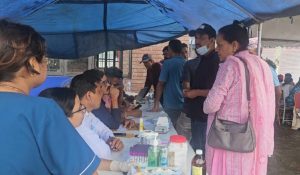
First and foremost, families searching for missing relatives must come forward to submit reference samples at designated medical centres; without a reference sample, a DNA profile generated from a body cannot be matched to anyone.
Given the scale, where thousands may be affected, and individual bodies may yield multiple fragmented samples, this process requires immense patience. At our current pace, completing the primary laboratory profiling will likely take around a month, though overall operational timelines remain subject to government directive.