
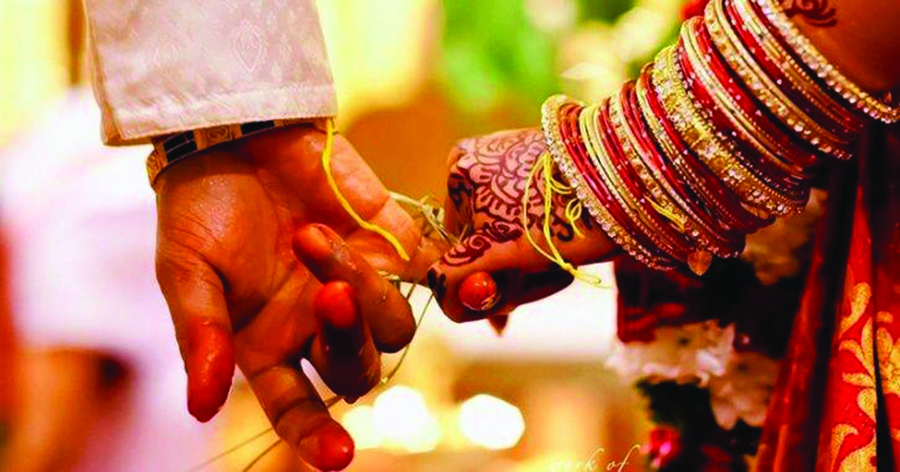
I have gone through many nights where even the smallest conversation about marriage feels like a departure rather than a celebration of unity. As a twenty-two-year-old daughter, I often find myself awake at night, staring at my white ceiling, crying over a thought that refuses to soften: that one day I will leave this home. Not visit less, not adjust slightly—but leave. Completely. The rooms, the belongings, the walls—everything that raised me—is expected to become memories.
And I wonder, why is this always unquestioned?
Why is it that in almost all marriages in Nepal, the conversation about where and how to live is already decided before it even begins? Why must one person’s life shift completely, while others continue almost uninterrupted?
I am writing this out of exhaustion—from carrying a future that feels pre-written, one that you cannot even properly question. The truth is, leaving is deeply difficult and uncomfortable. And if I feel this so strongly, how many others have felt the same and remained silent?
We have normalised a system rooted in long-followed tradition, where women are expected to adapt, relocate, and rebuild after marriage—often without being asked how it feels. Strength is measured by how well they adjust. But we rarely ask whether it is fair.
This is not about replacing one expectation with another. It is not about declaring that men must now move into their wives’ homes. It is about asking a question that past generations have avoided:
Why is it almost never an option?
Why don’t couples openly discuss living arrangements as equals? Why is the idea of a man moving into his wife’s home still treated as unusual, even uncomfortable?
There needs the environment to turn this quiet discomfort into visible dialogue. A project that encourages men to consider moving into their wives’ homes can open conversations and support a more balanced union between two people. The goal is not to persuade every man to move, but to ensure that when couples plan their lives, they genuinely have a choice.
Project Ghar Jwai
It is not a campaign against tradition, but a challenge to a long-unquestioned misconception. The project aims to highlight, feature, and celebrate individuals who choose alternative living arrangements after marriage, especially those where men willingly move into their wives’ homes.
It also seeks to recognise men who challenge this norm, not as exceptions, but as examples of evolving partnerships. The initiative will prioritise families with only daughters, who often carry silent anxieties about care, legacy, and support. It will conduct surveys and social dialogues to understand public attitudes, explore historical and cultural contexts, and build a visible, positive narrative, replacing stigma with respect.
People create culture. If that is true, then what we consider “normal” today is simply what has been repeated enough times to feel unquestionable. And repetition can change. Alternatives flourish when misconceptions are removed. Parents of daughters may no longer feel the quiet grief of “losing” a child after marriage. Decisions can become conversations, not assumptions. Most importantly, young women like me may no longer lie awake at night, feeling that their future requires them to walk away from everything that shaped who they are.
A truly progressive society is not one that blindly follows unfair practices in the name of tradition, but one that questions them.
So no, this is not just about asking men to leave their homes. It is about asking why women have never been given the same right to stay. And until that question becomes less uncomfortable, until it becomes part of honest conversation within marriages, we cannot claim to fully understand equality.
This article is an open call to anyone willing to support the belief that equality should be lived, not just spoken.
Project Ghar Jwai cannot grow as a solitary idea. It needs voices, stories, and collective courage. I invite students, researchers, families, lawmakers, and especially young men willing to rethink these norms to be part of this initiative and set an example. Whether by contributing to research, sharing experiences, participating in surveys, or simply starting conversations within your own circles, your involvement matters.
Change is built piece by piece, so why not start now?
If we come together with courage and honest intention, we can begin to deconstruct a narrative that has remained unchallenged for far too long and has quietly shaped countless lives.