Kathmandu, March 26
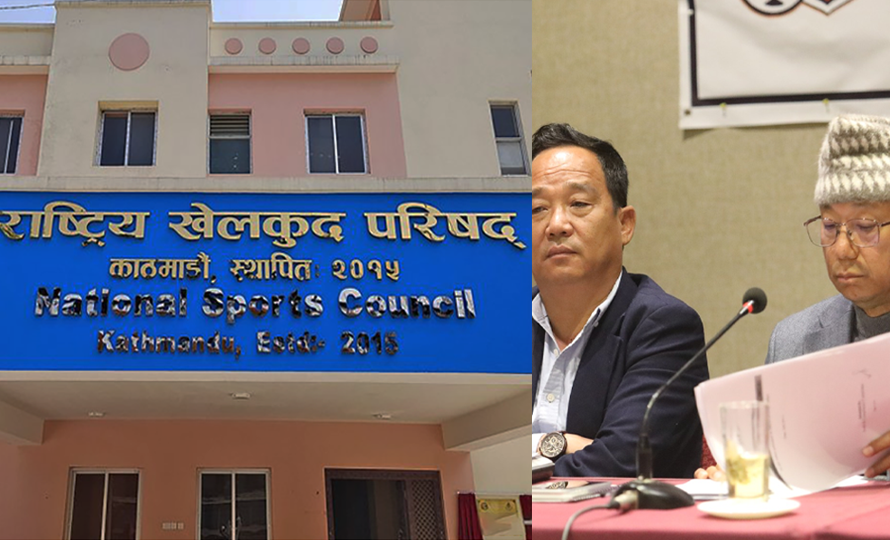
The National Sports Council (NSC) has suspended the leadership of the All Nepal Football Association (ANFA).
After repeatedly failing to comply with its directives, a meeting of the NSC Executive Committee on Wednesday decided to suspend the ANFA leadership for three months under Section 29(2) of the National Sports Development Act, 2017.
The provision states that if any association fails to follow the council’s directives, it can be suspended for up to three months. Accordingly, the ANFA leadership under Pankaj Bikram Nembang has been suspended for three months.
The NSC said the association appeared to ignore national laws by prioritising instructions from its international body instead of following repeated written directives from the regulator.
On Tuesday, the NSC issued a 24-hour ultimatum to ANFA, asking it to clarify why action should not be taken. After ANFA responded on Wednesday, stating that it would not halt the election, the NSC moved to suspend it.
The NSC concluded that ANFA, which is required to operate within the framework of its approved statute and in accordance with prevailing laws, had instead described itself as an autonomous body and failed to provide a satisfactory response as requested.
“As making sure organisations follow existing laws and approved statutes cannot be seen as interference, ANFA’s written response via email was found unsatisfactory and without valid justification. No action was also seen as per Rule 10(1) of the National Sports Development Regulations, 2079 (second amendment). Therefore, under Section 29(2) of the National Sports Development Act, 2077, the Executive Committee has decided to suspend the association for three months,” the letter states.
The controversy began after the current ANFA leadership attempted to hold early elections, something not included in the statute, three months before the end of its term, in a bid to seek re-election.
As ANFA moved forward with the election, the NSC repeatedly wrote to it, instructing it not to conduct elections without approval. However, ANFA defied the directive and insisted on holding the election on March 27 at any cost, prompting the NSC to suspend it.
Following the suspension, Nepali football is likely to face further crisis. There is a strong possibility that FIFA could also suspend ANFA. If that happens, Nepal could lose participation in international competitions as well as FIFA funding.
The NSC has also directed ANFA to comply with nine points and inform the council accordingly, stating that compliance must be in line with prevailing laws.
After ANFA decided to hold early elections, the NSC sent an 11-point directive to ANFA on January 6. Among those, it has now instructed compliance with nine points.
The points include:
- The association’s statute must include a preamble and short title and be implemented only after approval from the council, in line with Rule 7(jha) of the National Sports Development Regulations, 2079.
- The definition section of the statute must specify that “Act” refers to the National Sports Development Act, 2077.
- The definition section must also specify that “Regulations” refers to the National Sports Development Regulations, 2079.
- The statute must ensure elections of office-bearers and members every four years through a democratic process, as per Section 22(c) of the Act.
- Elections must be conducted in accordance with Sections 22(4) and 22(5) of the Act.
- Provincial and district associations must be formed in line with Sections 23 and 24 of the Act, with proper structure and representation ensured through elections at respective levels.
- As per Rule 7 of the Regulations, each association must hold a general assembly within three months of the end of the fiscal year, conduct periodic elections every four years, and obtain council approval for such elections.
- Necessary amendments and revisions must be made to the statute in accordance with prevailing laws.
- Provisions related to ANFA elections (Articles 33 to 37 of its statute) must comply with the approved statute and existing regulations.