

Barcelona (Spain): Andrés Iniesta’s extra-time goal in the World Cup final in Johannesburg, South Africa, made Spain world champions for the first time. But the joy of that historic moment wasn’t confined to South Africa alone. Thousands of kilometres away, Spain’s streets, squares, bars and public spaces stayed awake all night. Among that crowd were Nepalis living in Spain, who celebrated that history-making moment alongside Spanish fans.
Sixteen years later, history has arrived at a similar turning point. In today’s FIFA World Cup final at a stadium in New York-New Jersey, USA, Spain faces Argentina for a second title. The Nepalis who were working in bars while watching the match back then are now running their own businesses. Some recall the victory march in Bilbao, others the night spent with thousands of fans at Barcelona’s Plaça d’Espanya. Some are currently in Belgium or Germany, but their hearts are still waiting for Spain’s win.
Akkal Bohara, a social worker, businessman and Everest climber who runs the “Rara Restaurant Coffee Bar” in Alfaz del Pi in Costa Blanca, still gets emotional remembering the 2010 final. He said he was working in a bar at the time, and the moment of Iniesta’s extra-time goal that made Spain world champions for the first time still comes vividly before his eyes.
Bohara, who watched that final 16 years ago while working at a restaurant, is now preparing to watch the game with customers at his own restaurant. He said his support is entirely for Spain because of the opportunities and sense of belonging Spain has given Nepalis, adding that out of this same affection he had even flown Spain’s flag atop Everest’s summit. He mentioned that many customers from Norway, the Netherlands and Belgium who visit his restaurant are also supporting Spain, so he expects today to be busier than usual.
Tulasi Gurung, who has been living in Bilbao in Spain’s Basque region, was also a direct witness to the victory march after the 2010 World Cup win.
“The Nepali community was quite small back then, whereas now there are many more Nepali friends around,” says Gurung to Onlinekhabar. “I even took part in the victory march after Spain’s win, it was an unforgetable moment.”
This time too, he plans to watch the match at Bilbao’s public fan zone, saying his wish is simply for Spain to win the World Cup again.
Yagya Narayan Poudel, currently on summer vacation in Germany, recalled watching the 2010 final on a big screen with thousands of fans at Barcelona’s Plaça d’Espanya. He said the excitement and joy of that night still can’t be forgotten, and that even though he’s in Germany now, he’ll watch the final with his family.
Gopal Regmi, who watched the 2010 final on a public screen in Barcelona, now lives in Belgium. Despite the distance, his support remains with Spain. He said the celebrations after Spain’s 2010 win remain one of the unforgettable moments of his life, and that he believes Spain will repeat that same joy this time.
Ram Krishna Pudasaini still keeps a special memory from watching the 2010 final at the Hyundai Fan Park at Cibeles in Madrid. He said he still has a bag he received as a gift after the match, with which he has travelled to more than 25 cities across 15 countries, mending it and reusing it whenever it wears out, calling it his lucky memento.
Recalling that he’d had the chance to sit and watch the match alongside well-known TV presenter Kiko Matamoros back then, he said this time he’ll watch the final with his family in Nepal, adding that wherever he is, his support will be for Spain.
All of Spain in football mode
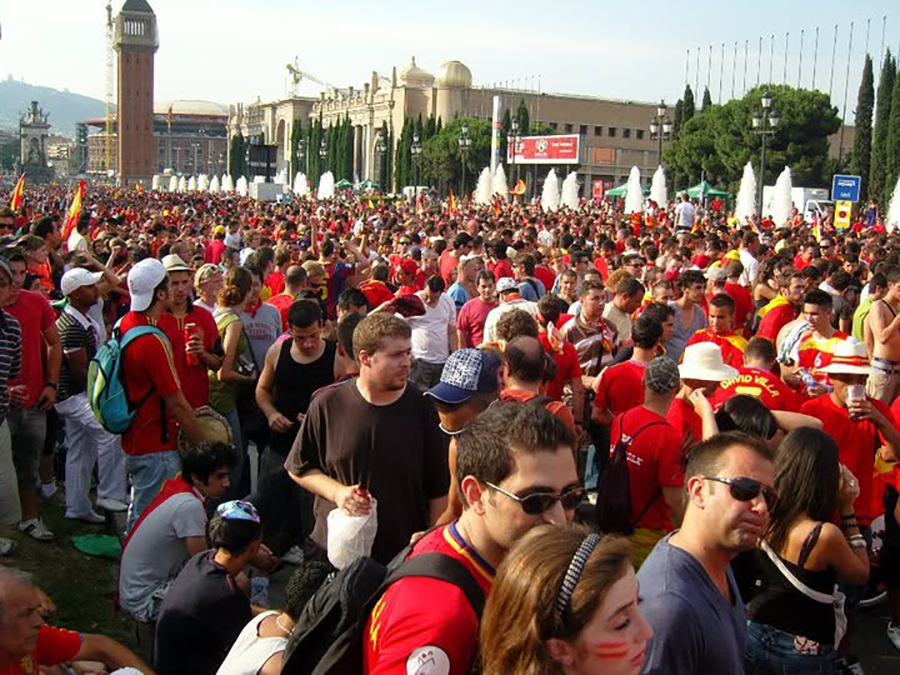
It’s not just Nepalis, the whole of Spain is awaiting the World Cup final. Large public screens have been set up in major cities including Barcelona, Madrid, Valencia, Seville and Malaga. Dozens of municipalities in Catalonia have arranged live broadcasts of the final in parks and public squares.
Anticipating a bigger-than-expected turnout, Barcelona’s city government moved the large screen it had initially planned to place at Les Corts to the Marina del Fòrum platform at the last minute. Municipalities including L’Hospitalet, Badalona, Tarragona, Reus, Salou, Gavà, Cornellà, Terrassa and Sabadell have also arranged public viewings.
After Spain reached the final, Madrid’s streets echoed with red-and-yellow flags, music, car horns and chants of “España” until midnight. Plaza de la Cibeles, the fans’ main gathering spot, is expected to fill again with thousands of supporters on Sunday.
Excitement for the final is also visible at restaurants and bars, with table bookings rising in many places days in advance. According to business owners, the night of the final will be far busier than a typical Sunday.
Contest between two generations
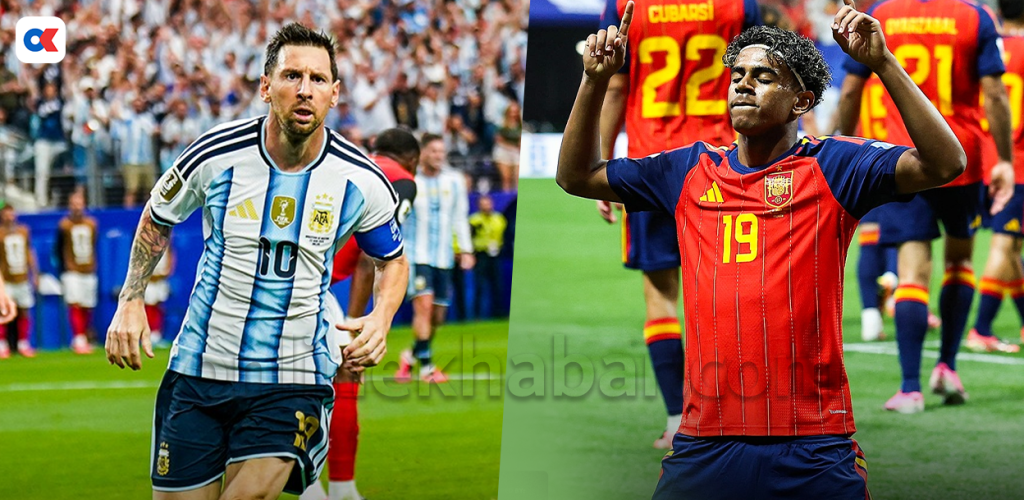
This final is also being viewed as a contest between two generations: on one side, 39-year-old Lionel Messi aiming for a second consecutive World Cup, and on the other, 19-year-old Lamine Yamal leading Spain’s bid for a second World Cup title.
Messi spent his golden club career at Barcelona, and Yamal too is a product of Barcelona’s “La Masia” academy, which is why many see the Spain-Argentina final as more than just a match: a contest between two generations, two footballing cultures and two eras.
Sixteen years ago, after Iniesta’s goal, Spain’s streets stayed awake all night. On Sunday night, those streets hope that history repeats itself. For Nepalis living in Spain too, this isn’t just a World Cup final; it’s another special night tied to the joy of the country they consider their second home.