
Kathmandu, August 29
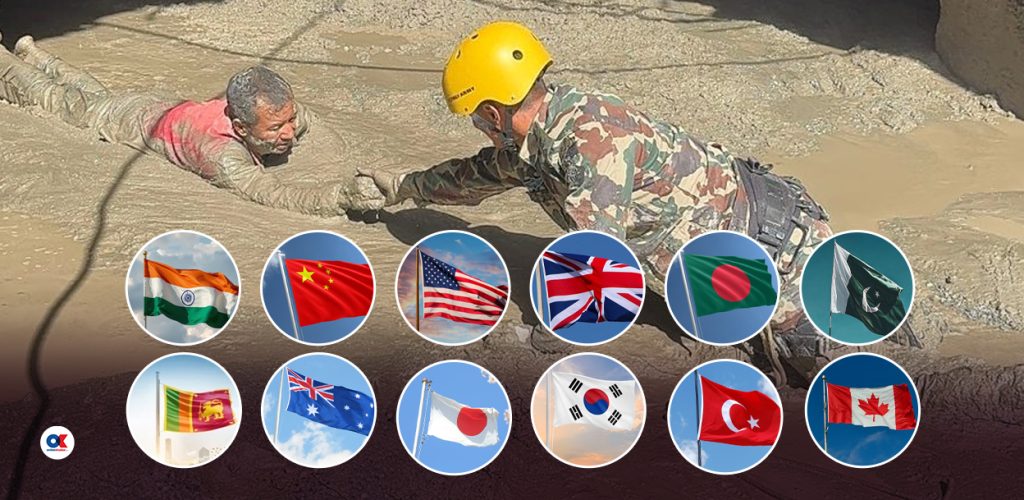
More than 12 countries have sought permission from the Nepali government to provide emergency assistance and participate in rescue operations for people affected by the Rasuwa floods.
India, China, the United States, the United Kingdom, Canada, Bangladesh, Pakistan, Sri Lanka, Australia, Turkey, South Korea and Japan are among the countries that have offered assistance.
They have mainly proposed three types of support: emergency rescue operations, medical assistance and financial aid.
Bangladesh and Sri Lanka have particularly emphasized providing medical assistance, while the other countries have offered emergency rescue teams and other rapid-response support.
The Nepal government is prepared to accept the second and third types of assistance—medical and financial aid. However, it does not appear immediately willing to accept foreign involvement in emergency rescue operations.
The concerns expressed by the Nepali Army, which is leading rescue operations on the ground, as well as the government’s geopolitical considerations and past experiences, appear to be influencing this position.
According to government sources, Nepal wants to rely on its own capacity for two main reasons.
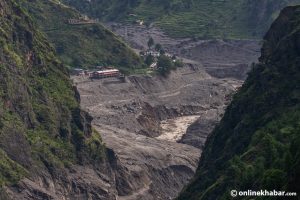
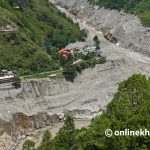
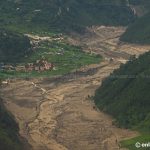
First, addressing the landslides and floods originating in the mountainous region near the Chinese border requires operations in deep gorges and narrow valleys.
Government officials say the Nepali Army, Armed Police Force and Nepal Police possess the necessary geographical knowledge and expertise. In particular, the Nepali Army’s experience, courage and capacity in disaster response are considered key factors.
Second, officials say that some countries involved in disaster assistance in the past had displayed geopolitical interests, both directly and indirectly. While they initially appeared focused on humanitarian rescue, there were concerns that they might seek to prolong their presence even after their assistance was no longer required.
Government officials cite attempts to take control of the tower at Tribhuvan International Airport for security purposes following the April 2015 earthquake as one of the clearest examples.
“It may not be very difficult for anyone to travel from Bidur to Betrawati, but reaching the areas from Syabrubesi to Rasuwagadhi, where more extensive rescue operations are needed, is another matter. Instead, we may end up having to manage them,” a senior army official told Onlinekhabar.
“Our time could be spent coordinating with teams that are supposed to be working independently. That could also affect the rescue operations already underway.”
The military official said flying helicopters through narrow gorges and valleys is difficult and that there are no suitable landing areas for large helicopters such as the Mi-17. The official added that countries offering emergency rescue assistance may not be prepared to operate without helicopters and suggested that it would be better for them not to deploy under the current circumstances.
Government officials, however, said Nepal has requested assistance from two countries for rescue operations involving tunnels.
Foreign Minister Shishir Khanal told Onlinekhabar, “We have already sent timely requests to India and China for the assistance needed to rescue employees, workers and experts trapped in tunnels. We have received positive responses from both sides. Something may happen soon.”
Indian External Affairs Minister S. Jaishankar said on Friday that India stands in solidarity with Nepal over the disaster and is ready to provide the necessary response and assistance.
He made the remarks after personally meeting Indian citizens who had escaped the flood risk while returning from Gosainkunda and Kailash Mansarovar.
At another meeting held at his ministry, Jaishankar said that Indian embassies in Kathmandu and Beijing were providing necessary information and developing strategies for rapid action. However, he did not specify what those actions would involve.
Nepali officials believe Jaishankar’s reference to rapid action may relate to rescuing employees and workers trapped inside tunnels.
The Nepali Army also appears more flexible about accepting assistance from the two neighbouring countries for tunnel rescue operations. Another government official indicated that emergency rescue teams from India and China could arrive soon.
“Teams also came during the earthquake, so this is nothing unusual,” the official said. “Humanitarian rescue is the first priority during a disaster.”
Nepali Army spokesperson and Director of the Directorate of Public Relations and Information, Assistant Rathi Rajaram Basnet, said the army had deployed its entire team for emergency rescue and search operations and that the government should decide matters concerning international coordination.
“All our teams are in the field. Even though I am the spokesperson, I am personally involved in rescue operations in the Trishuli area,” he said. “Whether those wishing to participate in rescue operations should be granted permission is not our decision. We are carrying out our responsibilities.”
Basnet said the army’s rescue teams were aware of the situation in the tunnels. However, complete information has not yet been consolidated because some tunnels remain blocked, some people who may have escaped have not yet made contact, and communication links have been disrupted.
“We have used our expertise as much as possible. On Friday alone, we opened an exit point of Trishuli Three A and rescued four people,” Basnet said.
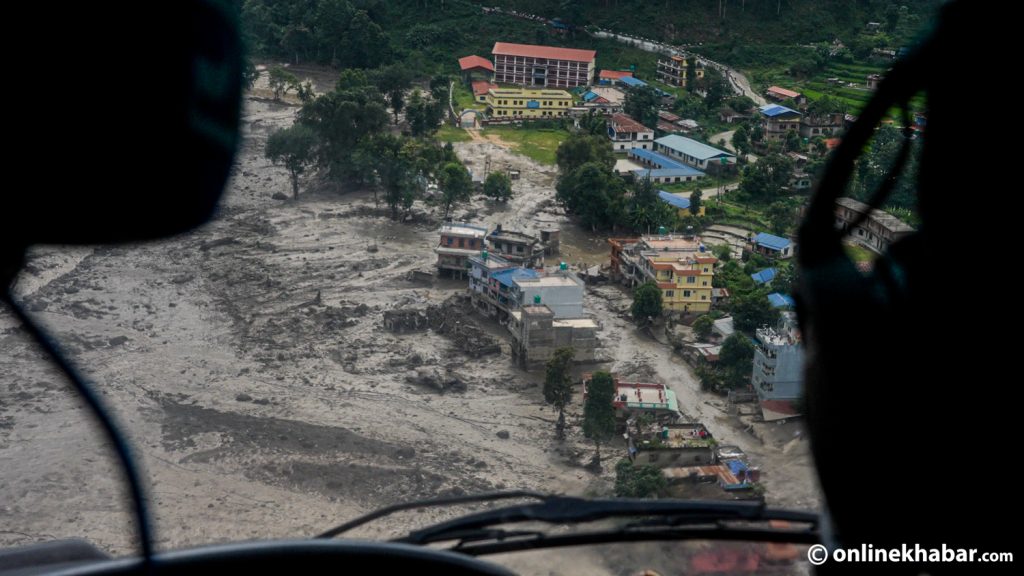
“However, the floods have completely changed the terrain. There is no way to take bulldozers and cranes to the affected areas. Even though we have equipment, the mud has made it difficult to identify locations.”
Basnet said knowledge of the geography of the affected areas, including Rasuwa, Nuwakot and Dhading, was extremely important and indicated that those seeking to join emergency rescue operations should take this factor into consideration.
Some observers have expressed concerns that, despite disaster response being an area of expertise for the Nepali Army, the government could use the army’s role to demonstrate political activism. The army, however, has rejected such concerns.
The army said it had repeatedly carried out disaster response operations in the past and challenged critics to provide examples of instances where it had subsequently shown political interest.

Critics have often commented that Prime Minister Balen Shah and his government are particularly close to the military. They have cited Shah’s past remarks welcoming the army’s role during his tenure as Kathmandu mayor and during the Gen Z movement.
However, senior government officials have urged people not to view the matter with suspicion.
“Where our capacity is insufficient, we must use the skills of those who are good at disaster response,” a government official said. “We should make maximum use of the army and police. If it becomes too difficult, we must consider other options.”
However, the government has little time to consider alternatives.
Bodies swept away from Rasuwa and Nuwakot have begun to be found as far away as Chitwan and Nawalparasi and even along riverbanks in India. There are growing concerns about decomposing bodies and the possible outbreak of disease.
Those who have narrowly survived could also face further danger if they are not rescued in time or if another possible flood occurs.
According to official figures, 579 people have died so far in the floods that struck on Wednesday morning. Injured people, including those who have suffered permanent injuries, continue to arrive at hospitals, while others are receiving treatment. A complete list of missing persons has not yet been released, and the death toll continues to rise.
More than 500 of those affected by the Rasuwa floods are citizens of 33 countries. Their respective governments have also expressed concern about their nationals and sought permission from Nepal to participate in rescue operations.
The floods began after a mountain collapse on Nepali territory above the Lhende River in the Nepal-China border region. The disaster also caused heavy casualties on the Chinese side after the floods crossed the border.
The sensitivity of the area, given its proximity to the Chinese border, appears to have made Nepali authorities particularly cautious.
China is also believed to have taken note of international organizations depicting the area as Tibetan territory and foreign media referring only to Tibet rather than China.
According to a high-level source, China is unhappy with attempts to geopoliticize what it considers a humanitarian rescue issue. Analysts say this could also affect international emergency rescue assistance.