
When a country cannot reliably produce or procure essential medicines during a crisis, the problem is not simply commercial. It becomes a matter of health security. Nepal learned this painfully during the 2015 border disruption, when medicine shortages and interruptions to health services showed how quickly treatment can become hostage to logistics.
The lesson should have changed the way Nepal thinks about pharmaceuticals. A decade later, the country has made progress, but the underlying vulnerability remains.
Nepal has dozens of pharmaceutical manufacturers, skilled pharmacists and technicians, and a domestic industry that has historically supplied roughly 45–46% of the medicines market by value. Yet the chemistry behind that production is still overwhelmingly imported. A Department of Industry study found that 80% of pharmaceutical raw materials came from India, 15% from China and 5% from other countries.
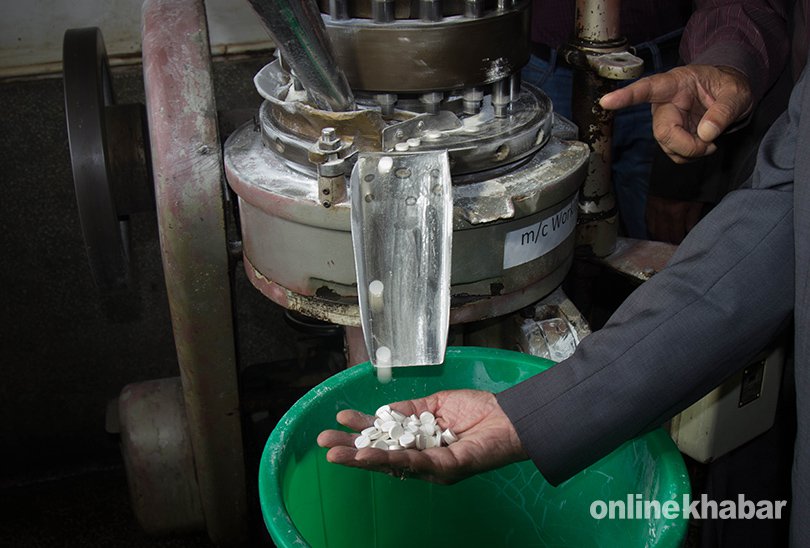
For many products, Nepal handles formulation, manufacturing and packaging. But it remains dependent on external suppliers for the active ingredients and other critical inputs that make production possible.
That distinction matters. A tablet made in Nepal from imported chemistry is genuine local manufacturing and creates real value. But it is not full medicine security. If an API shipment stops, a factory in Nepal can stop just as surely as an imported finished medicine can disappear from a warehouse.
The national debate therefore needs to move beyond the old binary of “local versus imported”. The real question is how much strategic capability Nepal needs to guarantee continuous access to priority medicines at an acceptable quality and cost when borders, freight routes, currency markets or geopolitics become unstable.
Nepal is not starting from a policy vacuum. Its National Medicines Policy already speaks of making the country self-reliant in pharmaceutical manufacturing. It calls for incentives for essential medicines, encourages production of active ingredients, excipients and packaging materials, supports technology transfer and exports, and gives priority to national industries in public purchasing in accordance with financial rules.
The problem is not the absence of policy. It is the absence of a sufficiently funded, time-bound and coordinated system for putting that policy into practice.
Nepal now needs a National Pharmaceutical Manufacturing and Medicine Security Strategy. It should not be a slogan, nor a shield for inefficient firms. It should be an industrial and health compact with clear targets, budgets, accountability and a public scorecard.’
The case is constitutional as well as economic. Article 35 of Nepal’s Constitution guarantees every citizen the right to free basic health services and protection from denial of emergency health care. The Ministry of Health’s own sector review has acknowledged medicine stock-outs, limited domestic production, weaknesses in pharmacovigilance and quality control, and the need to reform procurement and supply chains while increasing domestic production of quality medicines.
A right to health cannot be delivered reliably if the medicine supply system is chronically fragile.
But domestic production is valuable only when quality is beyond doubt. The regulatory side of the equation matters just as much as industrial capacity.
The Department of Drug Administration’s own WHO Global Benchmarking Tool self-assessment placed Nepal’s regulatory functions at maturity level 1, with major gaps in vigilance, market surveillance, marketing authorisation and laboratory capacity. In March 2026, the Ministry of Health, DDA and WHO held a strategic dialogue to develop time-bound roadmaps for stronger regulation and national quality-control capacity.
That work should become a central part of the industrial strategy rather than remain a separate conversation.
Nepal should reject the false choice between industrial promotion and rigorous regulation. Protection without quality can create complacency. Quality regulation without industrial strategy can leave a small country permanently dependent on imports.
Nepal needs both: a regulator capable of removing substandard products and a manufacturing base capable of producing medicines that can compete internationally.
The international direction is already clear. The World Health Assembly’s resolution WHA74.6 calls for an all-of-government approach to sustainable local production, including stronger regulation, financing, skilled workers, technology transfer, research and development, demand aggregation and private investment.
WHO has already worked with Nepal to strengthen local producers in current Good Manufacturing Practice and WHO prequalification. Nepal should use that support to build export-grade capability rather than simply increase the number of factories or brands.
Bangladesh offers a useful regional lesson, although Nepal should learn from it rather than attempt to copy it. Bangladesh’s investment authority reports that its pharmaceutical industry meets about 98% of domestic medicinal demand and exports to more than 150 destinations.
The 1982 policy era helped create space for domestic production. But Bangladesh’s success also reflects market scale, sustained industrial learning and the intellectual-property flexibilities available to least developed countries. Even today, Bangladesh imports large volumes of APIs.
The lesson is not that one restrictive policy can produce a miracle. It is that decades of coordinated policy can change what a country is capable of producing.
Nepal’s own transition out of the LDC category makes this more urgent. The country is currently scheduled to graduate from the UN LDC category on 24 November 2026, although the government has requested an extension until 2029 and the matter awaits final UN action.
WTO rules provide LDCs with special pharmaceutical patent transition arrangements only while they remain in the category. Whether Nepal graduates in 2026 or later, it needs a post-LDC medicines and intellectual-property strategy now.
That should include patent-examination capacity, lawful public-health flexibilities, technology-transfer pathways and an assessment of which products could become commercially or legally harder to manufacture after graduation.
None of this means Nepal should try to manufacture every API itself. That would be economically unrealistic and could create environmental risks.
The country should instead identify a Strategic Medicines and Inputs List covering essential medicines, APIs, excipients, packaging materials and devices whose disruption would cause the greatest health harm. Nepal could then select a limited number of high-volume or high-risk inputs for domestic or regional production, diversify suppliers for the rest, and maintain strategic buffer stocks where local production is not viable.
An API and pharmaceutical-inputs cluster could form part of that strategy, but only after serious feasibility analysis.
India’s bulk-drug parks show why shared infrastructure can matter. Common effluent treatment, solvent recovery, testing facilities, utilities and waste management can reduce the cost and environmental burden of chemical manufacturing.
Nepal should not build an “API park” as a prestige project. It should build only what the demand, environmental assessment and commercial case can justify.
Public procurement may be the state’s most powerful industrial tool.
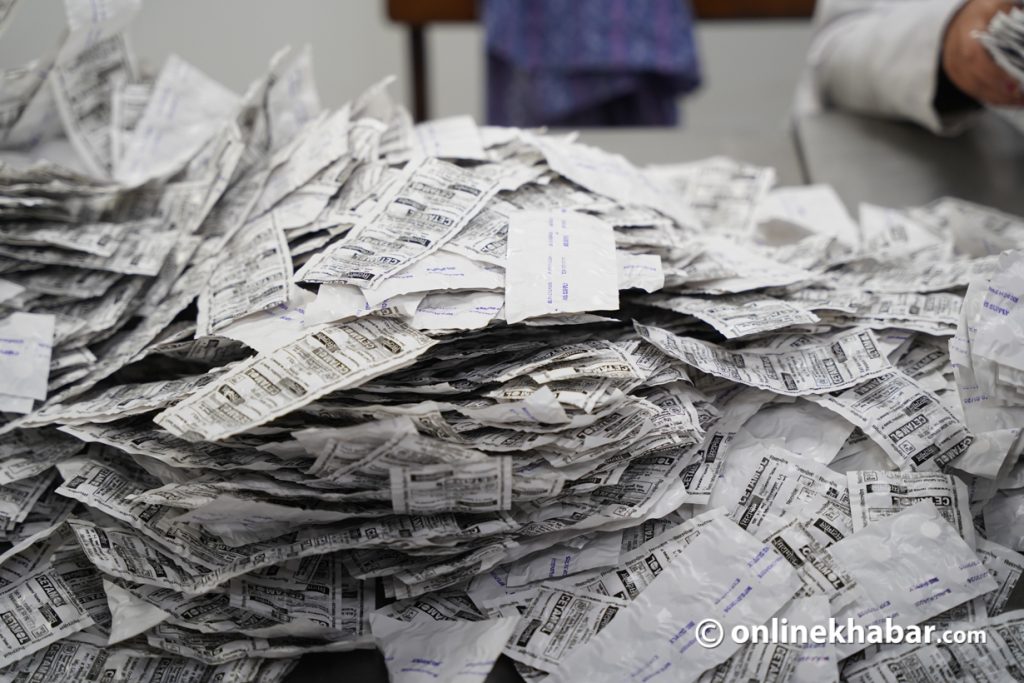
Nepal buys medicines for basic health services, hospitals and public programmes every year. The goal should not be to give automatic preference to locally made products. Procurement should reward verified quality, reliable delivery, resilience and genuine local value addition.
Multi-year framework contracts for priority medicines could give efficient local producers the certainty they need to invest in better plants, validation, bioequivalence, laboratories and skilled staff while preserving competition and price discipline.
The market itself also needs reform.
Nepal’s health-sector review notes that the Public Health Service Act requires prescribing by generic name, but implementation remains weak. Instead of arbitrary limits on the number of brands, Nepal should move towards transparent generic-name registration, stronger dossier requirements, bioequivalence requirements for selected high-risk or narrow-therapeutic-index products, electronic product and price databases, removal of inactive or non-compliant products, and risk-based post-market surveillance.
The aim should be to shift competition away from promotional intensity and towards quality, price and therapeutic value.
The final test is whether Nepal can become an exporter.
A resilient industry cannot be built by permanently insulating companies from competition. Firms that receive public support should be required to climb a quality ladder, from national GMP to stronger cGMP capability, validated analytical systems and pharmacovigilance, and eventually to WHO prequalification or registration in demanding export markets for selected products.
Public support should buy capability, not dependency.
The government should therefore publish a 10-year Pharmaceutical Manufacturing and Medicine Security Strategy, backed by a 100-day launch programme, three-year milestones and annual public reporting.
It should be jointly owned by the ministries responsible for health, industry, finance and commerce, with the Department of Drug Administration, National Medicines Laboratory, public procurement bodies, universities, hospitals, professional councils, patient representatives and manufacturers involved.
No single ministry can solve a supply-chain problem that crosses health, trade, taxation, intellectual property, skills, energy, environment and regulation.
The strategy should begin with a clear map of Nepal’s pharmaceutical vulnerabilities. Essential medicines and critical inputs should be classified according to clinical importance, import concentration, lead times, substitutability and stock-out risk. That would help determine what Nepal should produce, what it should diversify, what it should stockpile and what it should secure through regional arrangements.
Backward integration should then be selective, not symbolic. Nepal should commission commercial and environmental feasibility studies for a limited number of APIs, excipients and packaging inputs. Shared utilities, solvent recovery, effluent treatment, analytical laboratories and warehousing should be considered only where the scale justifies them.
Public purchasing should be designed to buy resilience as well as medicines. Multi-year agreements for selected essential medicines could assess suppliers on quality history, delivery reliability, local value addition, supply resilience and total lifecycle cost rather than simply the lowest price.
At the same time, the DDA and National Medicines Laboratory need to be treated as critical infrastructure. Nepal needs a ring-fenced plan to strengthen regulation and move towards WHO maturity level 3, with enough inspectors and assessors, stronger pharmacovigilance, risk-based market surveillance, modern laboratories, digital systems and transparent recall procedures.
Industrial incentives should be tied to measurable improvements. Tax relief, concessional finance, matching grants and customs support should depend on milestones such as cGMP upgrades, validation capability, data integrity, accredited testing, bioequivalence, WHO prequalification or successful export registration.
The country also needs a pharmaceutical research and skills compact linking universities, pharmacy schools, chemistry and biotechnology departments, hospitals and industry. The focus should include formulation science, analytical chemistry, process engineering, biostatistics, regulatory science and biomanufacturing, supported by competitive, milestone-based research grants.
And if Nepal wants to export, it must solve quality first. An export-regulatory desk could help companies identify target markets, understand dossiers and inspections, and use WHO prequalification or regional reliance pathways. Support should focus on products where Nepal can develop reliable and sustainable competitiveness.
Nepal does not need pharmaceutical autarky. No serious country produces everything it consumes.
What Nepal needs is strategic resilience: the ability to keep critical treatment available when one supplier fails; the regulatory capacity to know that medicines are safe and effective; the bargaining power to buy intelligently; and enough domestic capability to prevent every external shock from becoming a national health emergency.
The next crisis should not teach Nepal the same lesson again.
The country already has the policy language. It has manufacturers. It has skilled people. It has WHO support for quality local production.
What is missing is execution at national scale.
Medicines should be treated as critical national infrastructure, alongside food, energy, digital systems and disaster preparedness.
The work should begin now.
Medicine security is not the ability to manufacture everything. It is the ability to keep essential treatment available, affordable and quality-assured when one border, one supplier or one geopolitical shock fails.