Kathmandu, August 18
On Thursday and Friday, a team led by newly appointed Chancellor Brajesh Khanal of the Nepal Academy of Music and Drama, along with Drama Department Head Academician Saraswati Chaudhary, Theatre Department Head Academician Jeet Bahadur Deuja, and academician council member Pariwartan, visited six theatre venues in the capital to hold consultations.
Senior director Ashesh Malla of Sarwanam Theatre, who has had a long journey in the field of theatre, along with performer and director Ghimire Yubaraj of Shilpee Theatre, celebrated actor Dayahang Rai of Mandala Theatre, and Suraj Tamu, who started running his own theatre after struggling with rented halls to stage plays, all expressed happiness that, for the first time in the Academy’s fifth term, the institution had come to their doorstep.
“Seeing the state come to our doorstep and recognise us as its own felt like an entirely new and deeply gratifying experience for us today,” they said.
Nabaraj Budhathoki of Shilpee Theatre, who has continued the children’s drama festival for 18 years, said this was the first time the Academy’s team had reached his doorstep, and that it made him feel proud to call himself a theatre practitioner.
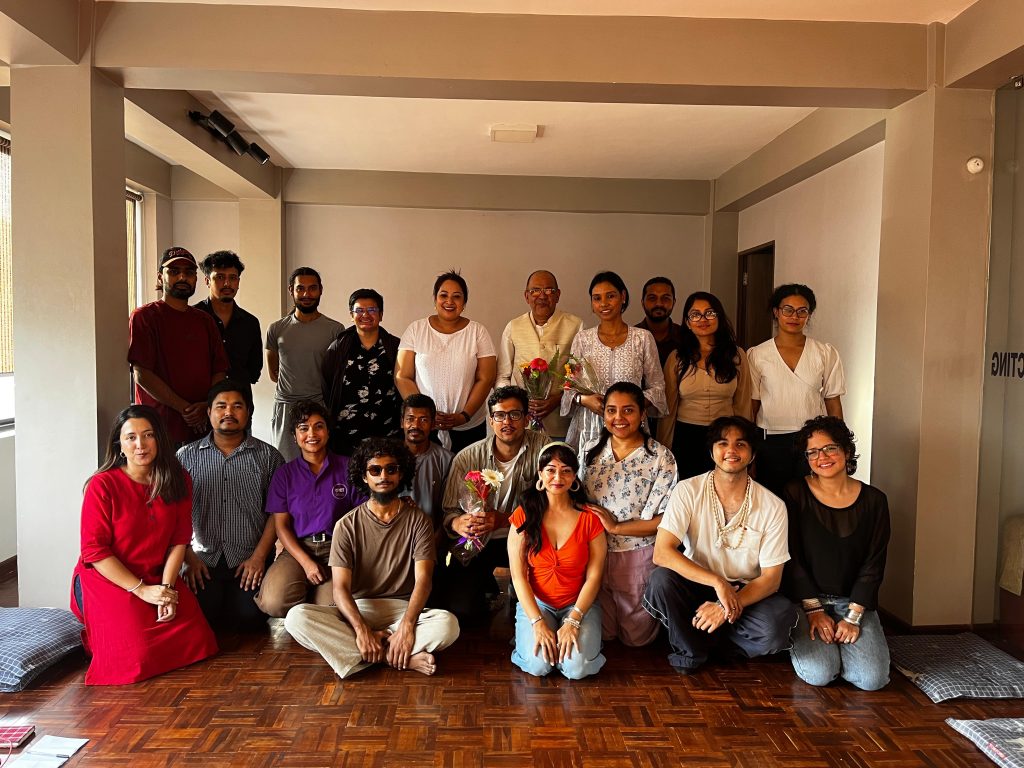
During the consultation, theatre practitioners offered their suggestions for improving the Academy’s policies, planning, and immediate action plans. Theatre practitioners Akanchha Karki and Loonibha Tuladhar of Kausi Theatre advised that the Academy should become a “smart academy” friendly to women, persons with disabilities, and LGBTIQ+ communities. More than 200 theatre practitioners, both affiliated with theatre institutions and independent, active in Kathmandu, shared their concerns and experiences during the consultation. Suggestions included expanding theatre beyond its current capital-centric focus to the rest of the country; providing life insurance for technicians and performers involved in play production and staging; scholarships and writing grants for study; advance agreements with production teams to ensure a state-fixed minimum wage; artist identity cards with associated benefits and concessions; and fee waivers at state-owned theatre halls for staging plays.
Theatre practitioner Prabin Khatiwada said he had heard the government had allocated budget to build theatres in all seven provinces, which he said would help create an environment for independent theatre practitioners who lack venues of their own. Ghimire Yubaraj argued that the programme expenditure within the Academy’s overall budget should be increased. He also proposed that a policy be developed to protect private and community theatre institutions; that currently ad hoc theatre festivals and training programmes be organised systematically, grounded in multilingual and local cultural contexts; and that grants be given to each theatre institution on condition that it produces at least two plays.
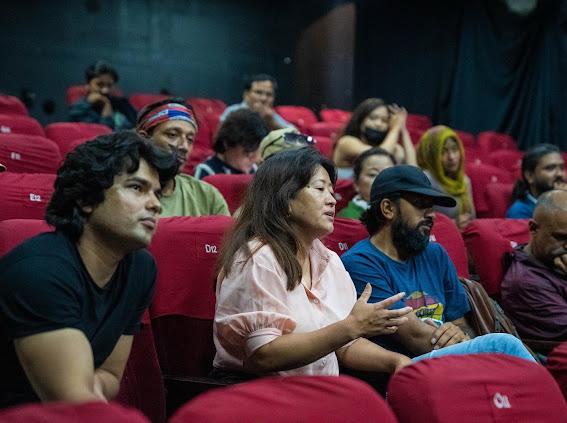
Actor Dayahang Rai struck a somewhat different note. Noting that Mandala Theatre alone had produced more than 150 plays and over 200 performers, he requested that the Academy work to theorise and give conceptual grounding to the plays being staged by them and by others across the country.
Newly appointed Vice-Chancellor Brajesh Khanal had one consistent response: “The Academy has opened its doors today.”
He requested that all theatre venues regularly and transparently share their activities and programmes with the Academy, so they could be compiled and preserved in the Government of Nepal’s official database. He assured them that all the positive suggestions received would be addressed swiftly.