
Madhesh is often described as the birthplace of federalism in Nepal.
The movement that began in the plains was not simply about creating another layer of government. For many in Madhesh, federalism was tied to a much larger promise: political representation, greater autonomy, better access to government and an end to the need to look towards Kathmandu for every decision.
The first Madhesh movement began in 2006/07 under the leadership of the then Madhesi People’s Rights Forum Nepal. Other Madhesh-based parties later joined, and the movement grew around demands for an autonomous Madhesh, federal governance, proportional representation and inclusion.
When the Constitution was promulgated in 2015, Madhesh was still protesting. Madhesh-based parties rejected the Constitution at the time, arguing that it did not address their concerns. Eventually, however, they accepted the Constitution and the federal system it established.
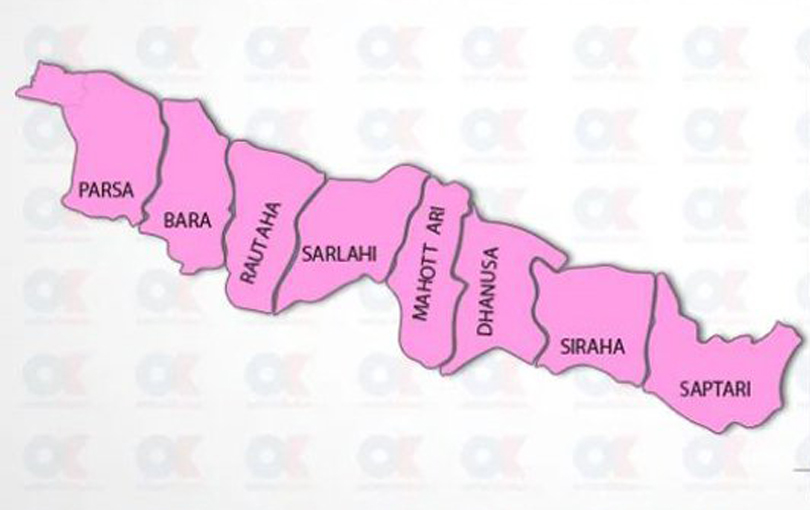
Eight Tarai-Madhesh districts were brought together to form Province 2, later renamed Madhesh Province.
For the parties that had led the federalism movement, this was the moment when years of political struggle turned into an opportunity to govern.
The 107-member provincial assembly gave Madhesh-based parties a majority. The then Federal Socialist Forum, led by Upendra Yadav, emerged as the largest party and joined the Rastriya Janata Party Nepal to form the government.
Lalbabu Raut became the province’s first chief minister.
At the time, the symbolism was difficult to miss. A leader from the movement that had demanded greater political power for Madhesh was now heading the government of the province created through that struggle.
And Raut knew what was expected of him.
Speaking at a programme organised by the Birgunj Chamber of Commerce and Industry shortly after taking office, he said development and prosperity would not be possible without good governance and promised that his government would leave no stone unturned to maintain law and order and good governance.
For many Madhesh residents, it was a moment of genuine hope.
Federalism begins to take shape
The first five years brought visible changes.
Roads were built and paved. Temples, mosques, party palaces and other public structures appeared across the province. New provincial institutions were established and laws were passed.
Federalism also created political opportunities that had previously been difficult to imagine. People from communities that had traditionally remained at the margins of power became provincial lawmakers and ministers.
The Madhesh-based parties deserved credit for much of this. So did their leaders, particularly Upendra Yadav, whose role in establishing federalism as a political agenda in Nepal remains significant.
But governing brought a different kind of test.
The question was no longer whether Madhesh could win political power. It was what its leaders would do with that power.
Some of the provincial government’s programmes initially appeared to offer an answer.
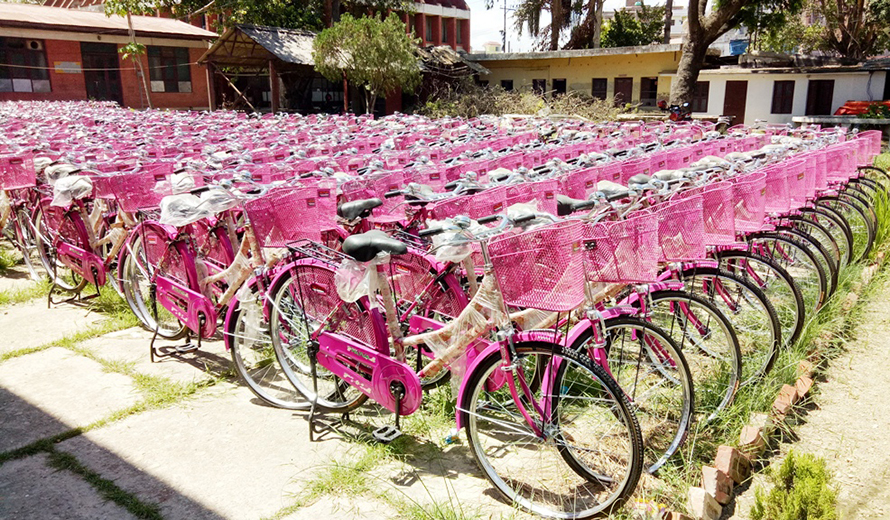
The ‘Chief Minister’s Beti Padhaun, Beti Bachhaun’ programme became particularly popular. Bicycles were distributed to girls, education insurance was introduced, cleanliness campaigns were launched and a Madhesh bus service was planned to connect the provincial capital with district headquarters.
The programmes were visible, practical and politically popular.
But gradually, questions began to emerge over how they were being implemented.
One of the clearest examples was the bicycle programme.
Around 10,000 bicycles were purchased for distribution to girls during Raut’s tenure. The bicycles were later found to be unnamed and substandard, and about 4,500 remain stacked in a government warehouse.
The CIAA filed a corruption case against eight people, seeking Rs 103.3 million in damages. The Special Court eventually convicted two officials, while acquitting the others.
The case became more than a dispute over a procurement process. The bicycles were supposed to represent the promise of a government investing in its daughters. Instead, thousands ended up gathering dust.
And the bicycle case was only the beginning.
From individual cases to a pattern
As Madhesh’s provincial governments changed, questions over governance continued.
Shailendra Prasad Sah, who served as both land management and agriculture minister and later finance minister under Raut, has been charged along with six others over alleged corruption in the construction of the Baghmati Municipal Park and Resort in Sarlahi. The CIAA has claimed that the project involved Rs 393.9 million in corruption.
Then came cases involving elected representatives themselves.
JSP Nepal provincial lawmaker Saroj Singh Kushwaha was convicted by the Special Court for taking bribes and commissions through consumer committees. He was sentenced to four years and one month in prison and fined Rs 3.85 million.
Vijay Yadav, another senior JSP leader who served as finance minister and later land management and agriculture minister under Raut, was also convicted in a corruption case involving a snake-venom project at the Jhalanath Khanal Health Sciences Academy in Sarlahi. He was sentenced to nine years and one month in prison and fined more than Rs 35.9 million.
The controversies were not confined to the first government.
A programme to establish public health laboratories in all 136 local units of Madhesh also became the subject of a corruption case. The CIAA alleged that Rs 520.9 million was misappropriated in the procurement of medical equipment.
The Special Court later convicted three people, including the then director of the Public Health Laboratory, while others were acquitted.
Then came questions over the provincial budget itself.
During the second provincial government, led by Saroj Kumar Yadav, the provincial assembly formed a special committee to investigate large-scale budget reallocations under then Finance Minister Sanjay Kumar Yadav.
The committee found that grants had been distributed unevenly among local governments and reported, among other things, that Rs 420 million had been reallocated using the letterhead of the personal secretary of the industry and tourism minister.
The provincial assembly passed the report and sent it to the CIAA.
But the report eventually returned to the provincial government and remains there.
No action has been taken on the irregularities formally identified by the provincial assembly.
The bigger question
Taken individually, these cases are about procurement, construction, grants, public laboratories, consumer committees and budget allocations.
Taken together, however, they tell a larger story.
When federalism arrived, many in Madhesh expected provincial government to mean something fundamentally different from the government they had known before. They expected power to come closer to them, development to become more responsive and public institutions to become more accountable.
Instead, the province has struggled with the same problems that have long troubled Nepal’s central government: political patronage, allegations of corruption, weak accountability and questions over how public money is spent.
That has gradually changed the conversation around federalism itself.
Federalism was supposed to be a means of transferring power and development closer to citizens. For critics, Madhesh increasingly offers evidence of how that promise can be undermined when political power is not accompanied by stronger institutions and accountability.
The JSP, of course, is not responsible for every problem in Madhesh or every failure of federalism.
But the party occupies a particularly important place in this story. It was among the principal political forces behind the Madhesh movement and was at the centre of the province’s first governments.
That means it receives the political credit for helping establish federalism. It also cannot completely escape responsibility for what followed.
And the political cost is becoming visible.
Political analyst Rojan Janakpur says Madhesh-based parties spent years benefiting from the political momentum created by the Madhesh movement.
“They had been living off the momentum of the Madhesh movement. That is no longer the case. Their very existence is now at risk,” he says.
The parties were reduced from national forces to regional ones in the election on March 5.
Now they are trying to rebuild their position through a new front.
But winning back political ground may prove easier than winning back public trust.
Madhesh affairs expert and senior journalist Chandra Kishore believes the parties lost credibility because of how they behaved while in power.
“If they improve their conduct, they can win some seats in the next election and preserve their existence,” he says.
There is an irony in where Madhesh finds itself today.
The region that once pushed hardest for federalism now has to defend the idea against some of the disappointment created by its own provincial governments.
The debate is no longer simply about whether Madhesh should have political power.
It is about what that power has delivered—and whether the people who fought for federalism still believe their leaders have used it well.