Kathmandu, May 11
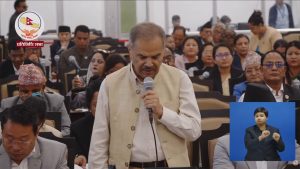
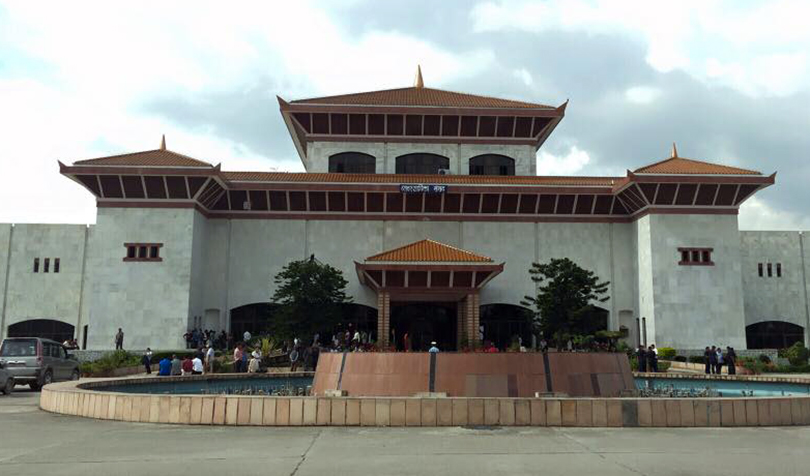
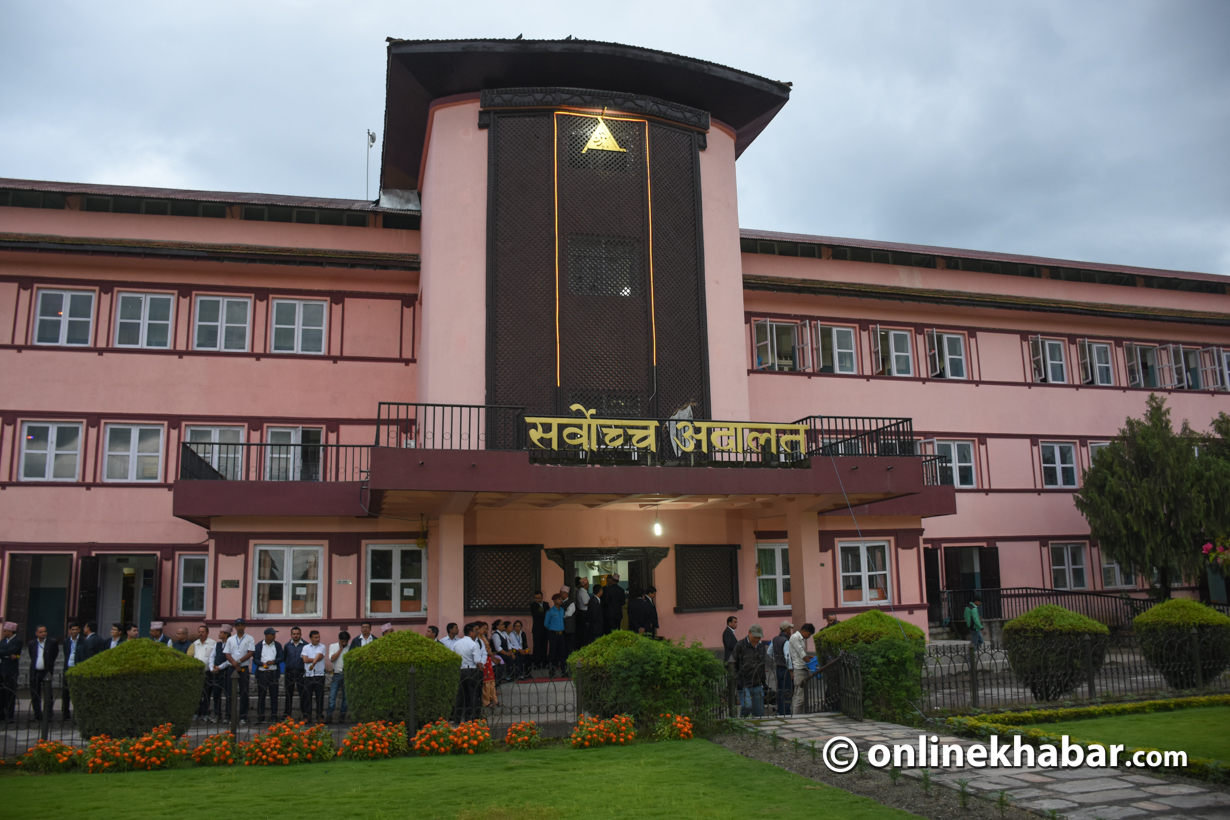
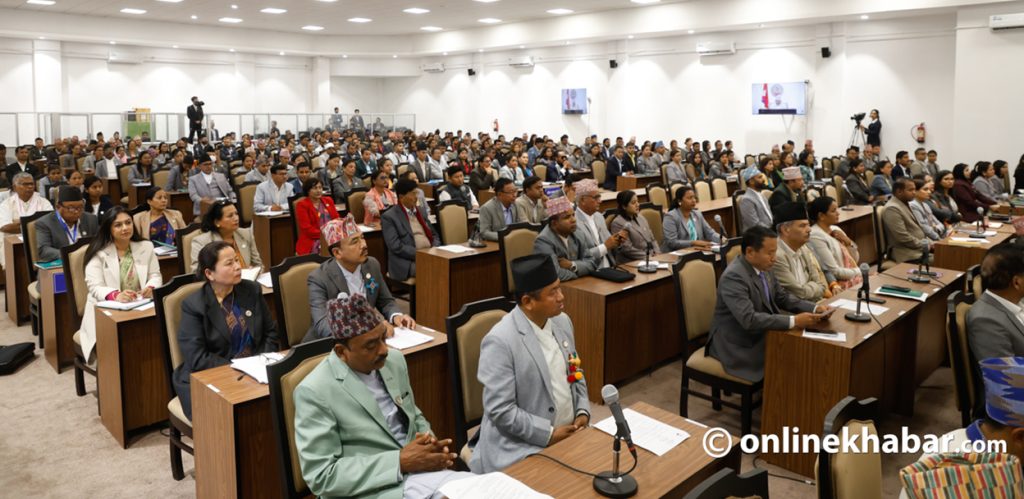
The government is scheduled to table several ordinances previously issued by it in both houses of the Federal Parliament on Monday. Meetings of both the House of Representatives and the National Assembly are set to begin at 2 pm.
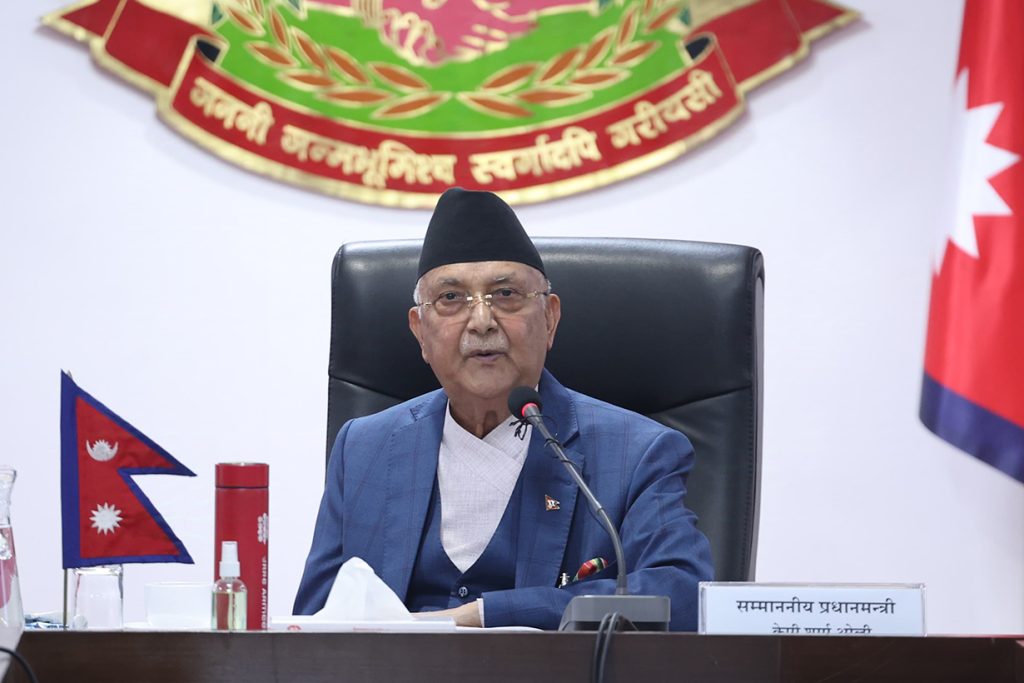
Prime Minister Balen Shah will present the Public Procurement (Second Amendment) Ordinance, the Special Provision Relating to Removal from Public Office Ordinance, and the Constitutional Council (Functions, Duties, Powers and Procedures) (First Amendment) Ordinance.
Finance Minister Dr Swarnim Wagle will table the Asset Laundering Prevention (Third Amendment) Ordinance, while Minister for Law, Justice and Parliamentary Affairs Sobita Gautam will present an ordinance to amend certain Nepal Acts.
Minister for Land Management, Cooperatives, and Poverty Alleviation, Pratibha Rawal, will present the Cooperative (First Amendment) Ordinance. At the same time, Health and Population Minister Nisha Mehta will table an ordinance to amend certain Nepal Acts related to health science academies.
Education, Science and Technology Minister Sasmita Pokharel will present an ordinance to amend certain Nepal Acts related to universities.
Under Article 114 of the Constitution, the government may issue ordinances when Parliament is not in session. Such ordinances must be tabled by the concerned minister at the first meeting after the parliamentary session begins.
After the ordinances are tabled, lawmakers may file notices seeking their rejection.
This provision is included in Rule 95 of the House of Representatives Regulations and Rule 89 of the National Assembly Regulations. According to Rule 95(1) of the House Regulations, any member wishing to present a proposal rejecting an ordinance must submit a notice to the Secretary General, or in their absence, the Secretary, within two days of the ordinance being tabled.
The notice must also clearly mention the reasons for seeking rejection of the ordinance.
Opposition parties generally register such proposals. This time too, opposition parties have criticised the government for introducing ordinances without convening a parliamentary session.
In the House of Representatives, the ruling National Independent Party is just two seats short of a two-thirds majority. Therefore, unless the ruling coalition itself allows it, the chances of a rejected proposal being passed in the lower house appear slim.
However, the National Independent Party has no representation in the National Assembly. Major parties in the upper house, including the Nepali Congress, Nepal Communist Party and CPN-UML, have opposed the ordinances. Members of the National Assembly can also file notices seeking rejection after the ordinances are tabled on Monday.
If an ordinance is rejected by either house, it automatically becomes inactive.
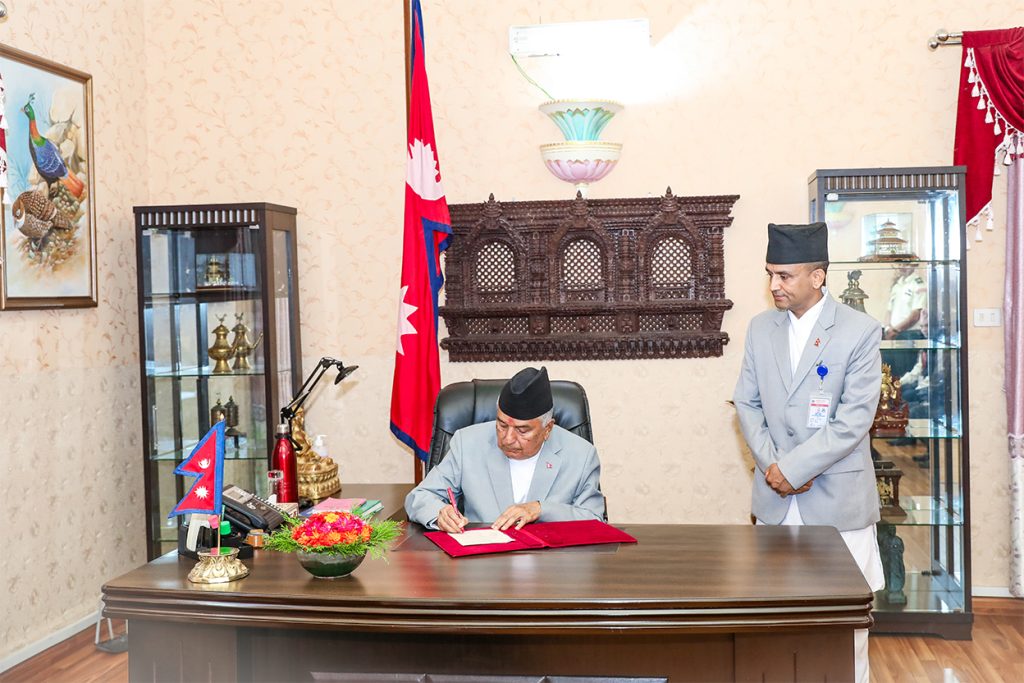
Article 114 of the Constitution states that the President may issue ordinances on the recommendation of the Council of Ministers when immediate action is required, and both houses of the Federal Parliament are not in session.
However, Clause 2 of the same article states that every ordinance must be tabled in both houses of Parliament after the session begins, and if both houses do not approve it, the ordinance automatically becomes ineffective.
This means the ordinances could be rejected if major parties in the National Assembly unite against them.
In the 59-member National Assembly, the Nepali Congress holds 24 seats, the Nepal Communist Party 17, CPN-UML 10, Janata Samajwadi Party two, while Loktantrik Samajwadi Party and Rastriya Sabha have one each, along with two nominated members. One presidentially nominated seat remains vacant.
If approved by both houses, replacement bills for the ordinances must be introduced, passed by both chambers, and authenticated by the President within 60 days of the joint sitting of the two houses. Otherwise, the ordinances automatically lapse.