
Kathmandu, October 13
A fraud scheme involving promises of sending Nepali citizens to Israel has come to light, echoing the Bhutanese refugee scam in which millions of rupees were swindled from people with promises of resettlement in the United States after falsely identifying them as Bhutanese refugees.
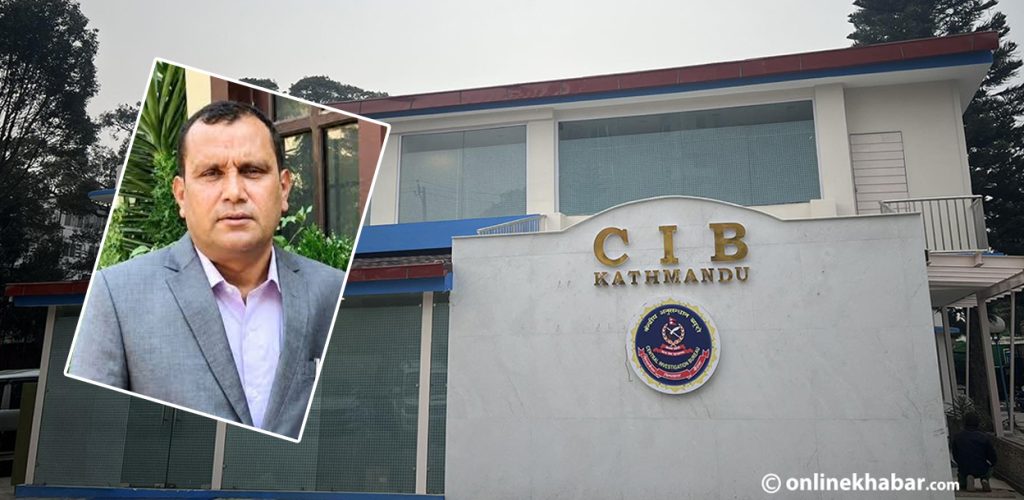
An investigation by the Central Investigation Bureau (CIB) of Nepal Police has revealed that the suspects allegedly used a similar modus operandi, preparing forged documents to convince victims that the Cabinet had decided to send them to Israel.
On June 30, 2019, during the tenure of then Home Minister Ram Bahadur Thapa ‘Badal’, a task force was formed to address the Bhutanese refugee issue. The task force was coordinated by Bal Krishna Panthi, a former joint secretary at the Ministry of Home Affairs. Ganesh Bahadur KC served as an expert, while Deepak Prasad Neupane, then a section officer at the ministry, served as member-secretary.
The Panthi task force’s report was manipulated by adding an annex containing fictitious names, which was then used to defraud people with promises of sending them to the United States. A CIB investigation officer said the suspects in the Israel case had adopted a similar approach, preparing fake documents purporting to show that the Cabinet had made a decision to send the victims to Israel.
According to the officer, Shivaram Shrestha and Gyan Bahadur Karki, who have been arrested in the case, were involved in preparing the forged documents.
“The allegation against the two is that they prepared fake documents claiming to reflect a Cabinet decision. We arrested them in the Mulpani area and have been investigating them,” the officer said.
Shrestha and Karki have told police that a person who appeared to be of Indian origin had asked them to prepare documents resembling official Cabinet decisions. They are accused of receiving money in exchange for preparing the forged documents.
Under a government-to-government (G2G) agreement between Nepal and Israel, Nepali workers have been sent to Israel for caregiver jobs. The suspects allegedly collected money from candidates who took the examination conducted by the Nepal government in 2024, promising that 156 of them would be sent to Israel through a special Cabinet decision.
The group allegedly collected Rs 620,000 per person, using forged Cabinet documents to gain the victims’ trust and invoking the name of the prime minister’s chief adviser to make the scheme appear credible.
The fraud was initially reported to the government’s Hello Sarkar grievance-handling mechanism in the name of Bimal Parajuli. The complaint was subsequently forwarded to the CIB through a letter bearing reference number 1580.
A total of 3,461 candidates passed the caregiver examination conducted in 2024.
According to investigators, the group targeted candidates on the waiting list, showing them forged documents purportedly confirming a Cabinet decision and invoking the name of the prime minister’s chief adviser to convince them that they would be sent to Israel.
Of the 1,152 candidates on the waiting list, the suspects allegedly told 156 that a special Cabinet decision had been made to send them to Israel immediately. They used forged documents to support the claim.
CIB officials say the case represents another fraud scheme involving fabricated official documents, similar in method to the Bhutanese refugee scam.
A complaint had also been filed against Binita Khadka, a candidate for membership of the Nepali Congress Central Working Committee. The CIB said she was arrested only after investigators gathered evidence against her.
“A complaint had initially been filed against Khadka. However, we arrested her and proceeded with the investigation only after evidence emerged during the inquiry,” a CIB official said. “A connection has been established between Khadka and another Nepali Congress leader, Bharat Chaulagain, in the Israel case.”
On Monday, however, the Kathmandu District Court ordered that Khadka be investigated while remaining out of custody. Chaulagain had been arrested by police earlier in the investigation.
Investigators found that the group had collected money only four to five days before its members were arrested. Police identified Balika Siwakoti as the principal person receiving the money. She allegedly dealt directly with the victims, while other members of the group worked through their connections with her.
Rs 25 million allegedly swindled from a single person
According to the investigation so far, as much as Rs 25 million was allegedly collected from a single person. That individual had contacted various people and collected money from them on the promise of arranging jobs in Israel before handing the funds over to the group now under investigation.
However, those who paid the money have been left stranded.
So far, 22 people have filed complaints with the CIB. CIB spokesperson and SSP Anupam Shamsher Jabara said the bureau had received complaints alleging that a total of Rs 65 million had been swindled from the 22 victims.
“So far, 22 people have filed complaints saying they were defrauded. The number could increase further,” Jabara said.
The CIB has also issued a public notice urging anyone who has been defrauded in the case to contact the bureau and file a complaint.
Five arrested
The CIB initially arrested two people in connection with the case. On October 1, it arrested Bharat Chaulagain, 59, of Sunapati Rural Municipality-1 in Ramechhap, and Balika Siwakoti, 32, of Kalinchok Rural Municipality-8 in Dolakha.
Police initially obtained remand from the Kathmandu District Court to investigate them on charges of fraud.
Shrestha and Karki were subsequently arrested in the Mulpani area. Most recently, police arrested Khadka, who is also a candidate for membership of the Nepali Congress Central Working Committee.
Investigation expanded to organised crime
Police initially investigated the case as fraud. They later obtained remand to investigate the suspects on additional charges of criminal benefit alongside fraud.
The CIB has now said it is also investigating the case under organised crime charges.
Police initially arrested two suspects, but further investigation revealed the alleged involvement of additional individuals and indications that the operation had been conducted in an organised manner. The bureau subsequently added the organised crime charge.
Under the organised crime provisions, police can investigate suspects while keeping them in custody for up to 60 days.