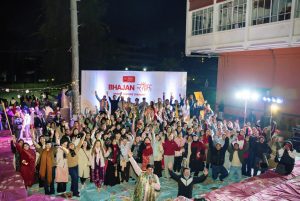

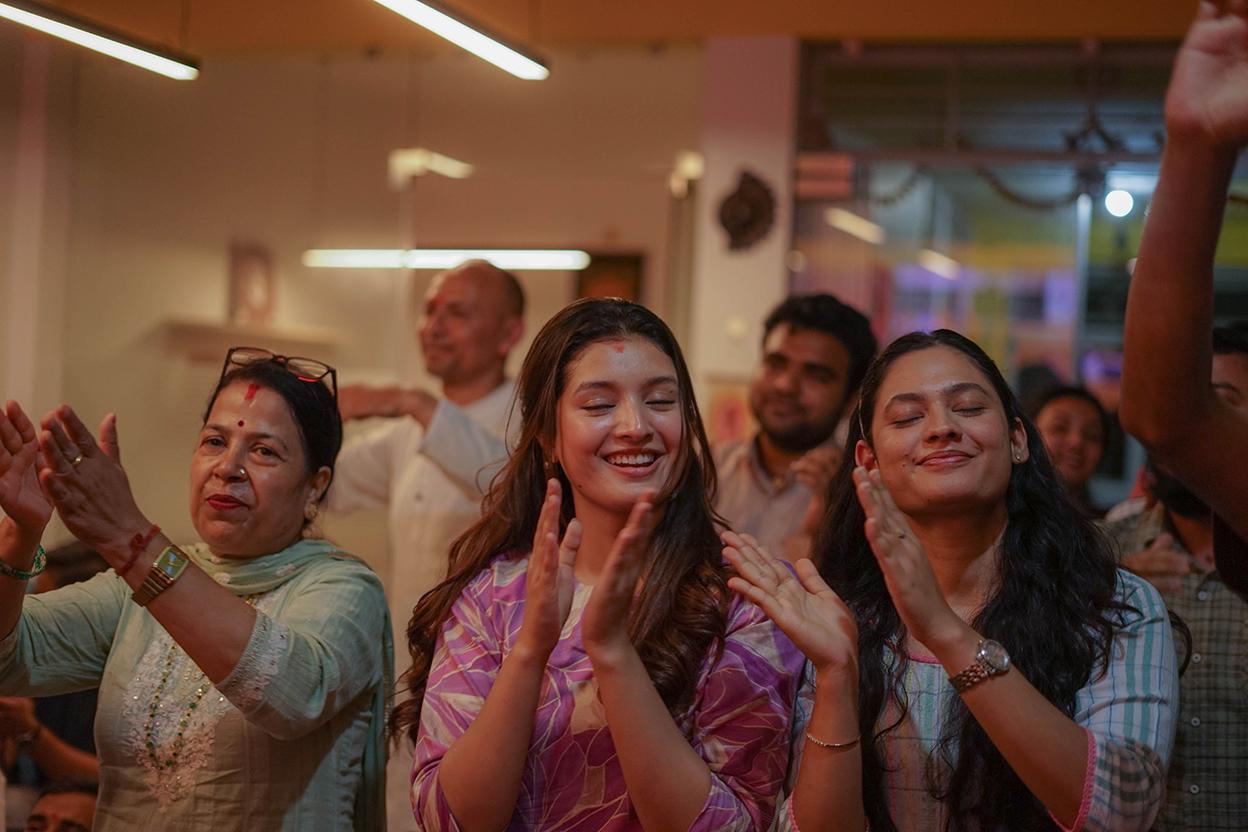
Bhajan, a devotional form of music, has long been considered something enjoyed mainly by older generations. However, times have changed. Today, bhajans are increasingly finding a place in the playlists of young people, and some youngsters have even begun organising bhajan events where youth gather to enjoy and connect through devotional music.
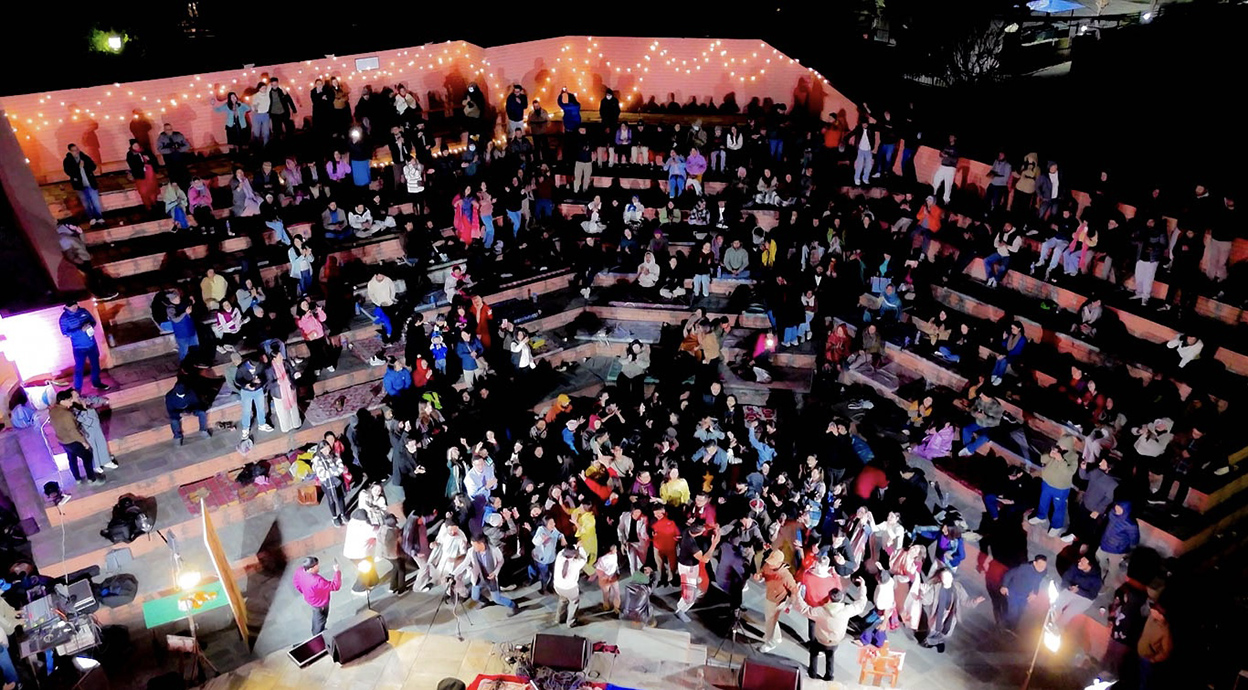
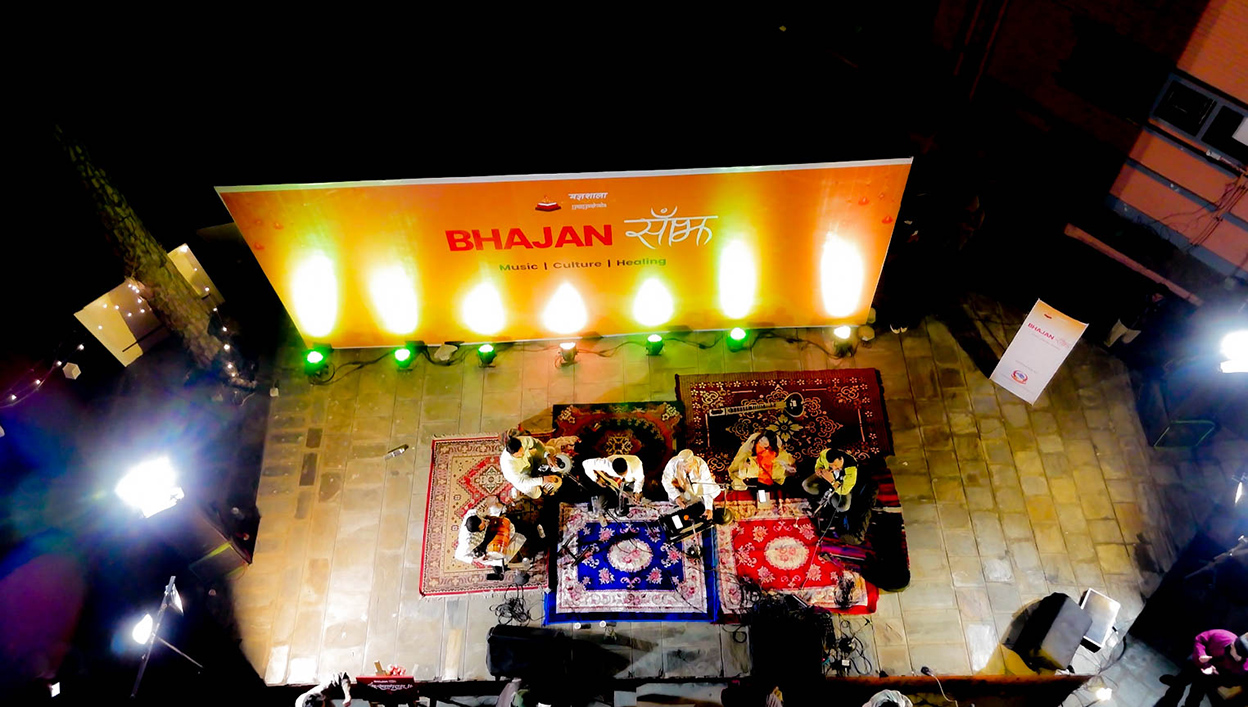
A similar scene was witnessed on November 29 during the ninth episode of Bhajan Sanjh organised by Yagyashala. To savour the village-like essence of bhajans and kirtans, people gathered at the Dabali of Nepal Academy in Kamaladi.
“It had been so long since I sat in such an atmosphere, it cured my homesickness for the village,” says an audience member. “I wish events like this, well managed and blending traditional culture with modernity, could happen all the time.”
The audience was not limited to villagers who had moved to the city. From actress Srishti Shrestha to singer-songwriter Ujjwal Saagar, the presence of well-known figures made the November evening feel warm and lively.
That same evening, Guru Chalisey was also present. He attends Yagyashala’s Bhajan Sanjh whenever he can. In his experience, such events offer relief to people who are always busy with work.
“I come to every Bhajan Sanjh,” he said. “This program makes me deeply joyful.”
Why are young people drifting away from our culture? This very question inspired Nirjan Adhikari to become the founder of Yagyashala. “Since I personally enjoy spirituality, I formed a team and began working,” he recalls.
Explaining why Yagyashala was launched in 2022, Nirjan adds, “When we saw young people moving away from their culture and traditions, the idea of how to spark their interest and preserve culture became the foundation of this initiative.”
To draw young people toward their own traditions, the team adopted a strategy, making worship and bhajans youth-friendly. Without altering their essence, they began presenting rituals in a modern way.
Various studies show that stress levels among youth are increasing. With the growing use of the internet, social media, and work pressure, it’s inevitable that they feel exhausted.
Adhikari says, “There are options like clubs and discos, but they don’t carry our culture. So we introduced the concept of Bhajan Sanjh, something that preserves culture while offering a clubbing-like experience.”
There is also an economic aspect. Bhajan singers do not earn well. According to musicians in the field, it’s difficult to make money through this genre, which increases the risk of such creations gradually disappearing.
Adhikari says, “We realised the need for a platform where cultural preservation, spirituality, and mental health go hand in hand with decent earnings for bhajan musicians.”
On January 1, 2024, they organised the first edition of Bhajan Sanjh at Yagyashala’s own hall with around 50 participants. All expenses were carried out by Yagyashala, including artists’ fees, sound systems and decoration.
Since its inception, Yagyashala aimed to make this initiative professional, not merely entertaining, but meaningful and attractive. Initially, entry was free. Fifty people attended the first Bhajan Sanjh; the number doubled in the second episode.
When 100 people attended the second episode, the team became even more enthusiastic. They began experimenting, adding microphones, using flowers, designing invitation cards, promoting on social media, and so on. Just like attractive city clubs, they started giving people special invitations and creating a similar ambience.
According to Adhikari, who studied parapsychology, good music heals people and is an effective way to reduce stress. That’s why he sees Bhajan Sanjh as an alternative form of mental health therapy.
“Counselling is a Western method, but in our culture, kirtan and bhajan are age-old healing practices,” Adhikari says. “That’s why this is even more essential for our changing society. Beyond that, it’s a bridge that promotes social unity and culture while connecting youth with spirituality.”
By the ninth edition, Yagyashala finally introduced ticketing, Rs. 500 per person. This was a new experiment, and the organizers did worry whether people would come if they had to pay. But during the ninth episode of the Bhajan Sanjh, around 350 participants gathered at Pragya Dabali to immerse themselves in the bhajan evening.
Previously, Yagyashala had been hosting events in its own hall. Adhikari said that attendees at Pragya showed even more interest, asking when the next evening would be.
“It went much better than we expected. Data already showed that youth are interested in spirituality; this event confirmed it,” he says.
Adhikari’s personal experience further strengthens the initiative. He has experienced clubs and various “fancy night dinners.”
“Personally, clubs are fun at first, but later they become tiring. Ultimately, people seek peace,” he says. “Bhajans gave me personal healing.”
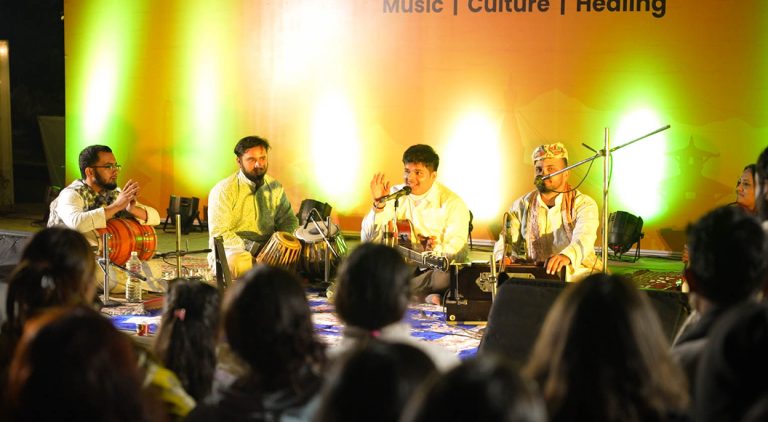
Singer Nishu Sharma, who performed at the ninth Bhajan Sanjh, joined by coincidence. Seeing videos of Bhajan Sanjh on social media sparked her interest. Then the opportunity arose, and she ended up performing. While dreaming of swaying along, she instead got the chance to make others sway at Pragya Dabali.
“My friend Ravi is part of the Bhajan Sanjh team. I was very happy when he offered me the chance to sing,” Sharma says enthusiastically. “I had said I’d go anywhere just to listen, and suddenly I was performing. Yagyashala is giving a platform to singers like us.”
Sharma has now joined the Yagyashala team.
“The dream is to provide a platform for new talents and commercialise good traditional culture,” Nirjan says. “We want people to be able to live comfortably by singing bhajans, just like other music genres, and see it as a career. That’s also our dream.”
Though it looks exciting in the ninth edition, the beginning was not easy. When Adhikari first shared the idea with relatives, he was humiliated even within his own circle. When Yagyashala was established, he heard comments like, “He’s gone crazy, he would end up doing nothing with this bhajan and kirtan”
But over the past two years, responses have changed. People have begun viewing it positively, and the influence of Bhajan Sanjh is growing.
Throughout this journey, Ravi Pandey has consistently supported Adhikari and the team. Pandey oversees overall management. From the sound system to everything that enhances the audience’s experience, Adhikari says Ravi and other colleagues play a major role.
For those who are interested in going out in the evening but can’t go to clubs, Bhajan Sanjh has become a meaningful alternative.
“It has created a path for families to come together for ‘bhajan clubbing.’ It has built a beautiful bond among family and society. I’m extremely happy with all these things,” Adhikari says.
One message that Nirjan often remembers reads, “I came out of my house after two months to attend Bhajan Sanjh. Thank you, brother!”