Kathmandu, August 30
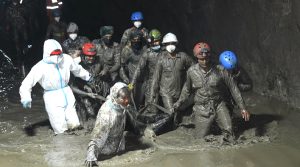
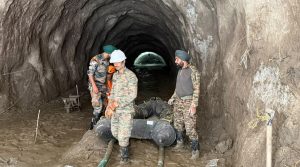
An Indian technical and tunnel rescue team has reached Chilime in Rasuwa to begin search and rescue operations for workers believed to be trapped inside hydropower project tunnels.
The rescue team arrived in Nepal on Saturday and reached Chilime on Sunday to begin operations.
The 11-member technical team includes doctors, paramedics and tunnel engineers. A separate 22-member Indian Army team has also been deployed to support the rescue operation.
The initial team has already conducted an aerial reconnaissance of the Chilime and Langtang areas by helicopter. It has now begun operations focused on Chilime in Rasuwa and Trishuli in Nuwakot.
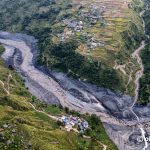
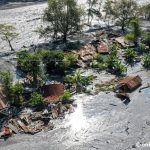
The team is working to rescue workers trapped inside tunnels of hydropower projects in the Chilime and Trishuli areas following devastating floods and landslides in the Bhotekoshi and Trishuli rivers.
The tunnels have been filled with thick mud, sludge, rocks and debris carried by the floods and landslides, making it extremely difficult for rescuers to enter.
According to the Office of the Prime Minister and Council of Ministers, the Indian experts have begun working with an 82-member joint security team comprising personnel from the Nepali Army, Nepal Police and Armed Police Force. They are using specialised equipment to clear the tunnels and rescue those trapped inside.
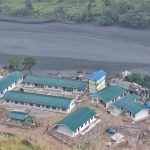
The 22.1-megawatt Chilime Hydropower Project has suffered extensive damage from the floods and landslides.
Around 20 employees and workers associated with the project have been reported missing. Authorities estimate that six to eight workers are trapped inside the project’s powerhouse and tunnels, prompting the joint Nepal-India rescue operation.
The project’s structures have been buried under flood debris, while thick mud and sludge have filled the tunnel passages.
Power generation from the Chilime project has been completely halted due to the extensive damage to its infrastructure.
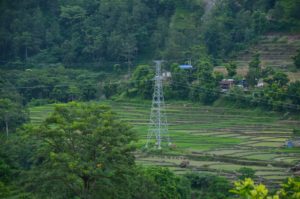
The flood also damaged the substation at the Trishuli-3B hub, which connects Chilime and other hydropower projects, disrupting the electricity transmission system in the area.
Along with the rescue teams, the Indian government has also handed over relief supplies to the Nepal government, including portable generators, food, water purification tablets and medicines.