Nepal’s 2026 federal election verdict reflects a clear public demand for better public service delivery. While the ballot has changed the face of political representation at the federal level, a more fundamental question remains unanswered: will provincial and local governments finally become capable of delivering the services citizens are entitled to?
Much of Nepal’s dysfunction in public service delivery is rooted in bureaucracy and procedural failures. But nowhere are the consequences more immediate than in basic health care and education—both enshrined as fundamental rights in Nepal’s Constitution. These sectors face persistent challenges in access, quality and implementation, despite being central to human development and among the issues that most directly shape people’s aspirations after an election.
Addressing these inequities should be among the new government’s most immediate priorities.
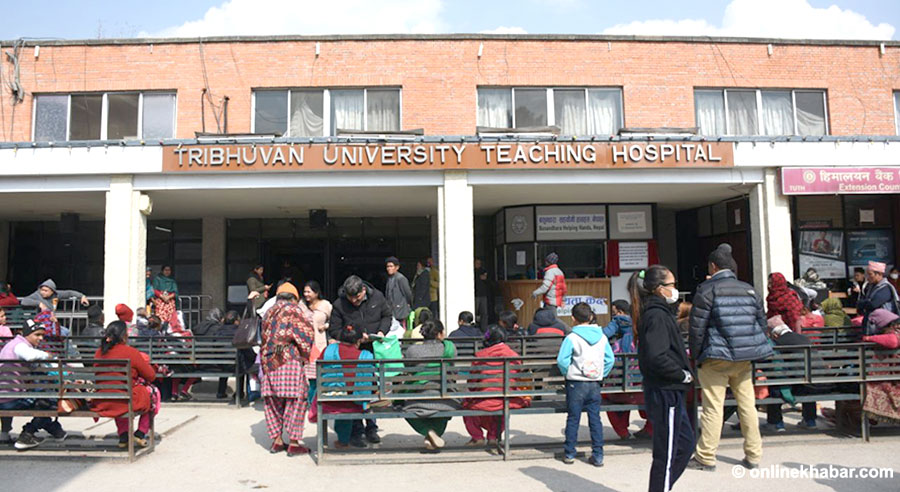
The recent case of Babita Paswan, who gave birth on the footpath outside a federally managed hospital in Rajbiraj, is a particularly stark illustration of how people-centred development—and basic public health—has been pushed to the margins.
The contradiction is difficult to ignore. Nepal’s federal structure has transferred substantial responsibility for operating, managing and delivering health and education services to provincial and local governments. Yet the institutions entrusted with these responsibilities continue to struggle with some of the most basic functions of governance.
The big leap forward is often made through small but meaningful adjustments. Fixing how health and education services are delivered could be one of them.
Lessons from the work of alternative political movements and governments elsewhere in South Asia, including India and Sri Lanka, could offer useful examples for Nepal’s new government to consider.
Health governance at a crossroads
In the center of Golbazar, just steps away from the municipality’s newly built executive office, stands a modest structure that doubles as a birthing centre.
Every year, more than 300 women—many of them Madhesi Dalits, daily wage earners and among the poorest members of society—come to this dark and poorly maintained building for emergency obstetric care. For many, it is their only lifeline during childbirth.
Yet despite the federal government’s Aama Programme, which provides transportation support and incentives for antenatal care, only about half of these women receive the support they are entitled to by the time they are discharged. The rest leave empty-handed, forced to bear the cost themselves.
The reason is not particularly complicated. It is a failure of governance and bureaucratic accountability.
More troublingly, routine Health Management Information System (HMIS) data does not necessarily reflect this reality. Health workers prepare reports that present performance as satisfactory, while the experience on the ground tells a very different story.
Further investigation suggests that the problem extends beyond a single facility. Similar patterns are found in birthing centres and Comprehensive Emergency Obstetric and Newborn Care (CEONC) sites managed by both local and provincial governments.
This is the uncomfortable gap between what exists in the government system and what exists on the ground. On paper, the system works. In practice, people are left waiting.
Who bears the greatest responsibility for this failure is a legitimate question. But perhaps more striking is the silence surrounding it.
Local and provincial executives, health managers and frontline workers rarely acknowledge the delayed provision of transportation support as a systemic problem. What should be treated as an administrative failure has quietly become routine, with only rare exceptions across Madhesh Province.
For the women who are already among the most underserved and neglected in Madhesh, this is not simply about money. It is about dignity at one of the most vulnerable moments of their lives.
Committees without capacity
Governance is ultimately about who makes decisions, how those decisions are made, who participates in the process and whether citizens actually experience the benefits of those decisions.
When institutions repeatedly fail to meet public expectations, dissatisfaction is inevitable.
The unfinished birthing centre in Bishnupur, Mahuhai, along with 22 other basic health service centres in Siraha district alone, is a stark reminder of the provincial government’s failure to translate plans into functioning services.
Every political leader leaves behind a blueprint. Every government announces plans. But too many of those plans remain trapped on paper.
This is not fundamentally a question of ideology or political identity. Whether a government is left-leaning or right-leaning, national or regional, the real test is execution.
The issues that matter to citizens are far more basic: respectful maternity care, vaccination, protection from the vicious cycle of malnutrition and access to meaningful, skill-based education.
Federalisation was supposed to bring decision-making closer to citizens. Instead, in Madhesh, the transfer of responsibilities has often exposed a different problem: authority has been devolved, but capacity and accountability have not followed.
Provincial and local governments have established—or been required to establish—various committees and governance structures, including Social Development Committees, Immunization Coordination Committees and Health Facility Operation and Management Committees.
These bodies are supposed to strengthen decision-making and improve public health delivery.
But committees alone do not deliver health services.
Without the capacity to make decisions, the resources to implement them and mechanisms to hold decision-makers accountable, decentralisation risks becoming little more than the redistribution of administrative responsibility.
The long-recognised gaps in capacity and accountability within Madhesh’s decentralised health system have not been adequately addressed. The consequences are not abstract. They are reflected in maternal and newborn deaths, recurring vaccine-preventable diseases and repeated outbreaks of diarrhoeal disease.
Federalisation cannot be considered a success simply because responsibilities have been transferred. The real test is whether people receive better services because of it.
Accountability, planning, budgeting and auditing
Nepal’s Auditor General has painted a troubling picture of fiscal accountability among local governments in Madhesh.
Local governments were envisioned as engines of bottom-up planning, accountability and citizen participation. Yet the absence of routine audits has left more than Rs 200 billion in unsettled financial irregularities.
These are not merely numbers in an audit report.
They represent resources that could have funded health insurance premiums, hospitals, schools, medicines and basic services that citizens are still waiting for.
More than 20 local governments in Madhesh have also repeatedly failed to submit budgets for approval by their respective local assemblies.
The failure to approve plans and budgets is not simply an administrative inconvenience. It can directly paralyse basic service delivery.
Shortages of essential medicines and supplies, difficulties in operating health facilities and failures to implement conditional-grant public health programmes have all undermined the ability of local governments to deliver what those programmes were designed to achieve.
The consequences are visible in Madhesh’s persistent maternal mortality, fragile neonatal survival and the continuing cycle of malnutrition.
When planning fails, budgets remain stuck, audits are ignored and no one is held accountable, it is ultimately the citizen—not the bureaucracy—who pays the price.
The way forward
The lived reality of mothers, newborns, adolescents and marginalised communities in Madhesh remains one of unmet promises and institutional neglect, despite the constitutional and policy guarantees designed to protect them.
The problem is not that Nepal chose federalisation.
The problem is that we devolved responsibility without adequately equipping the governments expected to carry it.
There is no solution in turning back the clock. The answer is to make federalisation work.
That means putting all hands on deck to build the capacity of provincial and local governments while embedding real accountability into the system. It means ensuring that technically sophisticated health services are delivered to the people who need them most—not merely recorded as delivered in government reports.
The path forward requires more than another blueprint, another committee or another annual plan.
It requires political commitment, institutional capacity and the skills to implement, monitor and deliver basic health and education services with integrity.
The health sections of local governments need more than experienced personnel. They need professionals who understand not only how the system operates, but also health governance, public policy and the needs of the communities they serve.
Madhesh does not lack plans.
What it lacks is consistent execution, accountability and the political urgency to turn those plans into services.
For the mothers waiting outside health facilities, the newborns who need emergency care and the families who depend on public services, that distinction is not theoretical.
It is the difference between a right guaranteed on paper and a right experienced in real life.