Kathmandu, April 23
A climate conference has concluded in the Khumbu region, issuing a nine-point Gokyo Declaration that calls for Nepal to take leadership among Himalayan and mountain nations in advancing climate justice.
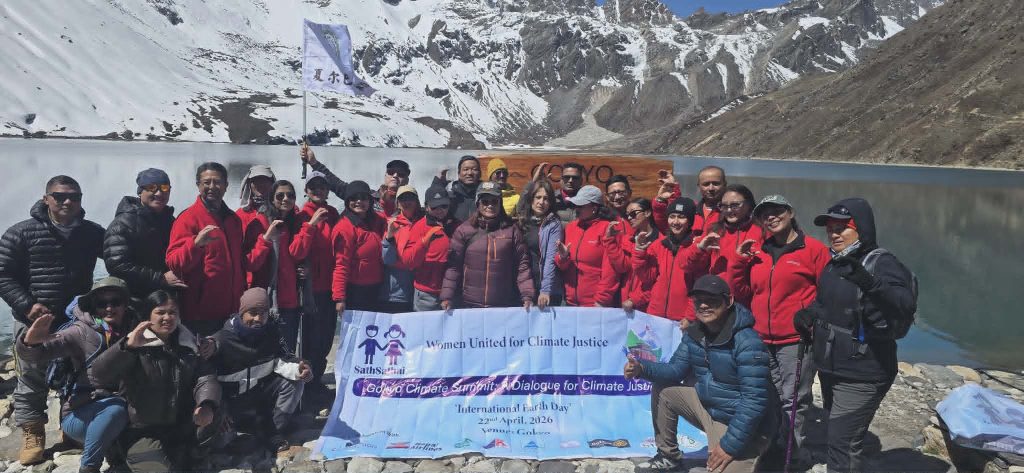
The declaration was released on Wednesday in Gokyo on the occasion of Earth Day. It emphasises the need to strengthen climate diplomacy and to raise mountain-related issues as priorities in international forums.
The Gokyo Climate Summit was organised by Khumbu Pasang Lhamu Rural Municipality of Solukhumbu in collaboration with Saath Sathai, an organisation active in climate justice and tourism development. A team of thematic experts travelled from Kathmandu via Lukla, Namche, Khumjung, and Machhermo to reach Gokyo, where the declaration was unveiled.
Former Deputy Speaker of the House of Representatives and lawmaker Indira Rana Magar, while reading the declaration, expressed appreciation for the organisers’ efforts in mobilising citizens to push the government toward climate justice.
“The government alone cannot bear the burden of climate change. It must engage directly with affected communities on the ground,” she said, adding that both the government and Parliament should heed the recommendations outlined in the declaration.
Glaciologist Arun Bhakta Shrestha, who participated in the interaction program in Gokyo, said the conference was important in addressing the risks of glacial lake outburst floods. Participants, including youth leader Tashi Lhazom, renewable energy researcher Kushal Gurung, rights activist Sama Shrestha, advocate Saroj Ghimire, and journalist Babita Basnet, voiced their agreement with the declaration.
The team also conducted community dialogues with women in Khumjung and carried out household surveys. They observed several glacial lakes in the Gokyo area to assess the risks posed by climate change.
The declaration also recommends that the government adopt gender-sensitive and environmentally friendly sustainable energy solutions to address the ongoing energy crisis. According to Saath Sathai founding member Bal Krishna Basnet, the study report, along with the declaration, will be submitted to local, provincial, and federal governments, as well as to the federal Parliament for policy consideration.
“We have worked in coordination with local governments to directly understand the impacts of climate change. Experts have pointed out increasing risks from glacial lakes in the Gokyo region,” Basnet said.
The declaration commits to making climate action just, inclusive, and rights-based, and calls for ensuring meaningful participation of women, Indigenous peoples, youth, and marginalised communities at all levels.
The conference was organised in collaboration with several institutions, including the Nepal Mountaineering Association, BYD, Ncell, Nepal Airlines, and the Trekking Agencies’ Association of Nepal (TAAN).