


Pokhara, October 6
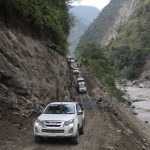
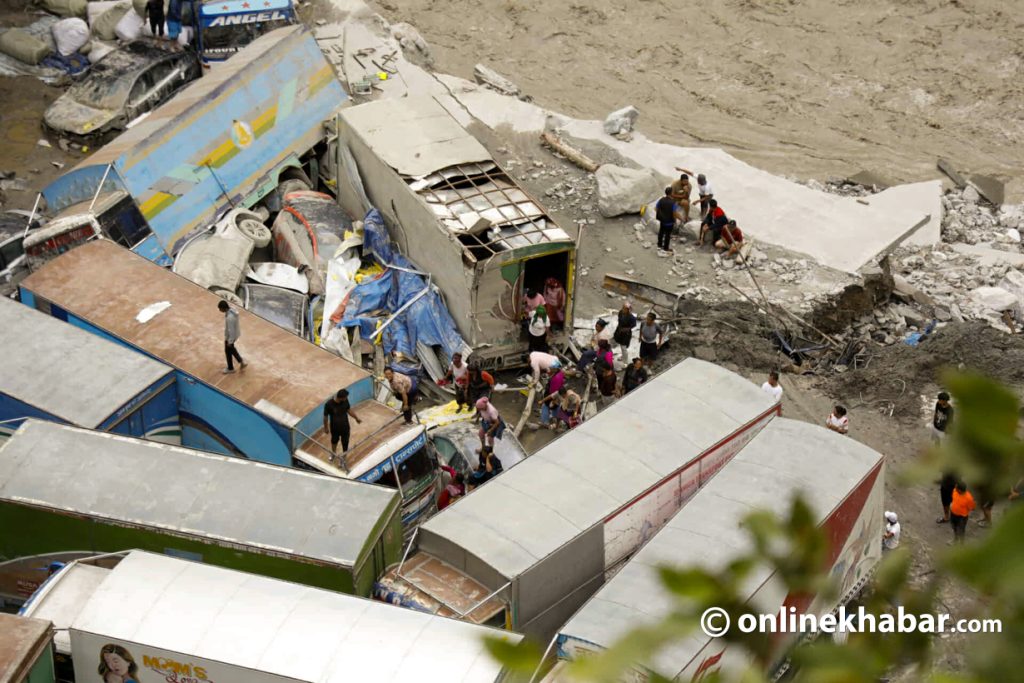
Landslides have occurred at several locations from Kushma Bazaar to Maldhunga and Beni Bazaar. In some places, landslides have swept away sections of the road, while in others, piles of rocks and soil have accumulated along the roadside. Rocks on the cliffs appear precariously poised to fall.
Vehicles have begun operating along the damaged sections of the road at Sahasradhara in Kushma Municipality of Parbat and along the Maldhunga–Beni road. However, passengers continue to travel while looking up anxiously at hillsides that appear ready to collapse overhead.
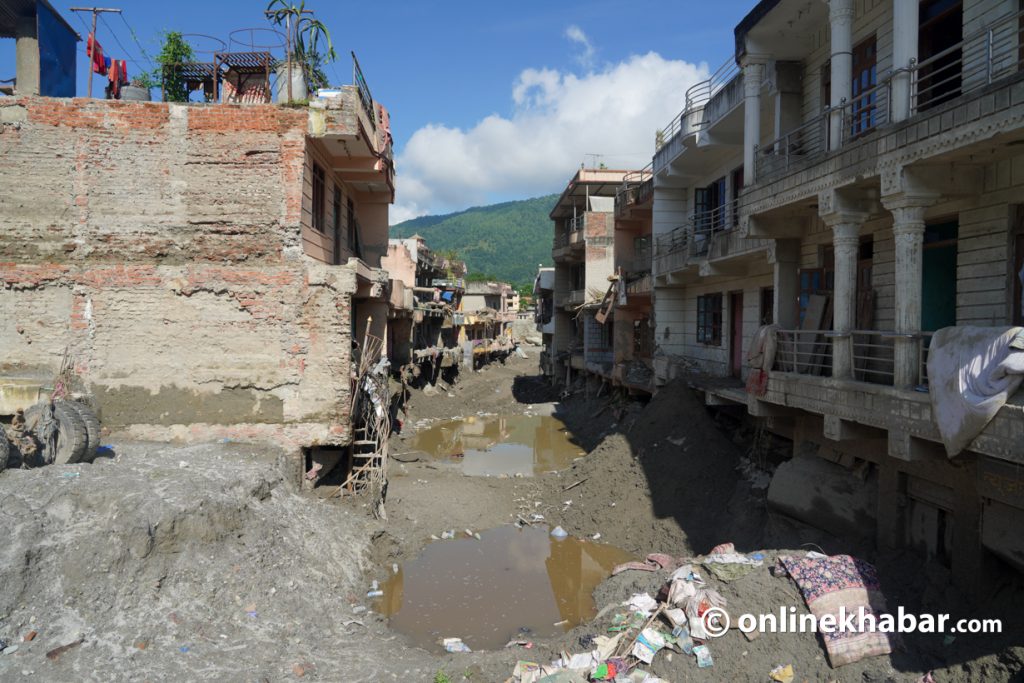
The floods and landslides triggered by incessant rainfall since September 24 caused extensive loss of life and property across Gandaki Province. Flooding in the Kaligandaki River swept away the old Farse Bazaar in Jaljala Rural Municipality. The river has also eroded land at several locations between Beni, the headquarters of Myagdi, and Kushma, the headquarters of Parbat.
Conservation activist RK Adipta Giri believes the scale of the erosion along the Kaligandaki River suggests that an even greater disaster was narrowly avoided.
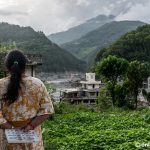
“Kaligandaki has eroded settlements and land to such an extent that it seems our settlements survived by a whisker. A major loss of human lives was averted,” Giri said while observing the damaged areas. Unusual and almost unbelievable scenes can still be seen all the way from Kushma to Jaljala.
Damage to Maldhunga Bridge approach road affects western region
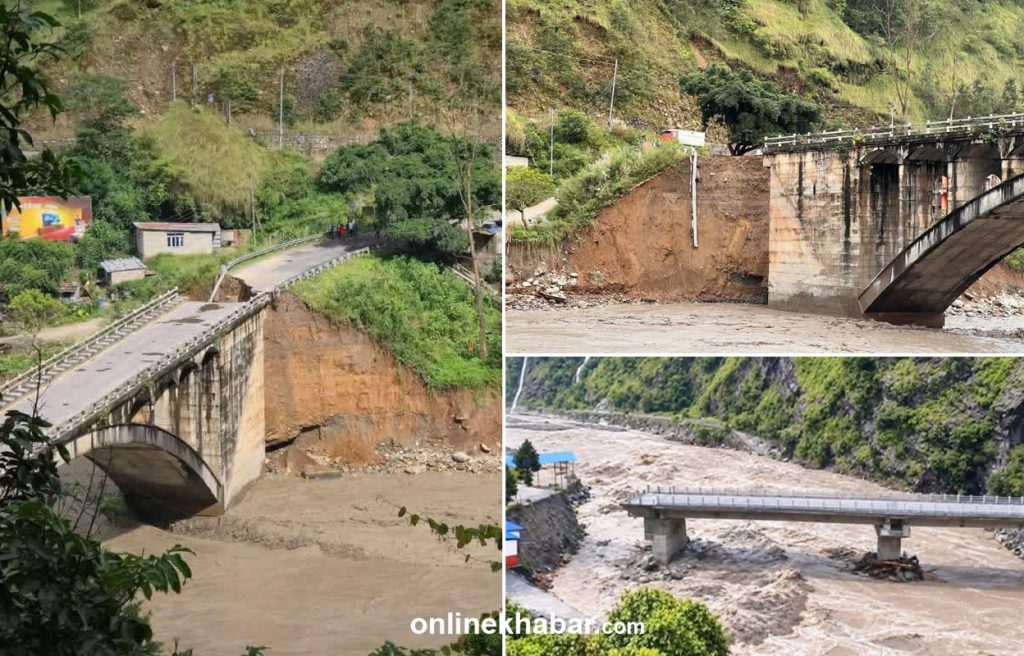
The flood in the Kaligandaki River on September 27 washed away the approach road to Maldhunga Bridge, which connects Parbat and Baglung. Erosion on the Parbat side of the bridge has caused major problems for residents of western Parbat as the festive season approaches.
With the Kaligandaki eroding the approach to Maldhunga Bridge, road connectivity from Baglung and Burtibang to Rukum East, Rukum West, Jajarkot, Dailekh, Achham and all the way to Baitadi (Jhulaghat) in Sudurpaschim has been disrupted.
The highway had provided a direct connection to western and mid-hill districts, including Rukum East, Rukum West, Rolpa, Jajarkot and Dolpa, mainly through the Burtibang area of Baglung. Baglung Chief District Officer Krishna Prasad Acharya said thousands of people had been affected by the loss of the approach road at Maldhunga just before the festive season.
Maldhunga Bridge is Nepal’s first arch bridge. The bow-shaped bridge was constructed in 1991 with Chinese assistance. Similar arch bridges have since been built at Muglin, Bijulibazar over the Dhobikhola and Ramdi over the Kaligandaki River.
In an arch bridge, the load is transferred not only directly to the pillars but through the curvature of the arch to strong foundations on both sides. A key feature of such bridges is that they do not require pillars in the middle of the river.
Experts say the ability to construct long spans without pillars reduces the risk of damage to the pillars or the bridge itself from logs, gravel and debris carried by floods.
Damage to approach road linked to river exploitation
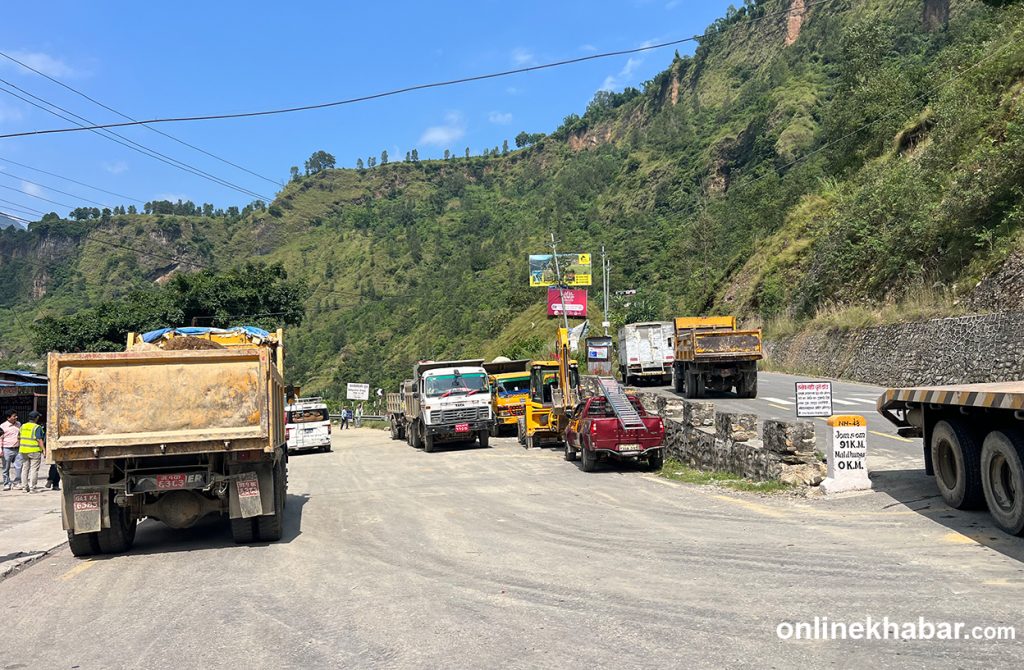
However, the Kaligandaki, which floods almost every year, has this time eroded a section of the road beside the arch bridge. Engineers say the erosion of the section is linked to the exploitation of the river.
“The flood on September 27 caused extensive damage at several locations. There has also been encroachment along the river in various places, as well as riverbed exploitation by crusher operators,” said Dhurba Pokhrel, information officer at the Road Division Office, Pokhara. “It appears that changes in the river’s course have damaged the approach road. This needs to be studied, and it should be.”
Excavators can still be seen operating in the river, while tipper trucks and bulldozers are being used to extract and transport riverbed materials. Locals are concerned that crusher operators have continued extraction activities despite the scale of the disaster.
The claim that businesses are misleading the administration is also reflected in the remarks of Parbat Chief District Officer Gangabahadur Chhetri.
“Locals have complained that settlements and structures, including bridges, along the riverbank have been eroded because of river exploitation. Extraction also appears to have contributed to the river changing course and entering settlements,” CDO Chhetri said. “We will strictly monitor the situation, determine what is legal and illegal, and take action accordingly. However, it appears that the businesses here have arranged everything through some kind of setting. We are still studying the matter.”
Target to repair before Dashain
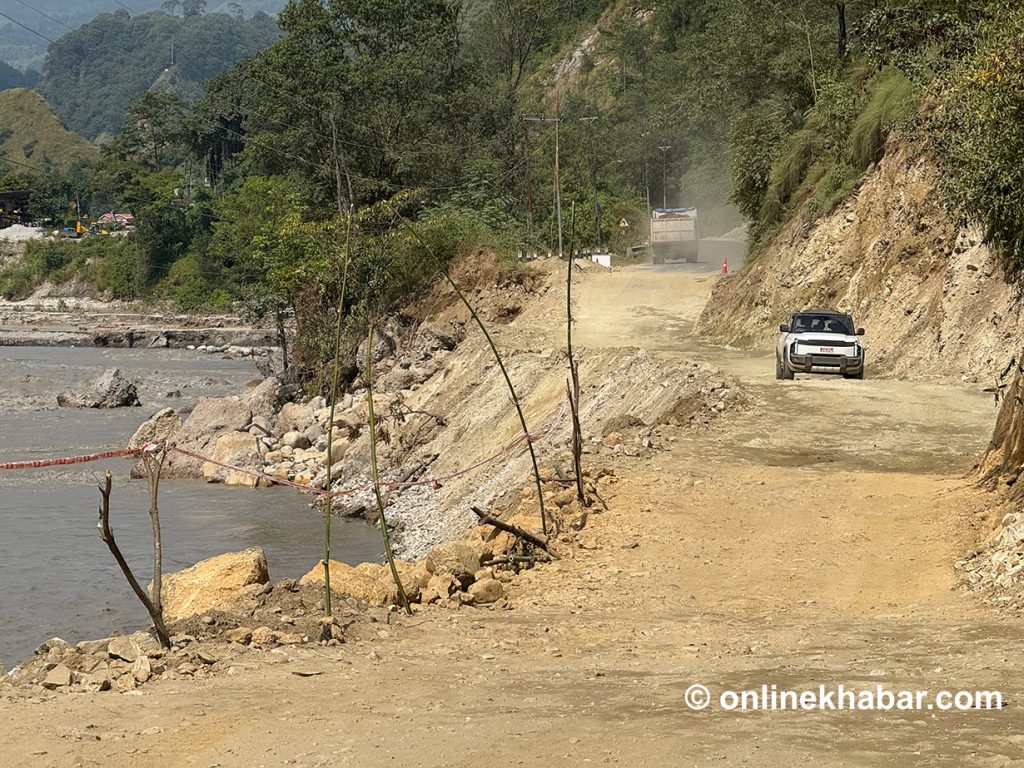
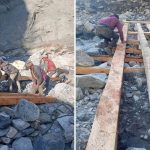
When an Onlinekhabar team reached Maldhunga Bridge on Sunday, a bulldozer was being used to level the soil at the eroded section. With Dashain approaching, locals remained uncertain about when the bridge would be restored.
Engineer Pokhrel said the Road Division Office, Pokhara, was working through the emergency fund with the aim of reopening the road before Dashain.
“When the river eroded the road and we began emergency construction, it was difficult during the initial days because the water level at some locations was as high as 8 to 10 metres. We are now preparing a suitable platform for construction,” Pokhrel told Onlinekhabar. “The foundation work is also in its final stage. The structure now needs to be raised to a height of 18 metres. Preparations are underway to open it at least before Dashain.”
With Maldhunga Bridge out of operation, people have been unable to travel to major cities such as Pokhara, Narayangadh and Kathmandu. Although vehicles have resumed operation after landslides were cleared at several locations between Kushma and Beni, locals remain fearful, saying the risk of accidents has not been eliminated, according to local Ganesh Acharya.
The bridge, which connects to the Mid-Hill Highway, has affected daily life across western Nepal. The Beni–Jomsom road has also been severely damaged by floods and landslides, leaving Mustang district cut off by road. The Korala border point, which had emerged as an alternative to the Rasuwagadhi border crossing, has also been brought to a standstill because of road damage.
As the bridge is expected to take some more time to reopen, locals say shortages of food, petroleum products and cooking gas have begun to emerge. Baglung resident Hari Khadka said people were concerned that they might face shortages during Dashain.
Residents of Baglung and Parbat are currently using the Gandaki Golden Suspension Bridge, claimed to be the longest suspension bridge in Asia, which connects Baglung and Parbat, as well as other high suspension bridges in Kushma as alternatives. Passengers are crossing the river on foot using these bridges, reaching the Parbat side and then taking other vehicles to continue their journeys.