

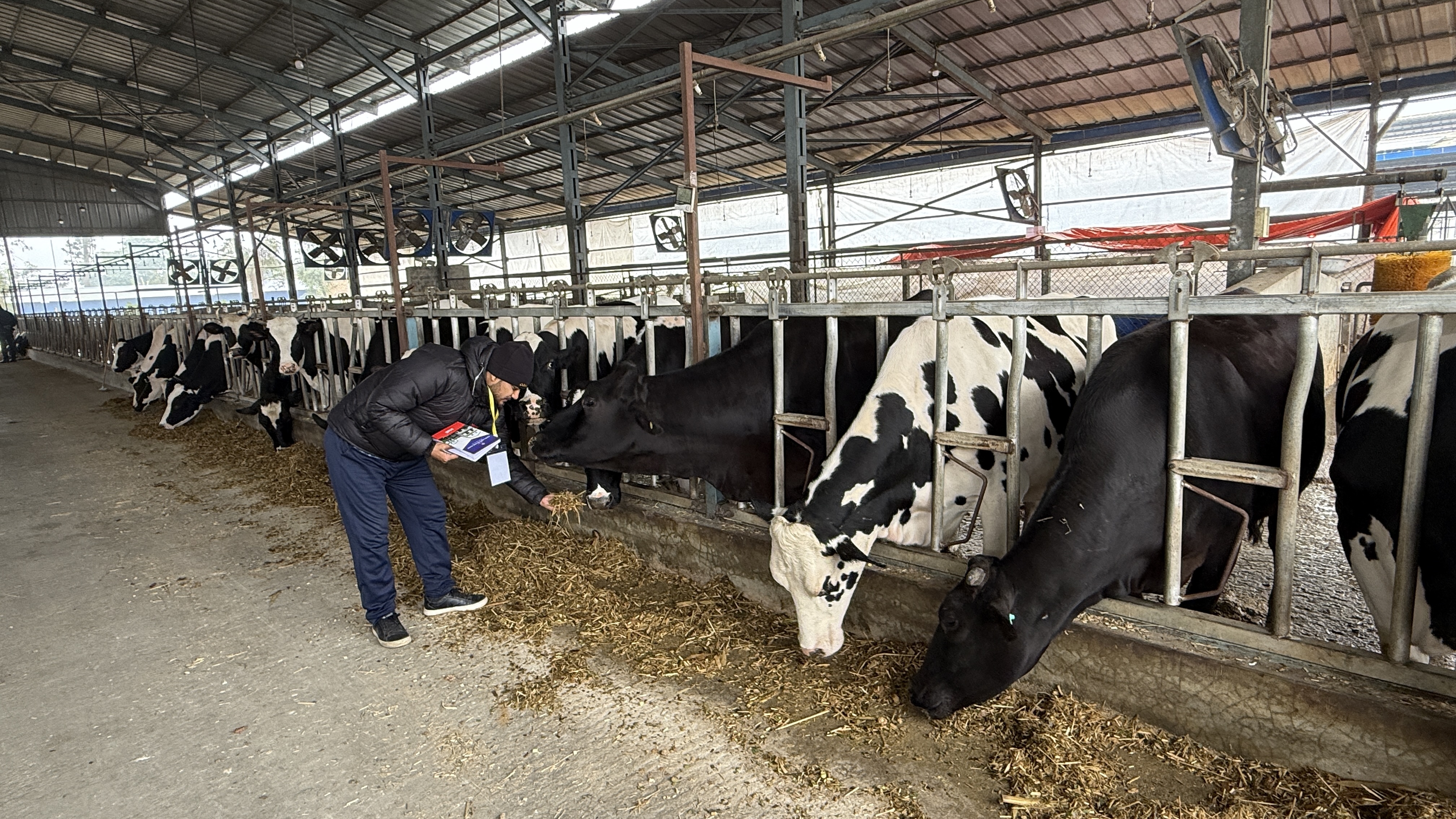
Animal rights advocates have objected to the government’s draft Animal Services and Animal Welfare Bill, arguing that it focuses on livestock production, trade and administrative management rather than protecting animal rights and welfare.
They say the legislation gives priority to production-oriented policies instead of making animal welfare the law’s fundamental objective. The activists have urged the government to draft a separate, independent and comprehensive Animal Welfare Act that meets international standards.
Sneha Shrestha, founder of Sneha Care, said any animal welfare law should be based on the internationally recognised “Five Freedoms.” These guarantee animals the right to be free from hunger and thirst, discomfort, pain, injury and disease, to express normal behaviour, and to live free from fear and distress.
According to Shrestha, the current draft fails to incorporate these basic principles, making it incapable of ensuring genuine animal welfare.
She also said the bill does not provide a clear legal framework for the humane management of community dogs and cats living on the streets, rabies vaccination campaigns, animal rescue, treatment, rehabilitation and rehoming. Likewise, it remains silent on who is responsible for protecting and managing abandoned cattle and other stray animals.
The draft also fails to clearly define the respective responsibilities of local, provincial and federal governments in protecting and managing such animals, she added.
Animal rights advocates have also expressed dissatisfaction with the bill’s provisions on animal cruelty. They argue that acts such as beating, poisoning, torturing, neglecting, transporting animals in inhumane conditions or other forms of abuse are not explicitly defined as criminal offences.
They say the bill lacks strong provisions for imprisonment, fines and effective enforcement, and stress that a clear definition of offences and appropriate penalties are essential for an effective law.
Stakeholders also argue that the bill inadequately addresses the operation, standards and monitoring of animal shelters, as well as the role of organisations working in animal welfare. Although many organisations across Nepal are involved in rescuing, treating and rehabilitating animals, they say their responsibilities, authority and operating standards should be clearly defined in law to prevent shelters from operating without proper regulation.
The bill has also been criticised for providing weak welfare provisions for farm animals, including cattle, buffaloes, goats, pigs and poultry. Campaigners say it does not establish clear standards for providing adequate space, water and rest during transport or humane procedures before slaughter, sending the message that production takes precedence over animal welfare.
They argue that the law should ensure not only animal production but also animals’ right to live with dignity.
Activists have further called for the bill to cover all categories of animals, including laboratory animals, birds, fish, wildlife and other species. They argue that an Animal Welfare Act should guarantee the protection, rights and welfare of all animals, whereas the current draft has a limited scope.
According to Pramada Shah, founder and former president of Animal Nepal, most chapters of the draft focus on animal quarantine, disease control, import and export, animal products, livestock industries, breed improvement, artificial insemination, genetic improvement and traceability systems.
Only after these sections does the bill address animal welfare, and even then, issues such as cruelty, shelters and euthanasia receive only limited attention.
Shah said a genuine animal welfare law should begin with the principle that animals are sentient beings and that their welfare is the primary objective of the legislation.
Only then, she said, should the law regulate companion animals, farm animals, working animals, captive wildlife, transportation, slaughter, entertainment, research, disaster management, education, monitoring and enforcement in line with that objective.
She concluded that the current draft instead gives priority to animal production and industry.
According to Shah, Animal Nepal has spent years advocating for a separate animal welfare law and submitted detailed recommendations prepared with lawyers, veterinarians, experts and animal welfare organisations. However, she said those recommendations have largely been ignored in the current draft.
Bina Pant, an animal rights activist with SPCA Nepal, also said the bill places greater emphasis on livestock farming, production and trade than on animal welfare.
While acknowledging that livestock production and business are important, she argued that animal protection, rights and welfare should receive equal priority, a balance the current draft fails to achieve.
Citing examples from developed countries, particularly in Europe and the United States, where animal welfare laws are effectively enforced, Pant said Nepal should learn from international best practices.
She said a comprehensive draft bill prepared about three and a half years ago with the participation of animal welfare organisations, legal experts and specialists had already been submitted to the government. However, she noted that most of its key recommendations have not been incorporated into the current version, suggesting that the expertise and experience of stakeholders had not been given sufficient consideration.
At the same time, Pant welcomed the government’s decision to seek public feedback on the draft, expressing hope that stakeholders would clearly present the missing provisions and that the government would seriously consider including them.
Animal welfare advocate Prabhat Rimal also said the bill fails to give sufficient priority to animal rights, ethical treatment, anti-cruelty measures, animal transport, proper care and animals’ right to live with dignity.
Although there are animal lovers and people with positive intentions within the government, he said that commitment should be clearly reflected in the law.
Referring to the recent incident in Baitadi in which bulls were thrown off a cliff, Rimal said the case demonstrated that animal cruelty remains a serious problem in Nepal and highlighted the need for stronger legal protections.
He also argued that the lack of unity among animal welfare organisations and campaigners has weakened their ability to exert effective pressure on the government.