

Kathmandu, September 1
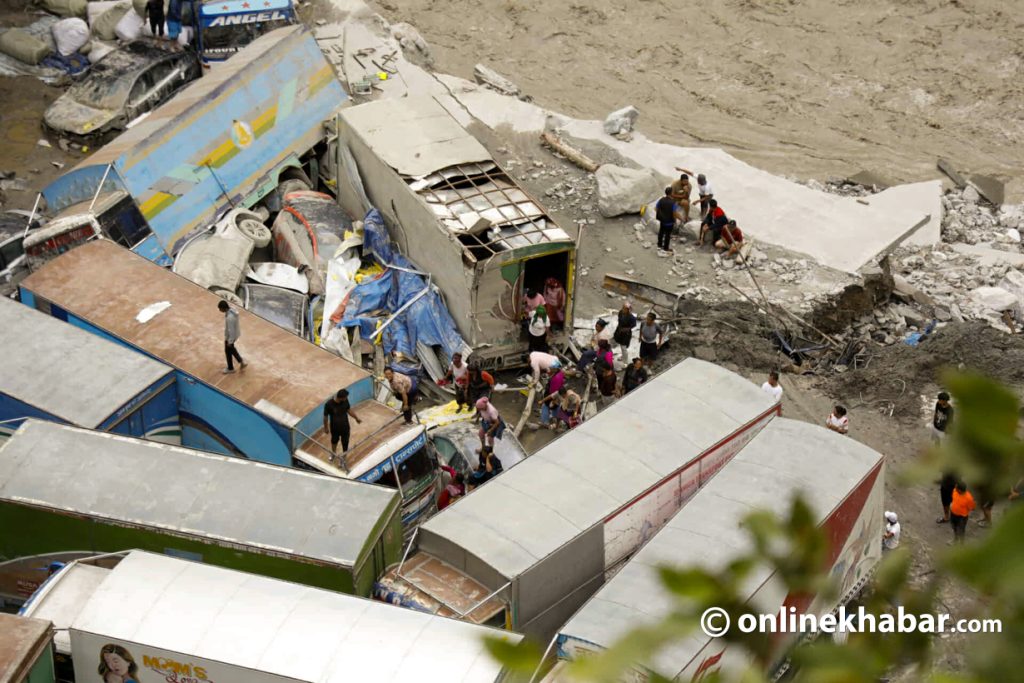
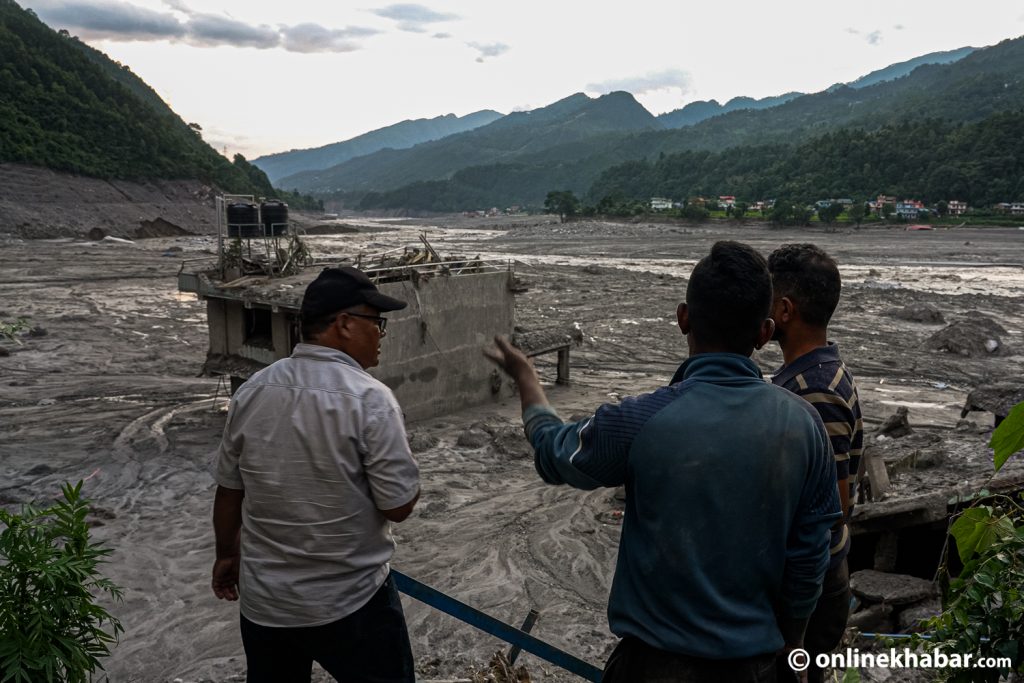
Nearly 1.6 million people have been affected by the August 26 glacial avalanche and subsequent floods near the Nepal-China border, according to the government’s first situation report on the disaster.
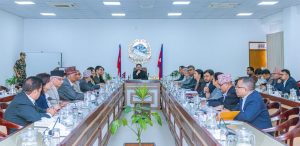
The report, released Tuesday by the National Disaster Risk Reduction and Management Authority, said the floods caused extensive loss of life and property along the Bhotekoshi-Trishuli river corridor.
Rasuwa and Nuwakot have been classified as the worst-affected districts, while Dhading, Gorkha and Chitwan have been listed as moderately affected.
Deaths and missing people
The disaster has so far claimed 987 confirmed lives, according to the authority.
Chitwan has recorded the highest number of deaths at 321, followed by Nawalparasi East with 216, Nawalparasi West with 170, Nuwakot with 95, Gorkha with 65, Dhading with 55, Tanahun with 38 and Rasuwa with 27.
Reports from 62 districts put the number of people missing at 3,916.
Of those reported missing, 62 percent are domestic tourists and groups including Nepali nationals, 17 percent are government employees and 15 percent are foreign nationals.
More than 11,800 rescued
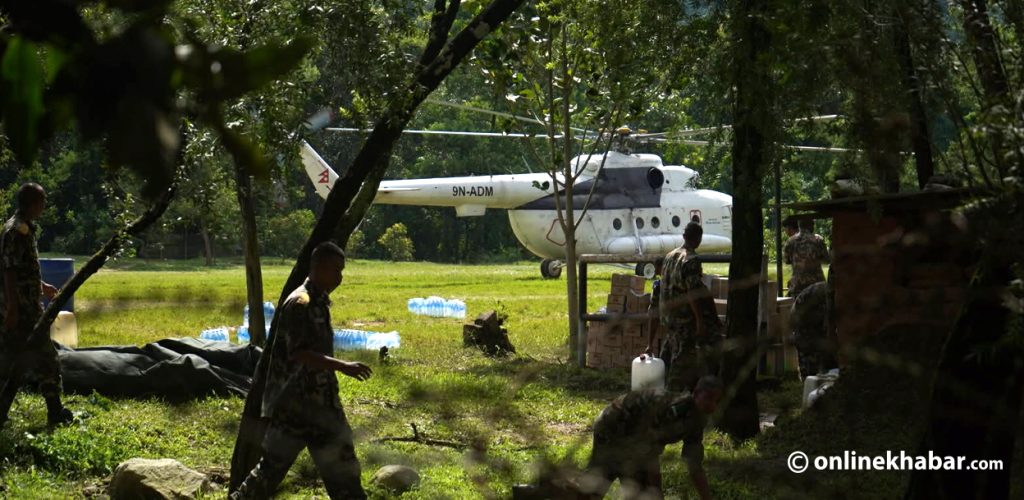
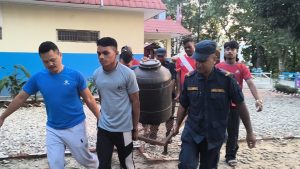
A total of 11,814 people have been rescued so far, including 253 foreign nationals, the authority said.
At least 3,702 people have been rescued by air, with 573 helicopter flights carried out as part of the operation.
A total of 21,011 security personnel have been deployed for rescue operations — 8,896 from the Nepali Army, 7,912 from Nepal Police and 4,203 from the Armed Police Force.
International teams from India, China and South Korea have also been deployed alongside Nepali teams for search and rescue operations.
A total of 279 injured people have received treatment at various health facilities. Of them, 79 remain under treatment, 168 have been discharged and three have died while receiving treatment.
The Nepali Army has also provided medical treatment to an additional 2,740 people in affected areas.
Roads, bridges and buildings damaged
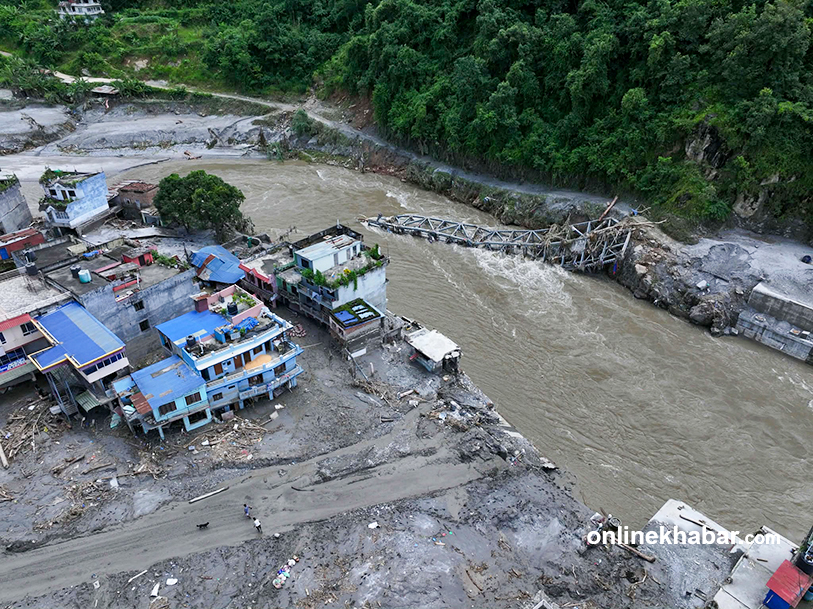
The floods completely destroyed 41 concrete bridges, while four others were damaged.
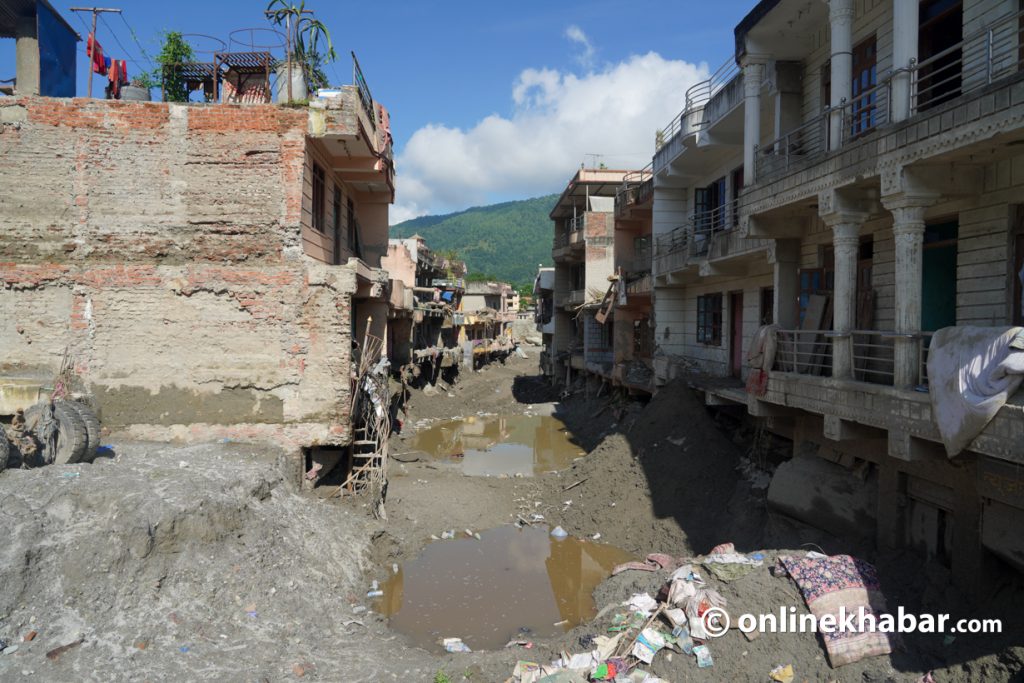
In Nuwakot alone, 1,267 houses were completely destroyed and another 1,253 partially damaged, according to preliminary figures.
Satellite mapping shows that 4,689 buildings in the flood-affected areas of the Bhotekoshi-Trishuli corridor are at risk, the report said.
In Rasuwa, 3,702 households comprising 14,461 people in the worst-affected Gosaikunda and Aamachhodingmo rural municipalities have been cut off from roads, electricity and communications for six days.
All major highways in Rasuwa remain closed indefinitely. The Trishuli-Mailung-Syafrubesi road section at Khalte in Uttargaya Rural Municipality-5 is completely blocked.
In Nuwakot, traffic along the Tokha-Chhahare road at Ghattikhola has been halted from 10pm to 5am because of the risk of flooding and landslides.
The Pasang Lhamu highway section in Belkotgadhi Municipality-10 is also completely blocked.
The floods damaged 110 Nepal Telecom mobile towers and 78 Ncell towers, according to the report.
Hydropower projects affected
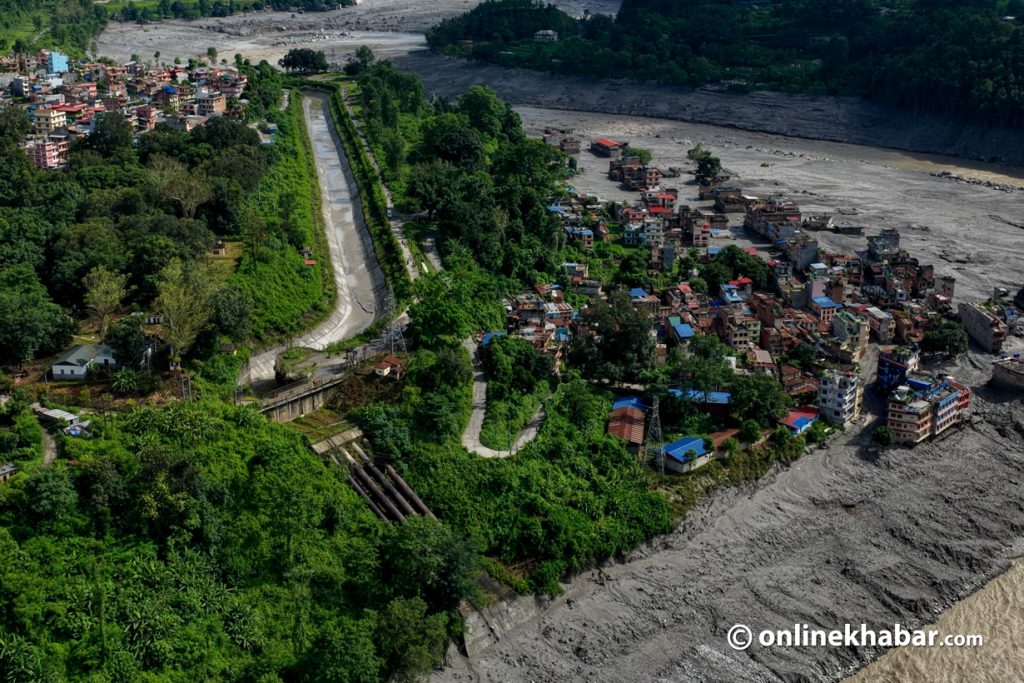
Several hydropower projects have suffered damage, including Rasuwa Gadhi, Rasuwa-Bhotekoshi, Chilime, Langtang Khola, Upper Trishuli-2, Upper Trishuli-1, Mailung Khola, Upper Trishuli-3A, Upper Trishuli-3B, Madhya Trishuli Ganga, Trishuli, Devighat and Super Trishuli.
Hydropower and solar projects with a combined installed capacity of 783.385 megawatts have been affected, along with substations and transmission lines.
Thousands of students affected
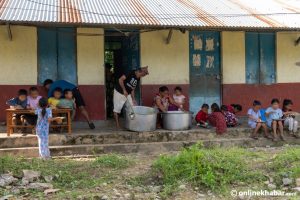
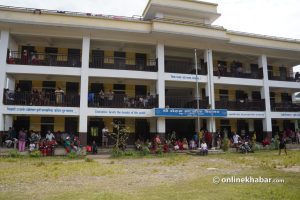
A total of 6,901 students at 19 schools in Rasuwa, Nuwakot and Dhading have been affected.
Eight schools were completely damaged and another eight partially damaged. Only three schools remain safe.
Health and water infrastructure damaged
The Syafrubesi Health Post, Timure Health Post, Timure Health Desk at Rasuwa Gadhi and Mailung Community Health Unit in Rasuwa were completely destroyed.
The Baireni Hospital in Galchhi and the Charaundi Basic Health Service Centre suffered partial damage.
Two wastewater treatment plants in Dhunge and Bidur, Nuwakot, were completely damaged.
Damage to the Bidur water supply project washed away around 4.5 kilometres of pipeline and three sump wells, affecting about 4,000 households.
The Trishuli Colony, Devighat and Betravati water supply projects were also affected, impacting another 465 households.
National park and agricultural offices damaged
Offices and buildings of Langtang National Park in Timure, Syafrubesi, Mailung and Bandare were either completely or partially destroyed.
The Agricultural Development Centre in Nuwakot and the Plant Quarantine Office in Timure were also damaged.