When Basu Aryal was growing up in Jyamire, Makwanpur, advanced technology was still a distant idea.
The East-West Highway had brought some convenience to the settlement, but electricity and technology were developing slowly. For a boy who had grown up in a farming family, education became the route to a very different future.
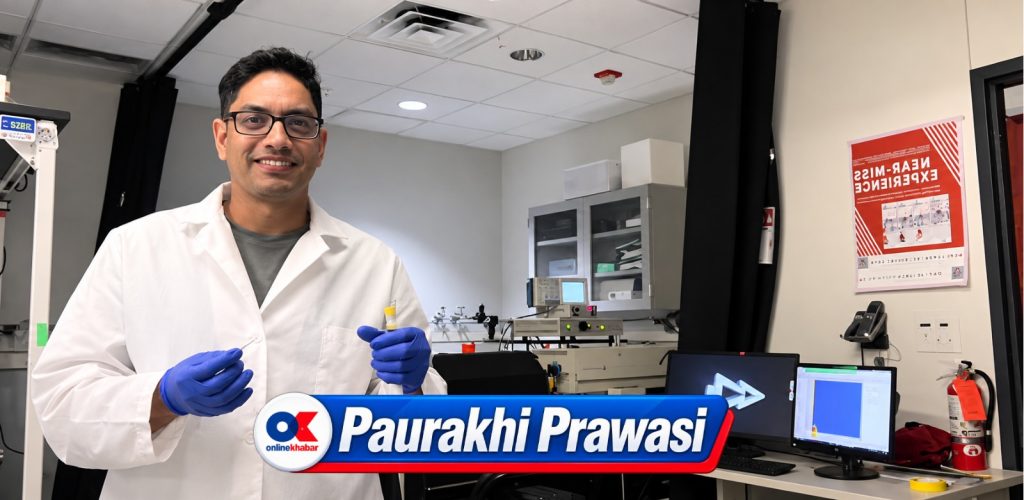
Today, Aryal has a PhD in analytical chemistry from Brigham Young University in the United States and has worked in advanced semiconductor and processor technology.
His journey began in the village.
Aryal completed Grade 4 at Vyas Secondary School in Pakani. In 1993, his family moved to Jyamire in Manahari-9, Makwanpur, after floods displaced many people in Pakani.
He continued his education at Mahendrakiran Secondary School in Manahari and completed his SLC in 1999.
He had been an exceptional student from an early age.
Throughout school, Aryal regularly stood first in his class. He scored full marks in mathematics examinations and more than 90 in other subjects, according to retired Mahendrakiran Secondary School teacher Matrika Subedi.
He scored 86 percent in his SLC examination.
At the time, he was the only student in the district to score 86 percent from a community school. He had also stood first in the district in the Grade 8 examination.
After he topped the district, Kathmandu-based Siddhartha Vanasthali came to Mahendra Secondary School in Bhimphedi to honour him.
“At that time, Siddhartha Vanasthali used to award students who topped the district. I was called to Bhimphedi and honoured with an award,” Aryal recalls.
Inspired by his brothers
Basu Aryal’s parents, Badri Aryal and Bishnumaya Aryal, had only basic literacy. They supported their children’s education through farming.
The youngest of six brothers, Aryal also has a sister.
He says his older brothers helped him understand the importance of education from an early age.
His brothers Rajkumar and Jayaram Aryal were his main sources of inspiration. While Basu was still in school, both were studying in Kathmandu.
“Basu was an exceptional student from a very young age,” Jayaram says. “I have never heard of him scoring less than 90 in any subject. Some teachers even used to say that they had to deduct marks because they could not give him full marks.”
From a village to Kathmandu
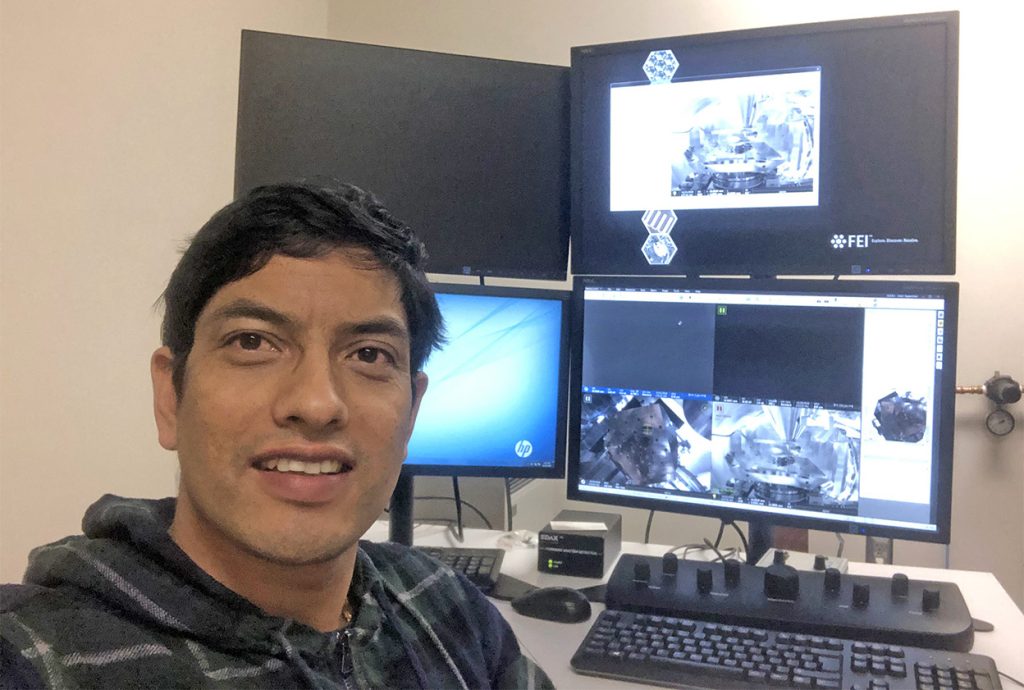
After completing his SLC, Aryal moved to Kathmandu to study science at Tri-Chandra College. The transition was not easy. Having studied at a government school, he initially struggled with English-medium education.
“When I first came to Kathmandu to study, it was a little difficult for me. Since I had studied at a government school, studying in English was initially a problem,” he says.
But he worked hard and gradually overcame the language barrier.
“I worked very hard and was able to do well. Only the best students from across the country come here to study. Even then, I used to rank second or third in examinations while studying science,” he says.
Aryal completed his ISc from Tri-Chandra and then earned a BSc from Amrit Science Campus. He went on to complete an MSc in Chemistry from the Central Department of Chemistry at Tribhuvan University in 2009, scoring 82 percent.
Studying in Kathmandu itself was a challenge. He lived in a rented room and completed his MSc without a scholarship. After completing his studies, Aryal taught chemistry at Bagmati Modern College in Sukedhara until 2012. He then returned to Hetauda, where he taught at Hetauda School of Management until 2016. That year, he received an opportunity to pursue a PhD in the United States on a full scholarship. In August 2016, he left Nepal.
From chemistry to chips
His move to the US marked the beginning of a new chapter — one that would eventually take him into the world of processors and semiconductor technology.
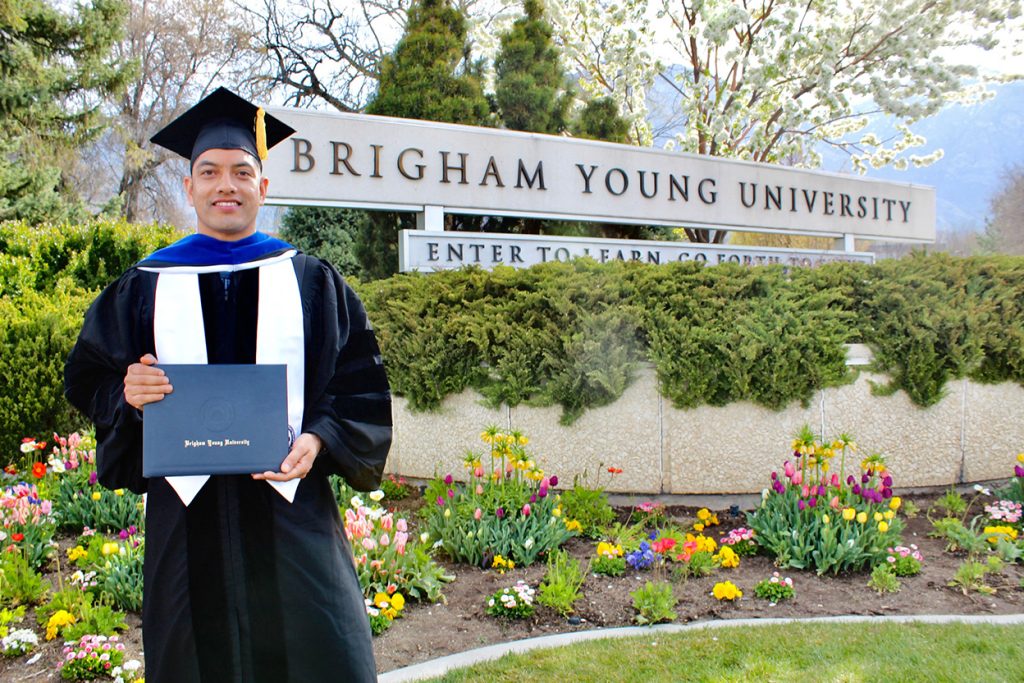
Basu Aryal pursued a PhD in analytical chemistry at Brigham Young University in Provo, Utah. He completed his doctorate in 2021.
During his time at the university, he worked on research projects in professors’ laboratories and earned $2,200 a month.
Through a nanofabrication research project, he worked on developing new materials and objects using substances invisible to the naked eye.
From July 2021 to June 2024, he worked as a researcher in the Department of Chemistry at the University of Texas at Austin.
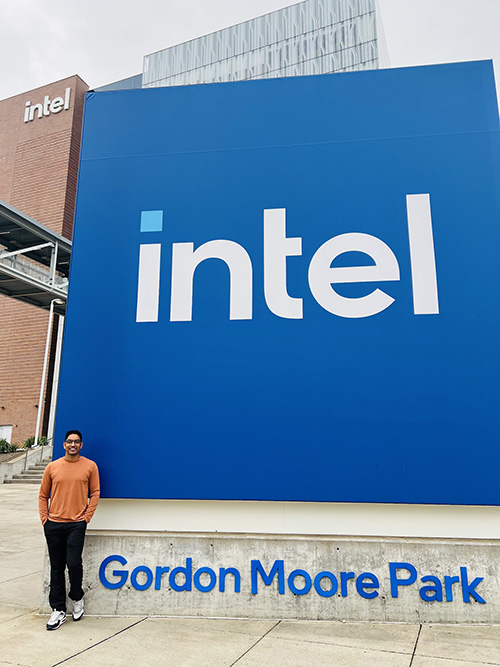
He then joined Intel Corporation in Hillsboro, Oregon, as a process engineer.
Intel is a major semiconductor technology company producing processors that power computers, laptops, mobile devices and advanced data centres. The company also works in areas including artificial intelligence, 5G networks, cloud computing and advanced chip manufacturing.
For Aryal, the transition from a rural school in Makwanpur to one of the world’s most advanced technology industries represents a remarkable change in his professional journey.
Working on smaller, more advanced processors
At Intel, Basu Aryal became involved in work related to the development of an 18A microprocessor, featuring 1.8-nanometre transistors.
He says smaller processors are generally associated with more advanced technology and can offer high performance.
“The smaller the processor, the more advanced the technology is considered to be. We work on its research every day,” he says.
He says continuous research and testing are carried out to make the microscopic technologies used in chip manufacturing more stable, faster and higher quality.
“Being able to work in processor production at a company like Intel is a matter of pride,” Aryal says. “I hope the country can also learn something from this.”
Intel’s Hillsboro facility in Oregon is one of the company’s locations involved in research and development of new processor technologies.
“The processors developed here are sent elsewhere for production. Production also takes place at other facilities of the company,” Aryal says.
Thinking about Nepal
Basu Aryal’s work in the semiconductor industry has also made him think about how his skills could eventually be useful in Nepal.
His annual salary at Intel was $131,000, equivalent to around Rs 20 million in Nepali currency. But he says his ambitions extend beyond personal financial success.
“We are always thinking about how these skills can be used in Nepal,” he says.
He does not believe large-scale chip manufacturing can be established in Nepal immediately. However, he says the country can begin by investing in research and basic technologies.
“Large-scale chip manufacturing industries are not immediately possible in Nepal. But research and the development of foundational technologies can be started,” he says.
Aryal says small-scale research efforts are already taking place at Tribhuvan University and Kathmandu University, but larger and long-term investment is needed.
Intel also has operations in countries such as Malaysia. Nepal, however, is not currently in a position to manufacture processors, he says, mainly because of the enormous investment required.
“I want my country to benefit. For that, a good team is necessary. We do have the idea of working in Nepal,” he says.
A journey beyond the village
Aryal’s journey began in a rural community where technology was still a distant concept.
He went from a government school in Makwanpur, where he regularly topped his class, to Kathmandu, where he had to overcome the challenge of studying in English. From there, he pursued postgraduate studies and research in the United States before entering the highly specialised world of semiconductor technology.
Today, his work is connected to the development of processors that serve as the “brains” of computers, mobile devices and other digital technologies used by millions of people around the world.
For his brother Jayaram, Aryal’s achievement carries significance beyond the family.
“A young man like him presenting his skills at the global level while living abroad is not only a personal achievement but also a way of enhancing the identity of the country,” he says.