

Kathmandu, November 22
Four years ago, thousands of young men from across Nepal were making their way to Dharan and Butwal, hoping to enlist in the Indian Army and become Gorkha soldiers.
Recruitment, suspended for two years because of the Covid-19 pandemic, had resumed, and the enthusiasm among aspiring recruits was particularly high. Indian Army selection officers had already set up camps in Dharan and Butwal, with the selection process scheduled to begin the following morning.
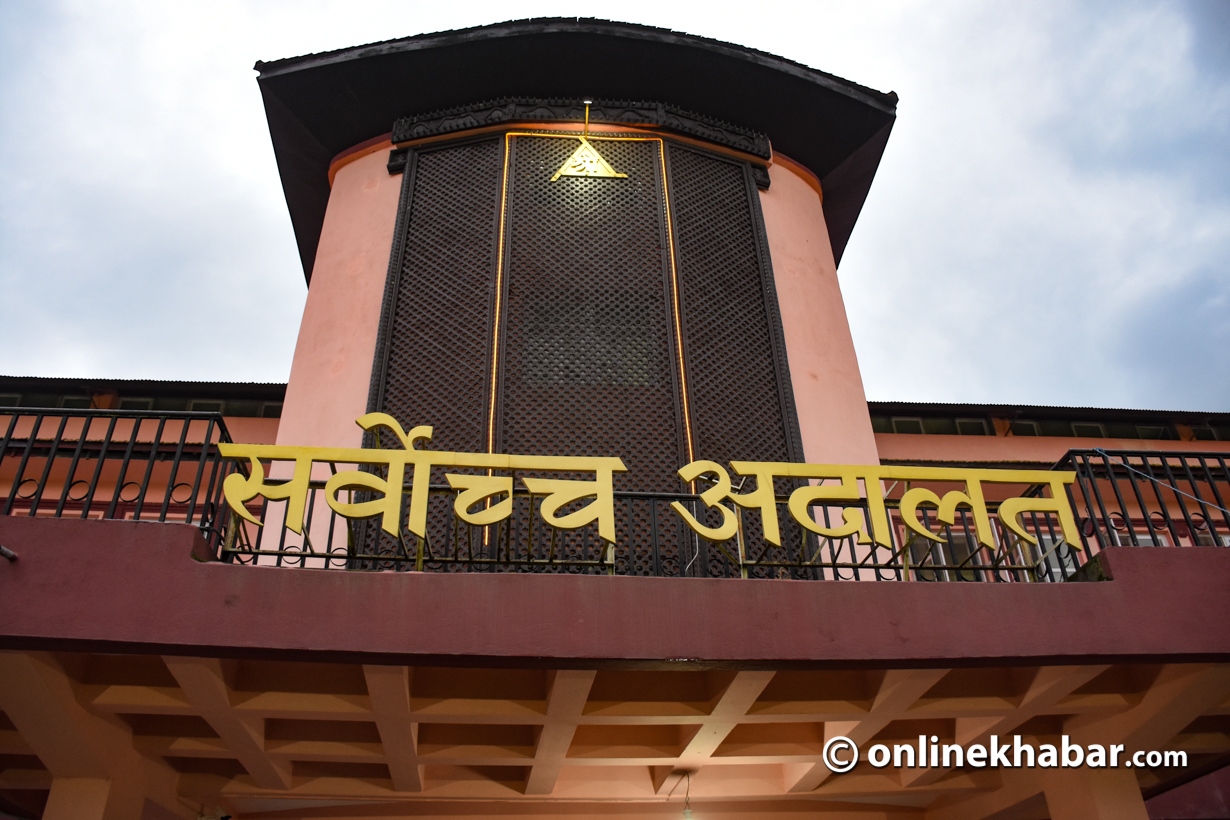
But on the evening of August 25, 2022, the Cabinet led by then Prime Minister Sher Bahadur Deuba decided not to allow recruitment into the Indian Army until further notice.
The selection officers and prospective recruits went their separate ways.
Four years have passed since that decision, but the government has yet to issue the promised further decision. The halt has interrupted a recruitment tradition that dates back more than two centuries.
Why did Nepal suspend recruitment into the Indian Army? Was the suspension meant to be temporary, or could it become permanent? Should recruitment remain closed or resume? And with India having revised its Agnipath scheme and Prime Minister Balendra Shah visiting India, could the issue now be revisited?
This report explores these questions.
When did recruitment of Nepalis into the Indian Army begin?
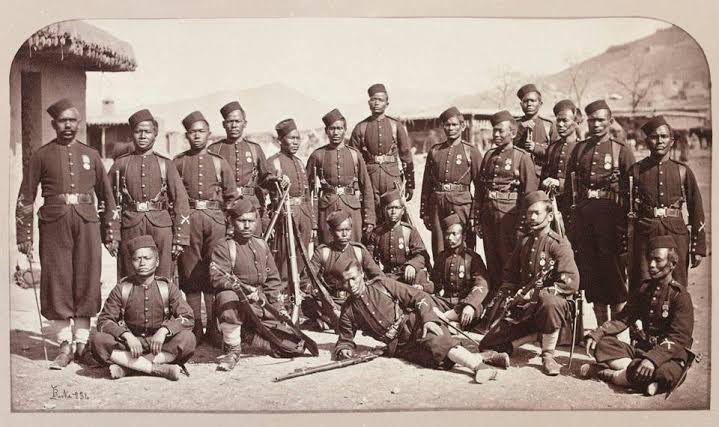
The history of Nepali recruitment into foreign armies goes back to the Anglo-Nepal War of 1814-1816.
Impressed by the courage and fighting skills of Nepali soldiers during the war, the British East India Company, which ruled India at the time, began recruiting Nepali youths into its army.
While the British were still fighting Nepal, they established three battalions in 1815 to recruit Nepalis — Sirmoor, Nasiri and Kumaon.
The Sirmoor battalion, established in Nahan in the Indian state of Sirmoor, later evolved into a regiment and became the Second Gorkha Rifles in 1906.
The First Gorkha Rifles originated from the Nasiri battalion, whose history is linked to Nepali war hero Amar Singh Thapa. Following the fighting in Kumaon, an agreement was reached between Thapa and General David Ochterlony, paving the way for the formation of the Nasiri battalion.
The Kumaon battalion was established in Almora and later became the Third Gorkha Rifles.
The Treaty of Sugauli in 1816 ushered in a new chapter in relations between Nepal and Britain, after which Gorkha recruitment became increasingly institutionalised.
However, the formal arrangement governing the recruitment of Nepalis into the Indian Army today is generally traced to the tripartite agreement signed in 1947 between Nepal, India and Britain.
At the time, there were 10 Gorkha regiments in British India. Following Britain’s departure from India, the three countries agreed to divide the regiments, with four going to Britain and six remaining with India.
Since then, Nepali youths have continued to serve in the Indian Army as Gorkha soldiers.
According to figures from India’s Ministry of External Affairs in 2024, around 32,000 Nepalis were serving across 39 battalions under seven Gorkha regiments. Nepali soldiers serving in the Indian Army reportedly bring in around Rs 60 billion annually through salaries and pensions.
This longstanding tradition, however, came to an abrupt halt four years ago, following the introduction of India’s Agnipath scheme.
What is the Agnipath scheme and who are Agniveers?
Agnipath is India’s military recruitment policy approved by the government on June 14, 2022. Those recruited under the scheme are called Agniveers.
India introduced the scheme with the stated aim of making its armed forces younger, more agile, modern and cost-effective.
Under the original scheme, youths aged between 17 years and six months and 21 years were recruited for four years. Following widespread opposition in India, the upper age limit for recruitment was raised to 23 years.
After four years, up to 25 per cent of Agniveers could be retained in regular military service based on merit and performance. The remaining 75 per cent would be discharged.
Agniveers were initially paid Rs 30,000 a month in the first year, Rs 33,000 in the second, Rs 36,000 in the third and Rs 40,000 in the fourth year.
Those not retained in regular service would not receive a pension.
Upon completing four years, Agniveers would receive a lump-sum payment of Rs 1.171 million. The amount comprises 30 per cent of their monthly salary contributions, matched by an equal contribution from the government.
The recruitment, service conditions, salaries, pensions, leave and welfare benefits of Gorkha soldiers are governed by the 1947 tripartite agreement.
The agreement provides for Gorkha soldiers to have the opportunity to complete the service period required to qualify for pension. The Agnipath scheme, however, would send 75 per cent of recruits home after just four years, a provision Nepal considers inconsistent with the spirit and provisions of the tripartite agreement.
This change raised questions over the recruitment of Nepalis into the Indian Army under the scheme.
Nepal communicated its inability to send recruits under the new arrangement through various diplomatic channels, says former foreign minister Dr Narayan Khadka.
“We expressed our disagreement through formal and informal channels,” Khadka told Onlinekhabar.
Arun Kumar Subedi, who was foreign affairs adviser to then Prime Minister Deuba when recruitment was suspended, recalls the selection process being halted after the Home Ministry did not deploy security personnel to the recruitment camps in Butwal and Dharan.
“The Home Ministry did not send security personnel, saying it had not received a letter from the Foreign Ministry, and the selection process was stopped,” he says.
What is Nepal’s position on Agnipath?
Ordinarily, a sovereign country would not necessarily have to concern itself with another country’s military recruitment policy. But India’s Agnipath scheme became an issue for Nepal for several reasons.
After India announced the scheme, it also prepared to recruit Nepali youths under the same arrangement.
Nepal, however, maintained that Gorkha recruitment should be conducted in accordance with the spirit and provisions of the 1947 tripartite agreement.
While India has the sovereign right to determine its own military policy, Nepal’s position is that it cannot unilaterally alter arrangements linked to a tripartite agreement.
There are also concerns about who would assume responsibility for the employment, education, social security and reintegration of young recruits returning to Nepal after four years.
The debate in Nepal has largely centred on two broad perspectives.
The first argues that recruitment should resume.
Supporters say joining the Indian Army provides Nepali youths with employment, income, skills and international experience.
Gorkha recruitment is also considered an important part of Nepal’s history and its relationship with India. Suspending recruitment has deprived thousands of aspiring youths of an opportunity they had long sought.
Krishna Bahadur Khatri, a former Gorkha soldier who has been campaigning for recruitment to resume, says Nepali youths should be allowed to enlist under the Agnipath scheme.
“Recruitment should have been opened even under the earlier Agnipath arrangement. Now the scheme has been revised. The government of Nepal should continue Gorkha recruitment,” he says.
Subedi, who was Deuba’s foreign affairs adviser when recruitment was suspended, also views Gorkha recruitment as a form of Nepal’s soft power.
“Gorkha recruitment is not merely an employment issue for our youths; it is the country’s soft power,” he says. “Ironically, recruitment was suspended under a government led by the Nepali Congress. It should now be reopened.”
But there is also opposition to accepting the Agnipath arrangement.
Some argue that Gorkha recruitment itself should be discontinued. Even among those who support recruitment, however, there are reservations about sending Nepali youths under Agnipath.
Their principal concern is the future of recruits who return after four or six years of military service.
What happens to young people who return without long-term employment, pensions or adequate social security? How will Nepal manage their reintegration? Who will provide employment and support to those returning with military training and weapons-handling skills?
Those holding these views say Nepal should not be reassured simply because India has revised the scheme. They argue that the changes do not necessarily address the broader concerns about the long-term welfare of Nepali recruits.
Why did India revise Agnipath after four years?
India has introduced a revised version of the Agnipath scheme in November 2026, describing the programme as successful over its initial four years.
Under the revised arrangement, 75 per cent of Agniveers will be able to serve for an additional two years, completing at least six years of service. They will also continue to be eligible to compete for regular military service during the extended period.
Agniveers will receive Rs 43,500 a month in the fifth year and Rs 47,500 in the sixth year.
The lump-sum payment they receive upon discharge will also increase. Those completing six years will receive Rs 1.594 million, compared with Rs 1.171 million for those discharged after four years under the earlier arrangement.
When the Modi government announced the revision on November 4, Indian Foreign Secretary Vikram Misri was visiting Nepal.
On the eve of Misri’s visit to Kathmandu, and during Indian Army Chief General Dhiraj Seth’s visit to Pokhara in August, protests were held demanding the resumption of Gorkha recruitment. Some have alleged that the protests were organised at India’s behest.
Although Gorkha recruitment was discussed ahead of bilateral visits, diplomatic engagement has not progressed towards a concrete resolution.
Prime Minister Pushpa Kamal Dahal visited India in June 2023, when Nepal’s disagreement over Agnipath was still in place. But the issue did not receive meaningful attention during the visit.
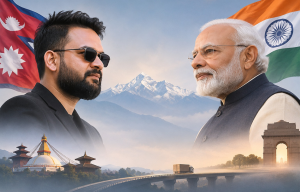
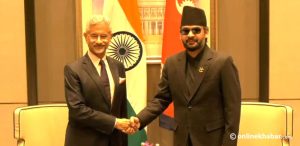
Now, Prime Minister Balendra Shah is preparing to visit India.
Can Balen take the Agnipath issue forward?
According to ministers from the Balen government who have previously visited India, the Agnipath issue has not been discussed even once so far.
With India having revised its recruitment scheme, a new opportunity for dialogue may have emerged.
Balen could use his visit to initiate discussions aimed at reaching a concrete decision on Agnipath.
The question facing Nepal is whether its decision on allowing recruitment should be based solely on immediate employment opportunities or should also prioritise the long-term future of Nepali youths, social security and national interests.
Vinod Rana Magar, who runs pre-army training in Pokhara for candidates seeking to join the Indian Army, says recruitment under Agnipath is not necessarily an unattractive option compared with other forms of foreign employment.
But he argues that the longstanding recruitment tradition and the provisions of existing agreements must be respected.
“Interested youths should be given the opportunity to join,” he says.
Writer Jhalak Subedi, who has extensively studied Gorkha recruitment, argues that Nepali youths’ entry into the British and Indian armies began when Nepal was losing its war against the British. He believes the agreement made under the conditions imposed by the victorious power should itself be scrapped.
Subedi, author of The Flipside of the British Empire: The Inside Out of the Gurkha Recruitment, argues that a sovereign country should not adopt a policy allowing its youths to be recruited into another country’s military.
“Personally, I believe the government should not stop people from joining the armies of India or Britain, or even the United States or France. The government also has a responsibility to ensure that their service conditions and benefits are addressed. But I do not support recruitment as a policy,” he says.
Dr Khadka, who was foreign minister when Nepal suspended Gorkha recruitment, recalls that the original Agnipath scheme faced strong opposition not only in Nepal but also within India, particularly over the provision requiring 75 per cent of recruits to leave the military after four years.
Although some provisions have since been revised, he advises Nepal not to abandon its position hastily.
“If this proposal comes up during the prime minister’s visit, we should say that we will respond after further homework. Nepal should not abandon its position and rush into reopening recruitment,” he says.