Kathmandu, November 22
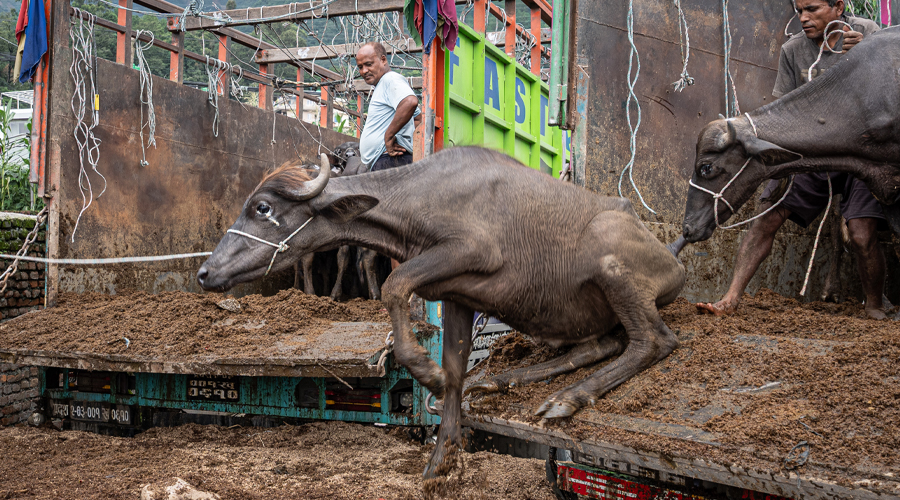
Livestock transported to Kathmandu from various districts for meat consumption are being subjected to severe mistreatment, with animals reportedly transported over long distances without food or water, overcrowded in trucks and in vehicles unsuitable for their transport.
Field observations, photographs and video footage collected by the Nepal Animal Welfare and Environment Society have documented violations of animal welfare standards, particularly in the transportation of buffaloes, goats and chickens.
At a press conference, the society said buffaloes transported from far-western districts, including Kailali, Tikapur and Attariya, take between 48 and 72 hours to reach Kathmandu. Some animals are reportedly not provided with food or water throughout the journey.
“Animals should be provided with water, food and rest during long-distance journeys. However, they are crammed into trucks beyond their capacity. As a result, they suffer injuries, wounds and both physical and psychological distress,” said Hari Joshi, director of the society.
According to Joshi, buffaloes are often transported in trucks meant for carrying vegetables and other goods rather than vehicles specifically designed for livestock transportation.
In some cases, smaller and larger buffaloes are transported together, tied up and given insufficient space, further adding to their discomfort, he said.
Similar problems have also been observed in the transportation of goats and chickens, Joshi added.
The society said it has launched awareness campaigns to reduce mistreatment of animals during transportation. It has also begun collecting and publishing photographs and videos to highlight the problems encountered during livestock transport.
Joshi stressed that the campaign is not against the livestock trade or the meat industry, but against cruelty to animals during commercial operations.
“Animals are living beings. They experience hunger, thirst, fear and pain. Ensuring their safe transportation is the responsibility of the state and all concerned stakeholders,” he said.
Although the government has established standards for livestock transportation, the society says their implementation remains ineffective.
Joshi said government agencies have shown interest in revising transportation standards to reflect changing circumstances, but little progress has been made in enforcing them.
He suggested that livestock should be transported using specially designed vehicles and that the government should provide incentives and tax exemptions to businesses to encourage the purchase and operation of such vehicles.
He also proposed establishing rest centres along long-distance transport routes where animals could be provided with food, water, rest and medical care.
Joshi further suggested that establishing modern and well-managed slaughterhouses around Chitwan could help reduce waste and sanitation problems associated with livestock transportation in Kathmandu.
According to the society, livestock and poultry brought to Kathmandu originate from areas including Kailali, Tikapur, Attariya, Nepalgunj, Bardiya, Nawalparasi, Bara, Janakpur and Biratnagar.
The society also raised concerns about the lack of an effective monitoring system for livestock transportation. Although quarantine offices in various locations facilitate transportation based on animal health certificates, adequate field monitoring of the actual conditions in which animals are transported remains lacking, Joshi said.
The society urged the government to strengthen coordination and cooperation among the Department of Livestock Services, quarantine offices, traffic police, livestock traders and transport operators to ensure effective enforcement of animal transportation standards.