

Nepal-India ties have traditionally centred on politics, trade, the economy and culture. However, cricket can be another effective way to take the relationship to the people. India is the financial, technical and institutional powerhouse of world cricket, while Nepal is a fast-rising nation in the sport. Nepal should not limit cooperation to some equipment or friendly matches. It should turn it into long-term cricket development.
Nepali cricket has progressed remarkably over the past decade, with strong international performances, World Cup participation, a wider domestic game and the launch of the Nepal Premier League (NPL). But there is still a dearth of infrastructure, regular competition, high-level coaching and funding.
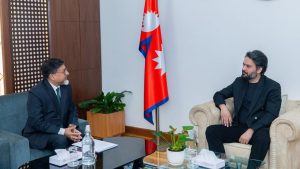
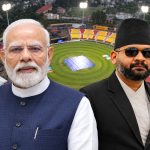
With this in mind, Prime Minister Balen Shah proposed expanding sports cooperation during Indian Foreign Secretary Vikram Misri’s recent visit to Nepal. India has world-class academies, skilled coaches, sports science centres and vast infrastructure.
India’s support so far
India has backed Nepali cricket for decades. Interest from India’s Zee TV in the 1990s led to the development of the Kirtipur ground, now the Tribhuvan University International Cricket Ground. In October 2023, the Indian Embassy handed 20 professional bats and other equipment to the national team.
More recently, support has extended to training and practice matches. The national team trained at the National Cricket Academy in Bengaluru in August 2024 and again in 2025. In 2025, the women’s team trained and played friendlies in Delhi. Three young players, Naren Bhatt, Sahil Patel and Pooja Mahato, also spent a month at the LB Shastri Cricket Academy in Bhopal under an embassy fellowship. A Delhi U-19 side toured Nepal in March 2025.
Sandeep Lamichhane’s selection for the Indian Premier League in 2018 was another milestone.
Four proposals
Nepal can seek support from India in four key areas to further develop and strengthen Nepali cricket.
First, national team players, coaches and support staff could train regularly at modern Indian academies. They would have access to experts in batting, bowling, fitness, sports psychology, injury management and sports science.
Second, talented U-16, U-19 and women players could receive scholarships or fellowships for six to twelve months at reputed Indian academies.
Third, Nepali players could gain access to Indian domestic cricket, including state teams and age-group and invitational tournaments. IPL franchises could also run trials and talent-identification programmes for Nepali players.
Fourth, Nepal could play regular bilateral series against India A, the U-19 and women’s teams and top domestic sides.
An international stadium in Pokhara
Pokhara deserves special attention. In 2019, the Gandaki provincial government proposed an international stadium at Pashupati Ghat in Bharatpokhari, Pokhara-33. The idea was also discussed at a 2014 Nepal-India Joint Commission meeting, so Indian support has already been raised diplomatically.
Balen Shah could put it on his agenda. India could offer grants, technical help, design, construction management and equipment. A stadium would benefit tourism too, as teams from India, Bangladesh, Sri Lanka and elsewhere could be invited to tournaments.
Lessons from Afghanistan
India’s help to Afghan cricket is a useful model. Because of instability and security problems, Afghanistan struggled to host matches. From 2015, India let it use grounds such as Greater Noida, Dehradun and Lucknow as home venues. After Afghanistan gained Test status in 2017, India hosted its first Test in Bengaluru in June 2018.
Nepal’s proximity makes similar cooperation easier. Nepal could practise and hold tournaments on Indian grounds until it builds enough international venues.
The ICC’s recognition of the NPL is another major achievement. It raises the league’s credibility and its appeal to foreign players, sponsors and franchises. Cooperation with Indian management experts, franchises and broadcasters could make it more professional. If Indian domestic players joined the NPL and Nepali players got chances in Indian franchise cricket, it could become a major league in South Asia.
Turning diplomacy into results
The government needs clear priorities. Nepal could formally propose four things: regular training at Indian academies for the national, women’s and youth teams; competition against Indian domestic teams; financial and technical help for the Pokhara stadium; and cooperation with Indian management and broadcasters to develop the NPL.
Seeking help does not make Nepal dependent on India. Using a neighbour’s knowledge, technology, infrastructure and experience is a positive step. The Prime Minister’s visit is a chance to make that cooperation institutional.