

Kathmandu, November 19
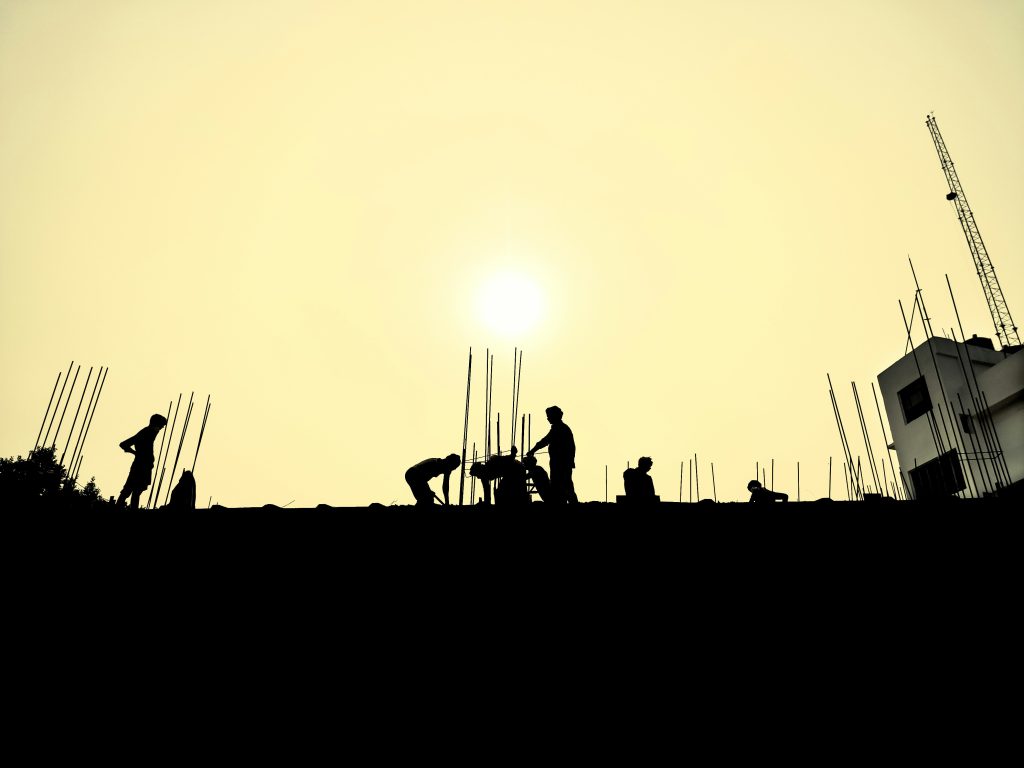
Successive Nepali prime ministers have travelled to India for high-level talks on political, economic, trade and diplomatic relations, but the concerns of nearly one million Nepali workers employed in India have rarely featured prominently in such engagements.
Prime Minister Balen Shah’s upcoming India visit appears to be no exception. While the two countries are preparing to discuss bilateral relations and other key issues, the concerns of Nepali workers in India have once again failed to make it onto the agenda.
India is the destination where the largest number of Nepali workers are employed. However, the informal nature of their employment makes it difficult to establish an exact figure. The Ministry of Labour estimates that around one million Nepalis are working in India.
Nepal does not formally classify workers travelling to India as foreign employment workers. India, too, does not have a separate system to identify Nepali nationals working in the country as foreign workers.
The two countries have facilitated the movement and employment of each other’s citizens under the 1950 Treaty of Peace and Friendship. However, the open-border arrangement has also meant that no dedicated mechanism has been developed to record Nepali workers in India, safeguard their labour rights or facilitate rescue and compensation when they face difficulties.
Despite the scale of migration, issues concerning the rights, social security, labour protections and safe transfer of earnings of Nepali workers in India have rarely received the attention they warrant at the highest level of bilateral engagement.
For PM Balen’s upcoming visit, the Ministry of Labour, Youth and Employment did not forward any agenda concerning these workers, according to ministry sources.
The Office of the Prime Minister and Council of Ministers and the Ministry of Foreign Affairs had asked the ministry to submit issues to be raised during the visit. The ministry discussed the matter internally but decided not to forward the concerns, reasoning that they were not sufficiently significant to warrant discussion at the prime ministerial level, according to sources.
Yet, the problems faced by Nepali workers in India extend well beyond routine administrative matters. Their registration, employment contracts, minimum wages, social security, compensation for workplace accidents and arrangements for transferring earnings through formal banking channels all require cooperation between the two countries.
No agreement, social security or compensation
Workers travelling from Nepal to Gulf countries or Malaysia generally complete formal foreign employment procedures, including obtaining passports, visas, labour permits and written employment contracts. Institutions such as Nepali embassies, the Department of Foreign Employment and the Foreign Employment Board are involved in protecting their rights. Financial assistance and compensation are also available under established provisions in cases of workplace accidents, disability or death.
Nepali workers travelling to India, however, have no comparable arrangements. They generally enter employment through verbal agreements or intermediaries. There is no clear mechanism to ensure compensation in cases of workplace accidents, disability or death, while their access to labour rights and social security in India also remains uncertain.
Prakash Madai, co-executive director of Needs Nepal who has researched Nepali workers in India, says their concerns have consistently remained outside the priorities of successive Nepali governments.
He argues that given the government’s own estimate of nearly one million Nepalis working in India, the issues they face should be addressed through high-level bilateral discussions.
“Given the sheer number of people, there should be bilateral discussions on how to organise their employment and address the problems they face there. But there is no mechanism for them,” Madai says. “These issues should have been raised during high-level meetings and government visits. Preparatory work should have been done, but it has not.”
According to Madai, Nepali workers in India also face difficulties transferring their earnings through banking channels. Without access to social security, they are often unable to receive compensation in cases of workplace accidents or death. Some workers return home injured or disabled without receiving assistance from the state, he says.
He says the Nepali government should take the initiative to ensure Nepali workers can access social security and benefits available under Indian labour laws. The same arrangements should apply to Indian workers employed in Nepal.
“The 1950 treaty addresses movement and trade. But social security that workers are entitled to should also be part of the agenda,” Madai says.
He also advocates arrangements to allow Nepali workers to transfer their earnings to Nepal more easily. Digital payment systems, banking services and QR-based transactions could be used to facilitate the transfer of workers’ earnings through formal channels, he says.
He also calls for cooperation between the two countries to maintain records of Nepali workers in India, provide vocational training to those seeking employment in skilled sectors and help them find jobs suited to their skills.
Problems ranging from Aadhaar cards to banking transactions
Labour and migration expert Dr Jeevan Baniya says Nepali workers in India face problems primarily related to documentation, banking transactions, cross-border movement and labour rights.
Workers often encounter difficulties when transferring earnings from India to Nepal. The absence of ration cards or Aadhaar cards can complicate banking transactions, while restrictions on transfers, even for those who possess Aadhaar cards, create further hurdles.
Baniya says some workers are forced to resort to informal channels such as hundi or transfers through individuals because of these limitations.
“Transactions are taking place from bank to bank. But there are problems for those without Aadhaar cards and even for those who have them, because of restrictions on the amount they can transfer,” Baniya says.
Differences in names, ages and other details across documents can also create legal complications when Nepali workers apply for Aadhaar cards, he says. Workers who previously relied on ration cards have faced additional difficulties since Aadhaar-related requirements became more widespread.
Nepali workers also encounter problems at border crossings when returning home, including issues involving the goods they carry and the conduct of security personnel, Baniya says.
The problems are not limited to Nepalis working in India. Indian workers employed in Nepal also face difficulties concerning minimum wages, benefits and social security.
“Neither Nepalis working in India are adequately receiving wages and benefits, nor are they enrolled in India’s social security system. Similarly, Indian workers in Nepal are not enrolled in Nepal’s system,” Baniya says. “There is also no dedicated bilateral labour agreement to protect workers’ interests.”
He says open-border arrangements have made it easier for people to travel between the two countries for employment, but the labour laws of both countries have not been effectively implemented to ensure workers’ rights. As a result, workers often depend on employers and trade unions for protection.
Baniya says Nepal and India should ensure that Nepali workers in India and Indian workers in Nepal receive employment contracts, minimum wages and social security in accordance with the labour laws of their respective host countries.
Included in policy, but implementation remains uncertain
Nepal’s National Labour Migration Policy 2026 has, for the first time, formally incorporated the issue of Nepali workers employed in India. The policy seeks to bring workers travelling to India within Nepal’s labour migration system.
Section 8.10 of the policy provides for incorporating workers travelling to India into the labour migration system. Section 9.35 calls for collecting and managing data on such workers through employment service centres at the local level.
Section 9.36 proposes gradually enrolling Nepali workers in India in a suitable welfare mechanism modelled on the Foreign Employment Welfare Fund. It also proposes collecting contributions ranging from Rs 200 to Rs 500 from workers.
Section 9.37 provides for local governments to offer information and guidance to workers travelling to India. The policy also includes provisions for free legal assistance to workers facing exploitation or other problems during migration, both in Nepal and in destination countries, and for monitoring whether workers receive the services, benefits and protection stipulated in their employment contracts.
However, despite the policy’s adoption, a clear implementation framework has yet to emerge. Efforts to collect data on workers travelling to India and enrol them in a welfare fund have not moved forward.
Baniya says the registration of Nepali workers in India and their inclusion in social security schemes had also been discussed in the past, but the proposals never materialised.
“These issues have been incorporated into the National Migration Policy. But there is no clarity on when or how they will be implemented,” he says.
The nature of employment opportunities in India is also changing, Baniya says. Alongside Nepalis traditionally employed in labour-intensive jobs, opportunities for skilled workers in information technology and service sectors are expanding.
He says bilateral discussions should therefore address not only labour rights but also opportunities for skilled workers, training and skills exchange.
The open-border arrangement and historical ties between Nepal and India have made it relatively easy for Nepalis to seek employment in India. However, cooperation between the two countries remains inadequate in ensuring workers’ rights, social security and safe transfer of their earnings to Nepal.
The omission of these issues from successive high-level engagements, including PM Balen’s upcoming visit, reflects how the concerns of a large workforce have continued to remain on the margins of Nepal-India bilateral discussions, despite the scale of migration and the vulnerabilities workers face.