

Kathmandu, October 26
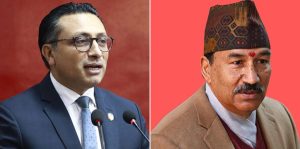
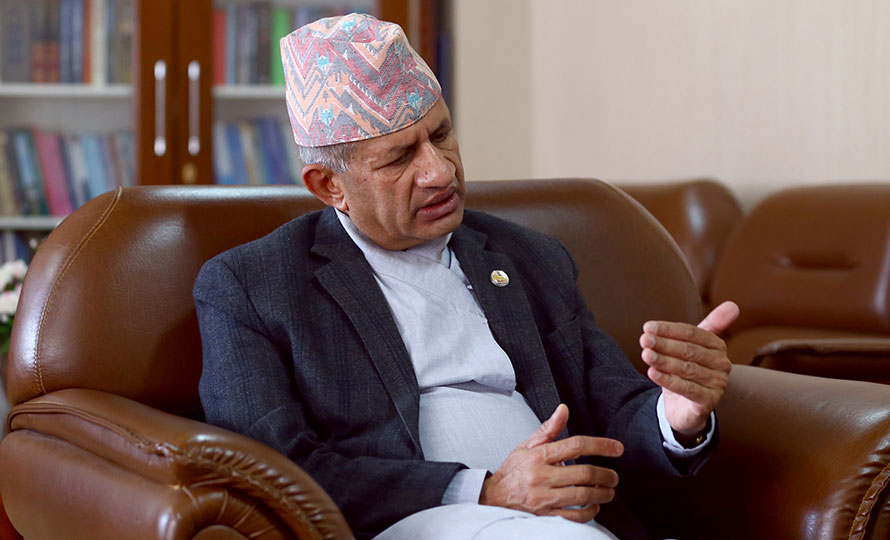
Former foreign minister Pradeep Gyawali has criticised Finance Minister Swarnim Wagle for saying that the era of associating Nepali nationalism with opposition to India has ended, describing the remarks as undiplomatic, irrelevant and damaging to Nepal’s national dignity and interests.
In a social media post, Gyawali said foreign countries were not appropriate venues for government officials to discuss internal political differences at home.
“There was never an era of ‘anti-India nationalism’ in Nepal,” he wrote, questioning what era Wagle was referring to.
Gyawali said Nepal had always sought friendly relations with India based on sovereign equality, mutual interests and respect, and continued to seek the same.
“The views held by a particular individual or group do not, in themselves, constitute an era. Nor do they represent the entire nation,” he wrote.
Wagle made the remarks while addressing the NDTV World Summit 2026 in New Delhi during his visit to India. He said the era of understanding Nepali nationalism as opposition to India had come to an end.
Wagle argued that decades of ideological conditioning had shaped a narrative linking Nepali nationalism with anti-India sentiment. The younger generation, he said, had different priorities, focusing on economic prosperity, good governance, employment opportunities and good relations with neighbouring countries.
“Our generation is different. We have seen the world, and our aspirations are economic. We want good jobs, good governance and good relations with our neighbours,” Wagle said. “So I can say with great happiness that the era of associating Nepali nationalism with anti-Indianism is now over.”
Gyawali highlights unresolved bilateral issues
Gyawali said Nepal and India continued to face several unresolved issues that needed open discussion rather than being overlooked in the name of strengthening bilateral relations.
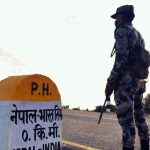
These include border disputes, provisions of the 1950 Nepal-India Treaty of Peace and Friendship that he said create a perception of a security umbrella, barriers that Nepali products face in accessing the Indian market, the growing trade deficit, flooding in Nepali territory caused by unilateral embankments along the border, and delays in securing alternative air-entry routes for Nepal.
“Relations cannot be strengthened by hiding problems under the rug,” Gyawali wrote, arguing that raising such concerns did not amount to opposition to any particular country but was a matter of protecting Nepal’s national interests.
He said every government had a responsibility to safeguard those interests and that the way forward was to build strong national unity and consensus on the issues, followed by serious diplomatic engagement.
“A policy of appeasement based on concealing reality does not strengthen national interests and dignity; rather, it undermines them,” he wrote.