Humla, October 26
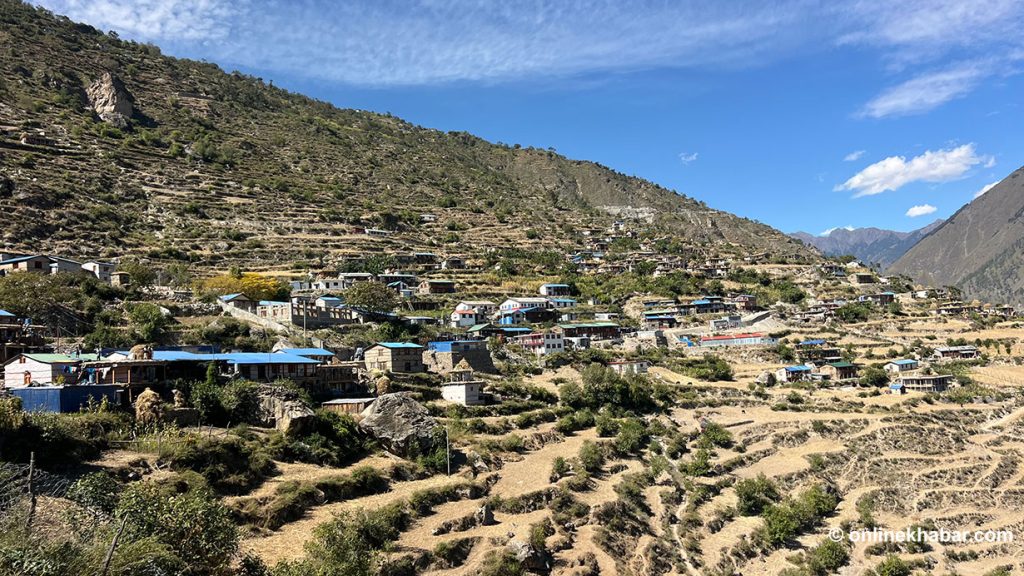
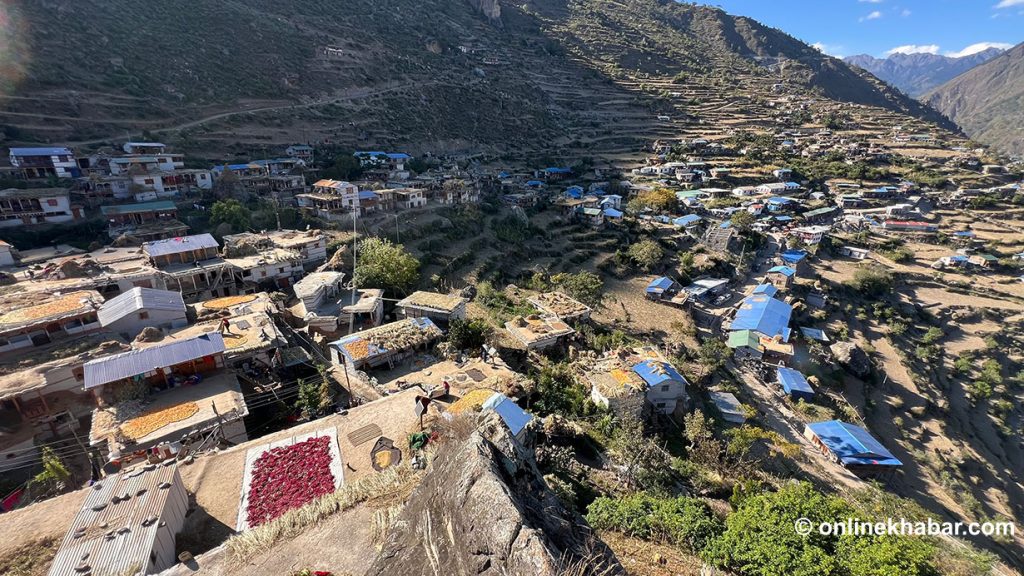
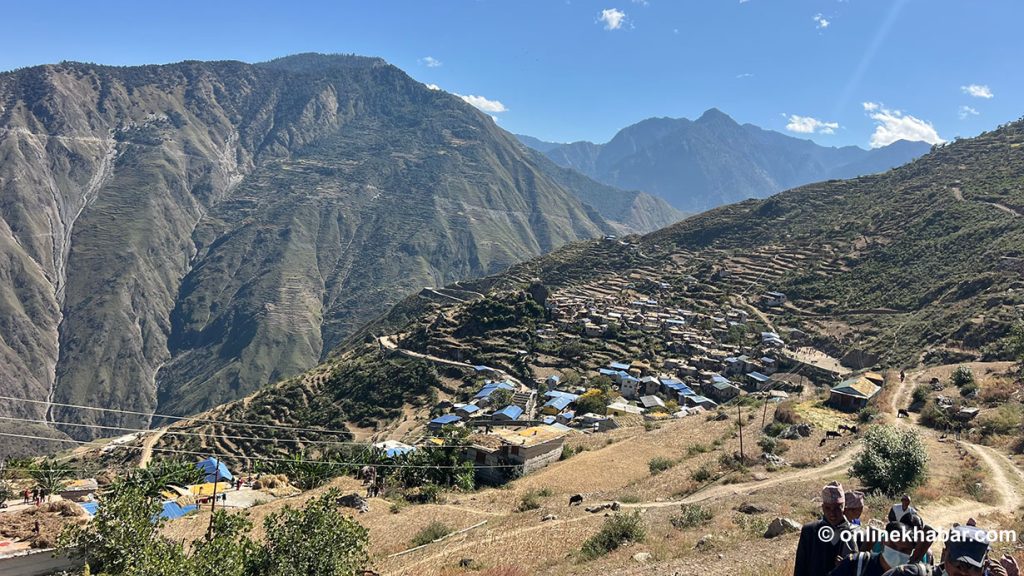
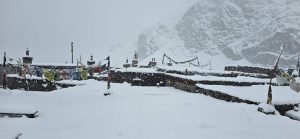
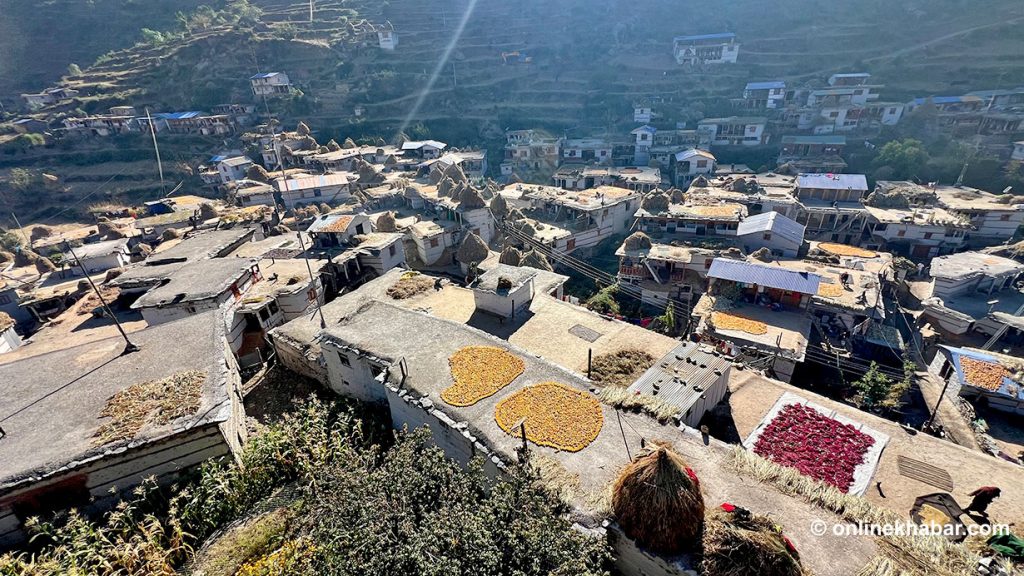
Houses in Srinagar, Adanchuli Rural Municipality-3, Humla, appear to be closely connected. Mud-and-stone houses, grain drying on flat rooftops and settlements spread across mountain slopes reflect the area’s distinctive way of life. However, this traditional housing style, practised for generations, also poses challenges for residents in maintaining sanitation and managing livestock.
Srinagar, which also serves as the administrative centre of Adanchuli Rural Municipality, has houses whose ground floors are used to shelter livestock, upper floors serve as living quarters, and rooftops are used to dry and store grain. As the houses are built close together, the roofs of some houses appear to serve as courtyards for neighbouring homes.
The settlement appears to have developed through the maximum use of available land, owing to the limited flat terrain and steep geography. Built using locally available mud and stone, the houses represent an architectural style adapted to the area’s landscape.
According to resident Manrup Pariyar, houses in the area have traditionally been built following long-established practices. Their structures are closely linked to the local way of life. Rooftops provide space to dry and store grain harvested from farming, while the ground floors are traditionally used to keep livestock.
However, residents say that keeping people and livestock in the same house makes maintaining cleanliness difficult. According to resident Ram Bahadur Mahatara, the lack of separate livestock sheds creates problems for household sanitation and daily management.
Another resident, Kalibahadur Nepali, also says that managing livestock is difficult without separate sheds. Although the practice has continued for generations, he says the need for better sanitation and more managed housing has grown.
Traditional architecture or better-organised housing?
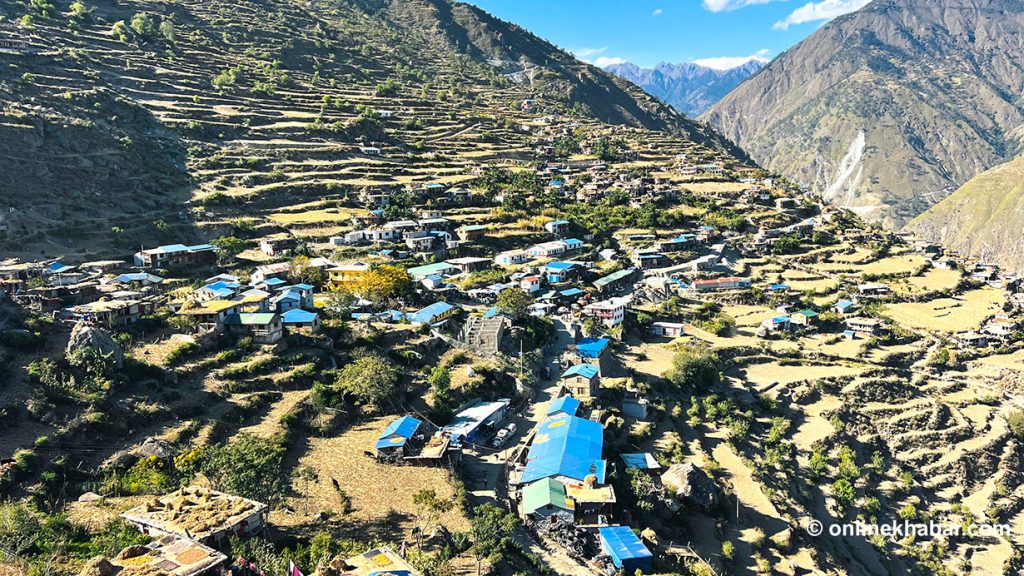
The houses in Srinagar are more than residential structures. They also represent the history, skills and way of life of the local community. The use of mud and stone, flat rooftops, and the practice of accommodating people, livestock and agricultural produce within a single structure are distinctive features of the area’s traditional architecture.
Similar houses can be found in various settlements across the former Karnali region. Built with locally available materials, these structures demonstrate how people developed their lifestyles in response to the geography and resources available to them.
However, housing needs have changed over time. Separate sheds for livestock, proper sanitation inside homes and safe housing have become increasingly important. Rather than simply choosing between preserving traditional structures and improving them, the key question is how to address residents’ problems while retaining the area’s architectural identity.
Residents say that improvements are needed to address sanitation and livestock management problems, even though traditional houses remain an important part of the village’s identity. They add that there are no concrete plans for managing or improving these houses or developing alternative housing.
Replacing traditional houses altogether is not the only solution. These structures are closely connected to local culture, skills and lifestyles. On the other hand, continuing with the existing structures without addressing sanitation and livestock management problems could leave residents facing the same difficulties.
“Therefore, local governments need to develop plans to improve household sanitation, provide separate sheds for livestock and construct safe housing while preserving traditional architecture,” a resident said. “Technical assistance for home improvements, the use of local materials and the development of structures compatible with traditional styles could help improve housing conditions while preserving the area’s distinctive character.”
The settlement of Srinagar reflects a distinctive architectural heritage and way of life preserved over generations. Preserving this heritage should not be limited to maintaining old structures exactly as they are. Efforts to improve residents’ living conditions and protect their cultural identity need to move forward together.