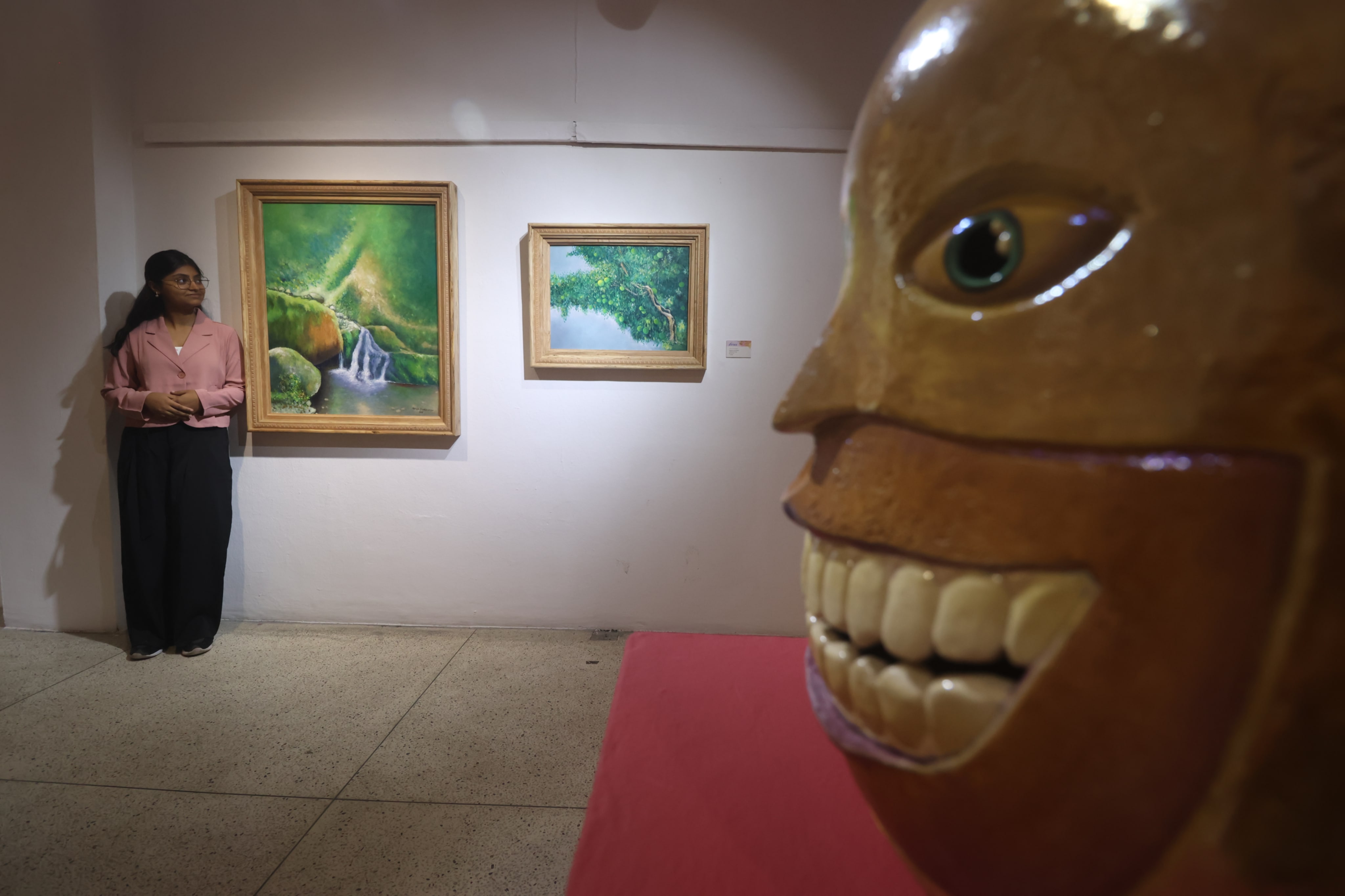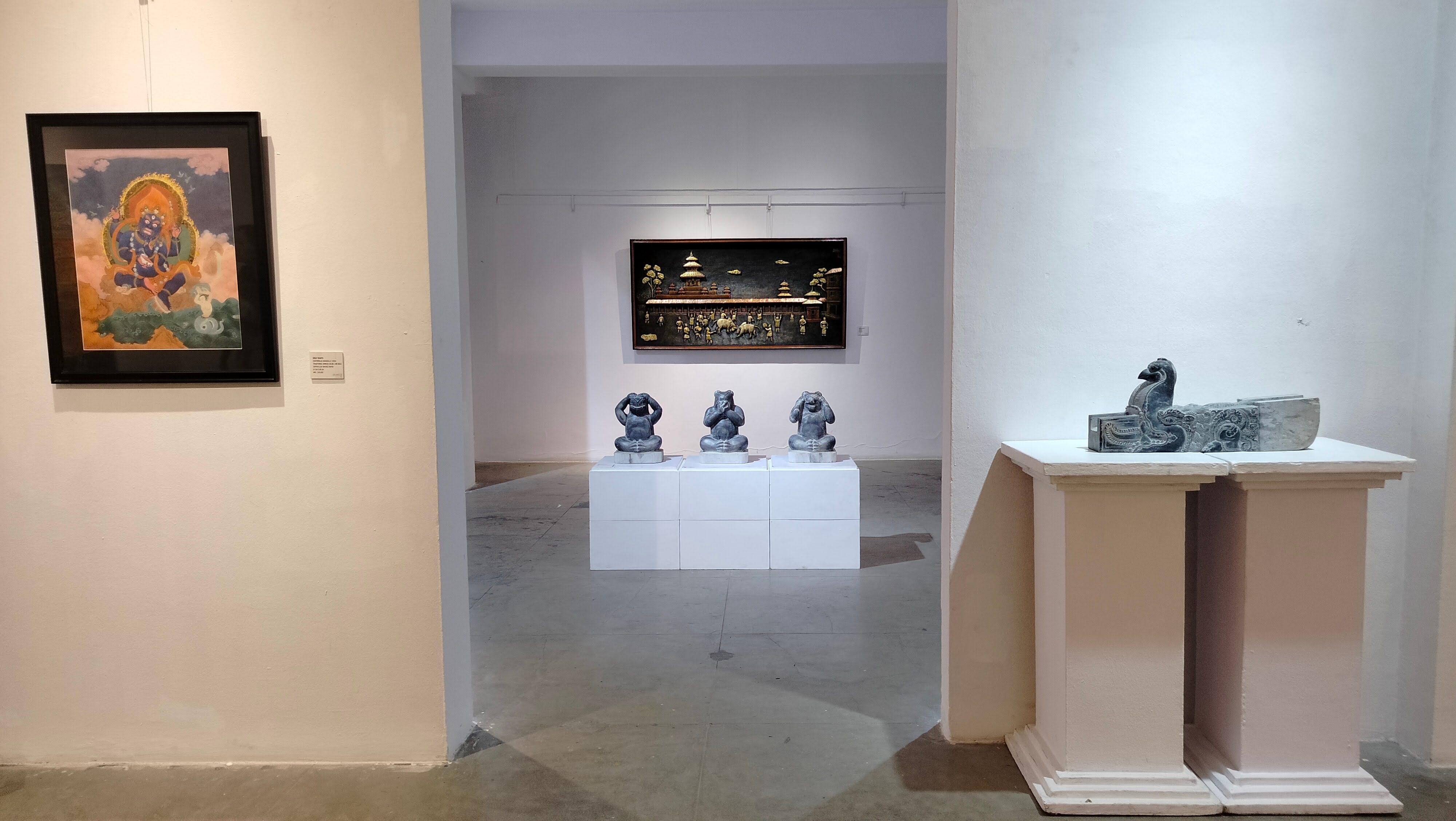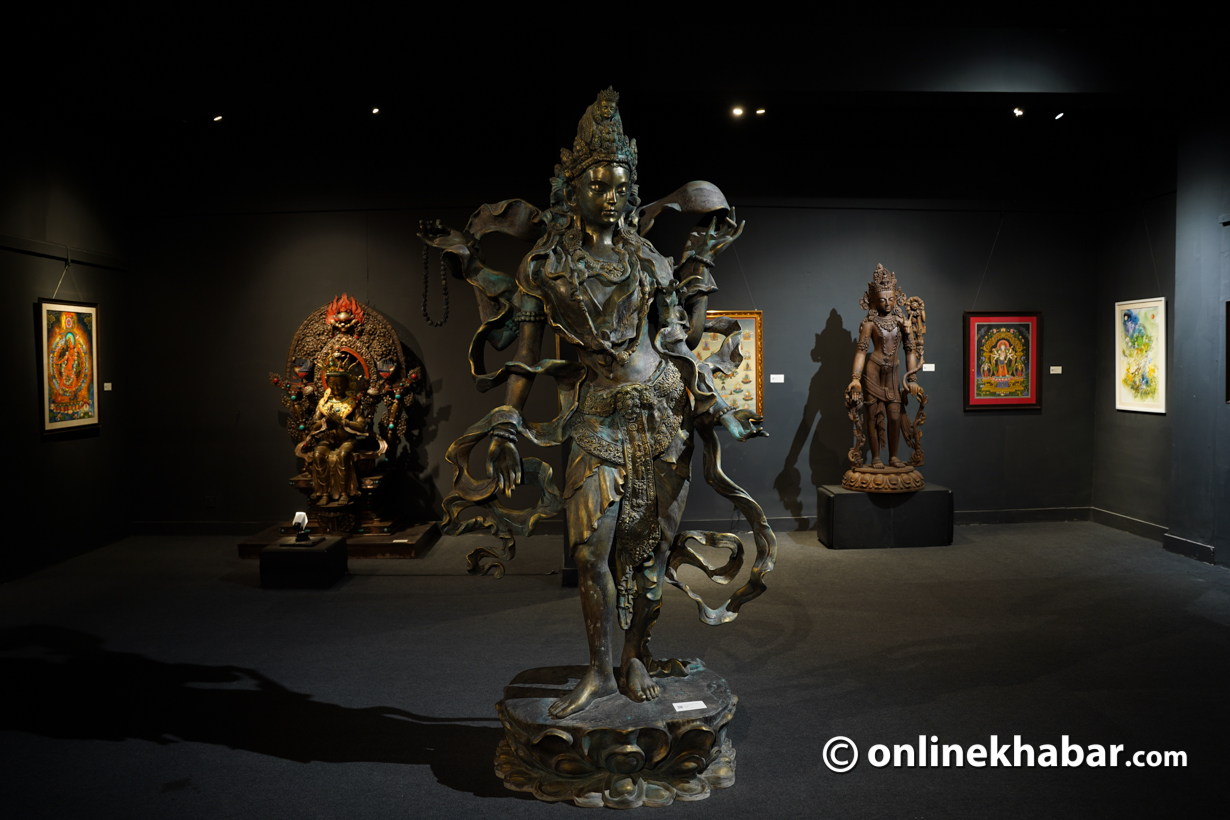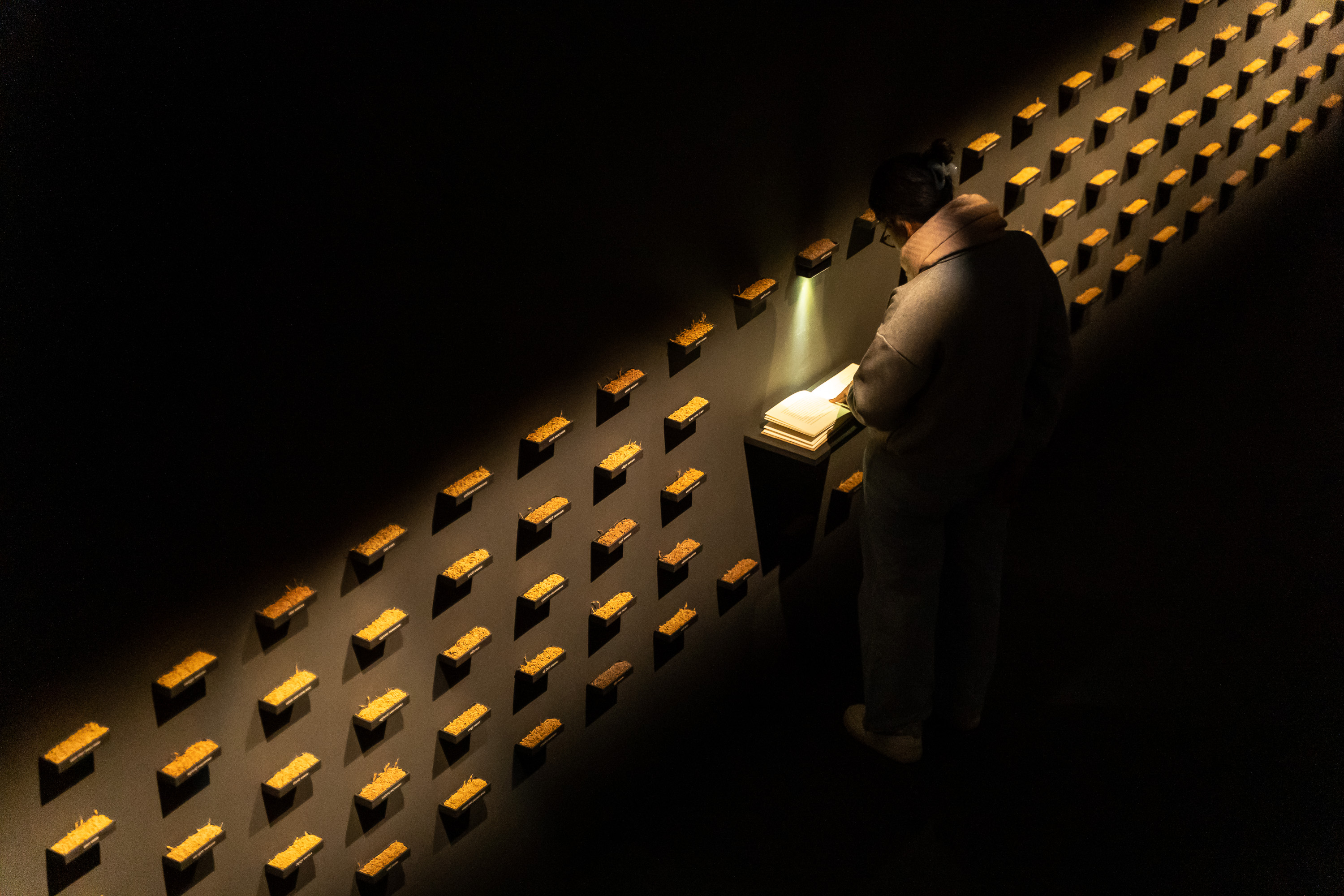


Step into the Nepal Art Council in Babar Mahal and the familiar rhythm of Kathmandu begins to recede. The traffic and noise of the city remain outside, while inside, another kind of landscape unfolds—one populated by gods, goddesses, myths, rituals, legends and the spiritual imagination that has shaped Nepal for centuries.
This is the world of Deities of Nepal III: Lore and Legends, the third edition of the deity-themed exhibition organised by the Nepal Art Council, which began on September 17. Curated by Swasti Rajbhandari Kayastha (Lead Curator) and Pranab Man Singh (Co-Curator), assisted by Rajani Sinkhwal and Rashmi Manandhar, the exhibition brings together 285 artworks by 157 Nepali artists, creating a broad visual account of the ways deities are worshipped, imagined and represented across Nepal.
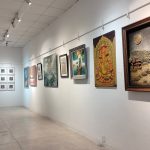
Rather than presenting the works simply as a collection of paintings and sculptures, the exhibition takes visitors through different layers of religious and cultural experience. Its arrangement across the floors of the Nepal Art Council creates something resembling a visual pilgrimage, beginning with the tangible world of household and communal rituals and gradually moving towards mythology, meditation and the cosmos.
A visual journey where Nepal’s sacred world unfolds
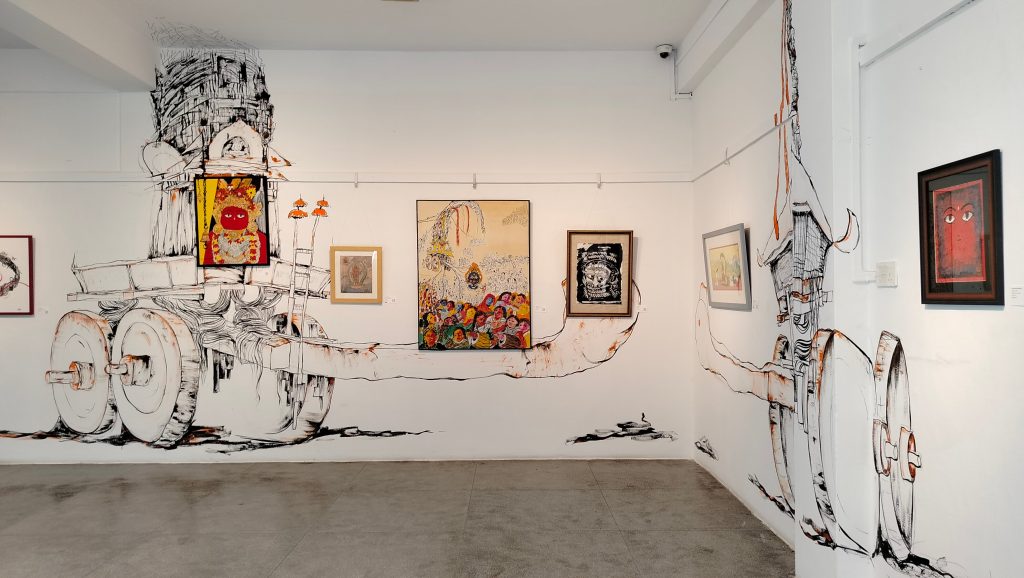
The exhibition also carries a strong generational dimension, featuring works by 22 veteran artists aged 65 and above. Alongside these living masters are works by a few artists who are no longer alive, allowing their artistic legacies to remain part of this wider conversation on Nepal’s sacred imagery.
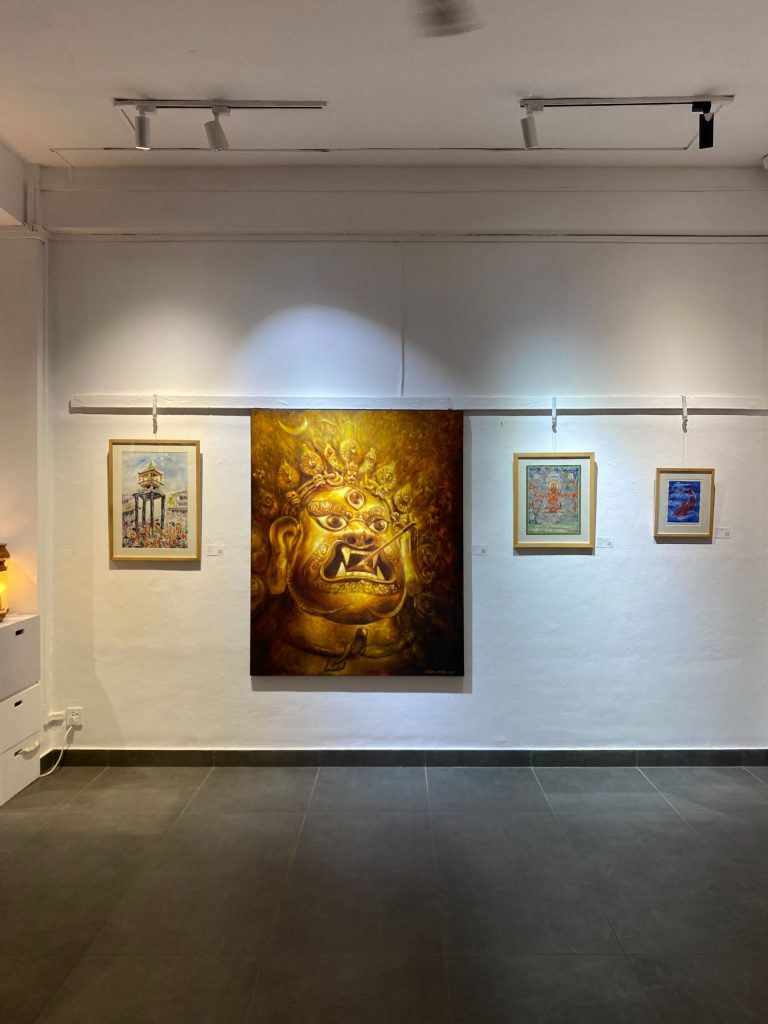
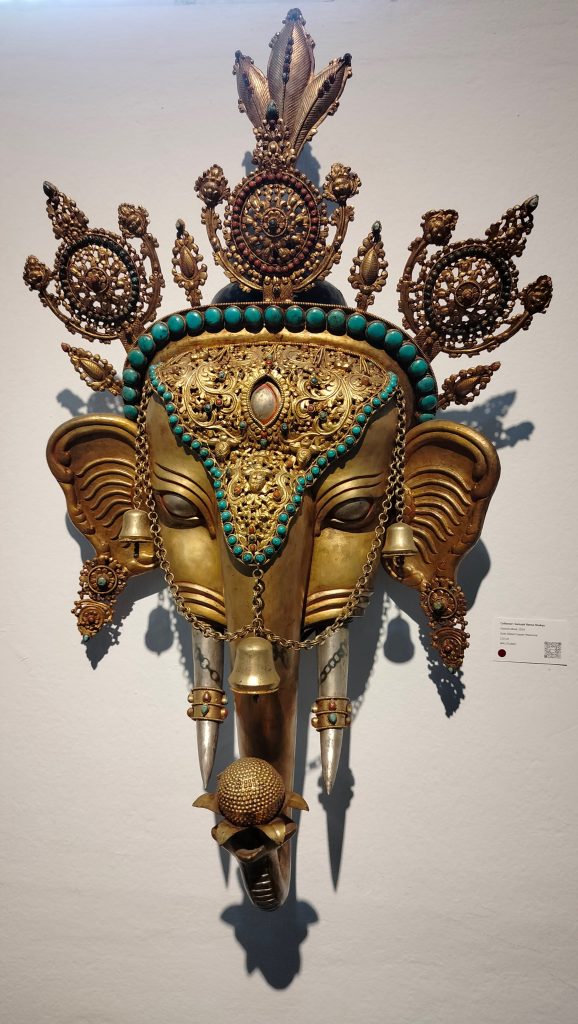
The exhibition unfolds floor by floor, creating a gradual movement through Nepal’s religious imagination. On the ground floor, it begins with representations of Lord Ganesh, Lord Bhairav, Uma Maheswor and more. These works establish the exhibition’s initial connection with deities who are deeply embedded in Nepal’s everyday religious and cultural life.
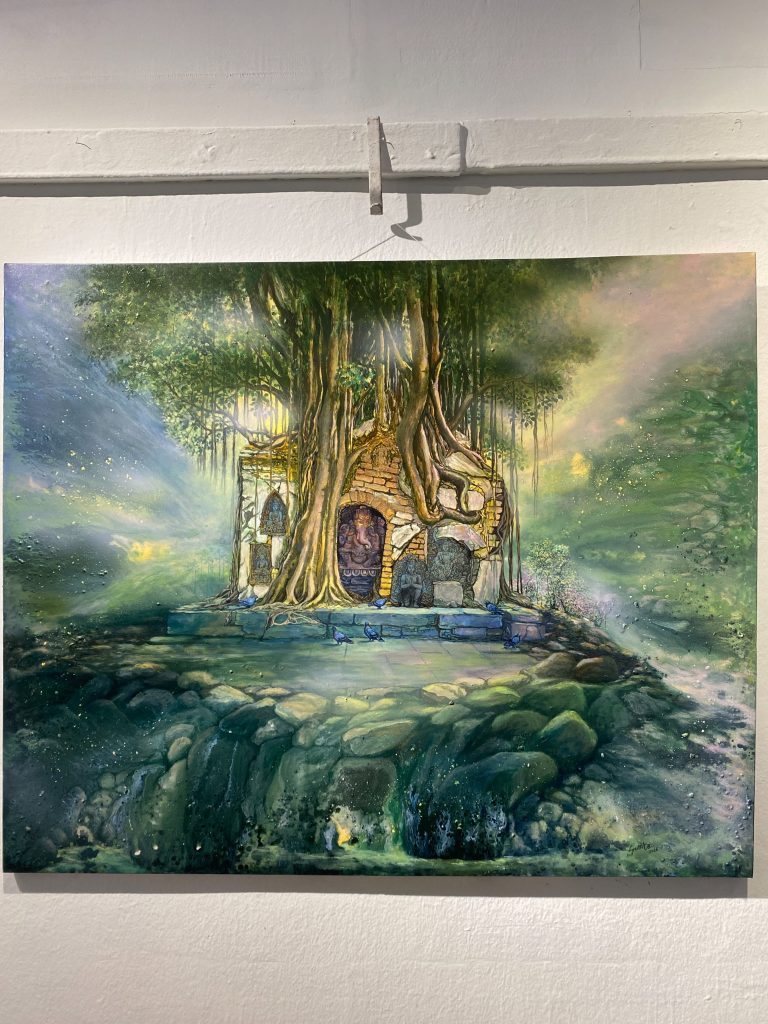
In the exhibition, the Ganesh series unfolds with artist Sharda Man Shrestha’s Ganesh Chauthi, where he has used mixed media on plywood, creating his unique blend of 2D and 3D features. Next to his artwork, Palistha Manandhar’s ‘The Golden Divine’ in impasto on canvas gives a different feel to a painting because of the texture and the brushstrokes on canvas. Using surrealistic technique, artist Naresh Sainju has created ‘Cheethu Ganesh Dhoka Kirtipur’ in acrylic on canvas. Likewise, artist Sunita Rana, in her painting ‘Nostalgic Dream ’, creates a semi-realistic landscape where a peepal tree has engulfed the Ganesh temple, with details like pigeons and other stone statues, and the background is blurry, giving a hint of eerie greenery around. Then, in Mithila style, artist Ranju Yadav created ‘Mangalkarta’ in acrylic on paper.
The next room shifts from the deities themselves to the rituals and practical dimensions of religious life among different communities across Nepal. Here, visitors encounter traditional block art, also known as Punh Jya, alongside works related to Ihi, Jitiya Parba, Dashain and other rituals and festivals. The section demonstrates how religious traditions are not limited to images of gods and goddesses but are expressed through ceremonies, festivals, community practices and everyday life.
As visitors walk upstairs, they encounter Nepal’s longest festival, Bunga Dyo Jatra, before entering the main gallery. The works trace the lore and stories associated with Bunga Dyo, creating the sense of following the deity’s journey through the festival and its cultural memory.
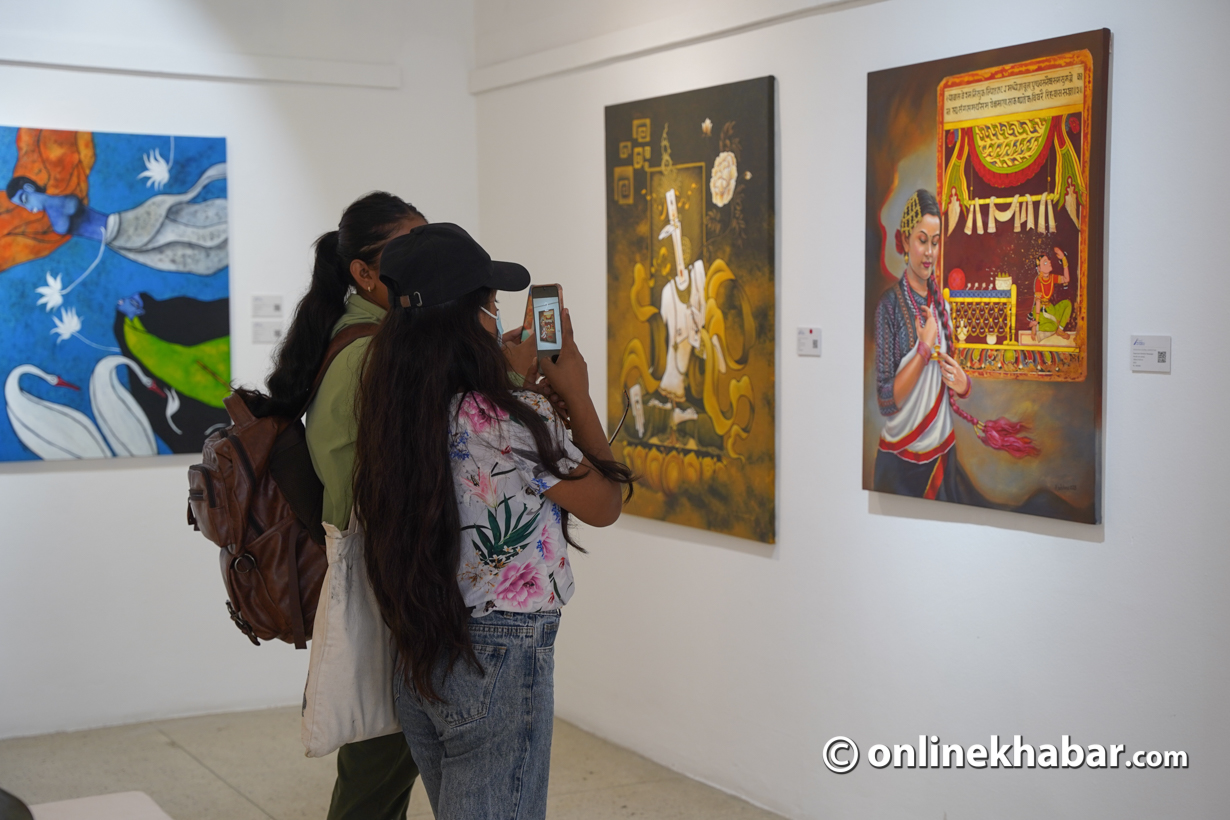
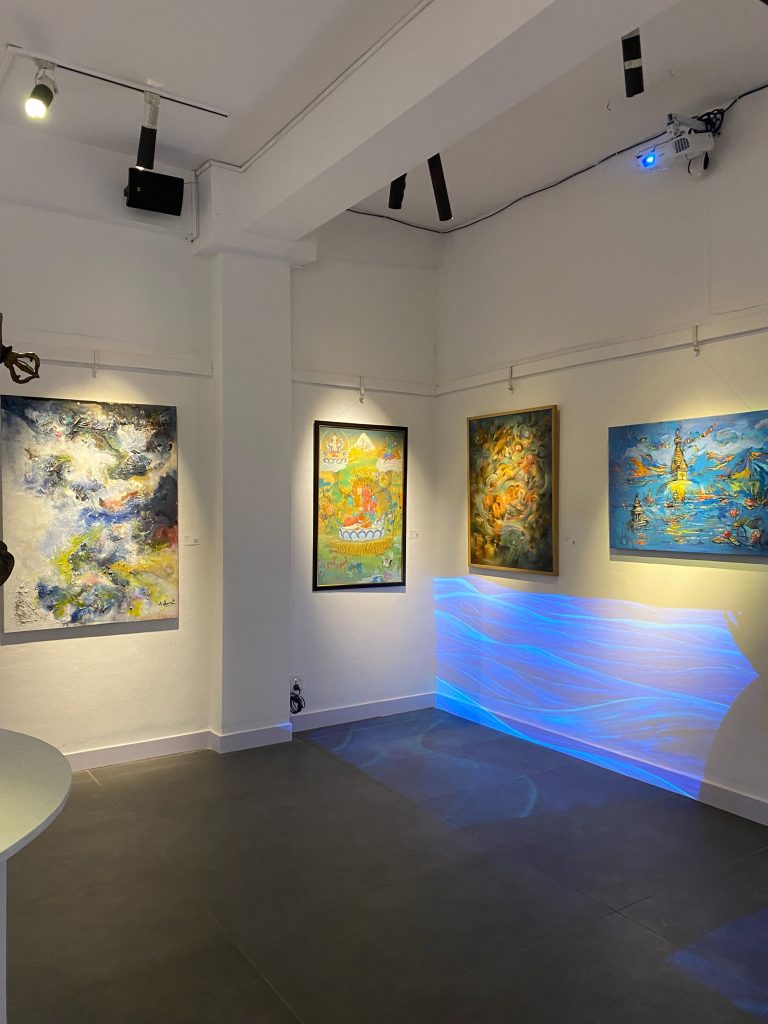
Inside the gallery, the narrative expands into the traditions surrounding Indra Jatra, with representations of the Asta Matrika, Navadurga and other deities and ritual traditions. The exhibition then moves into one of the foundational myths of the Kathmandu Valley—the story of Manjushri cutting through the gorge at Chobhar and draining the primordial lake. Nearby are works related to Swayambhunath, Harati Ajima and Namasangati. In this section, the sound of flowing water combined with blue waves creates a particularly calming and immersive atmosphere, bringing a sensory dimension to the sacred imagery.
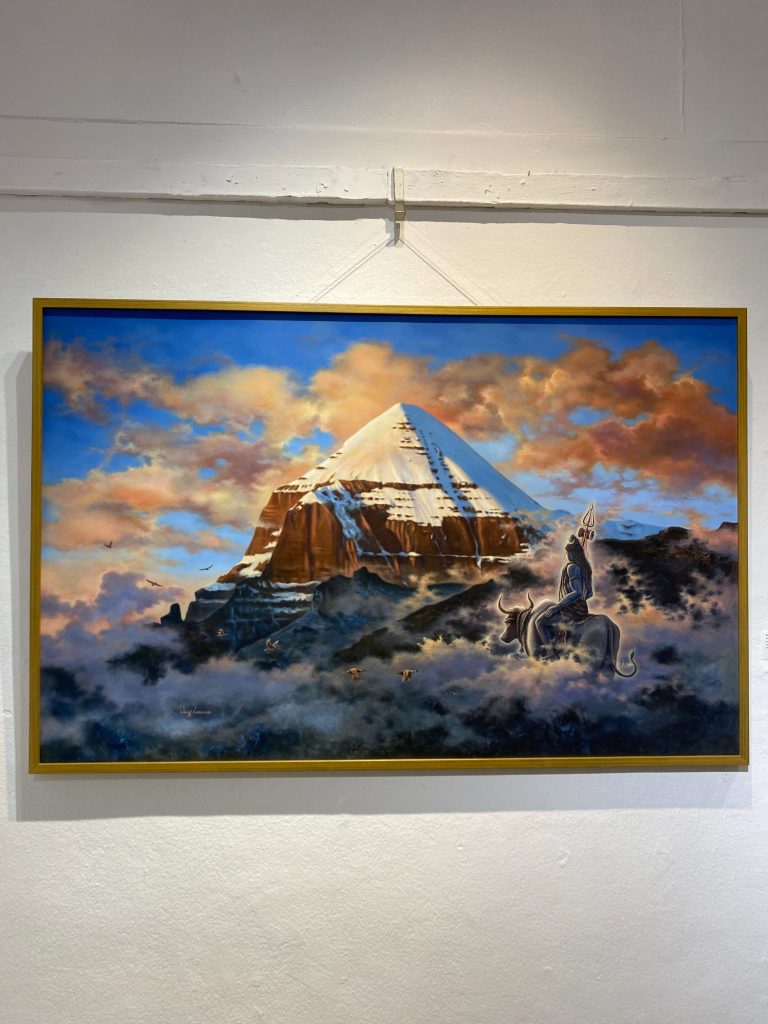
As visitors continue through the gallery, the exhibition moves into a wider range of Hindu mythology and cultural narratives. Works related to Samudra Manthan lead into representations of Hanuman and stories from the Mahabharata, before the exhibition opens into aspects of Limbu culture and other cultural dance forms. The narrative also reaches towards Kailash, expanding the exhibition’s geographical and spiritual landscape.
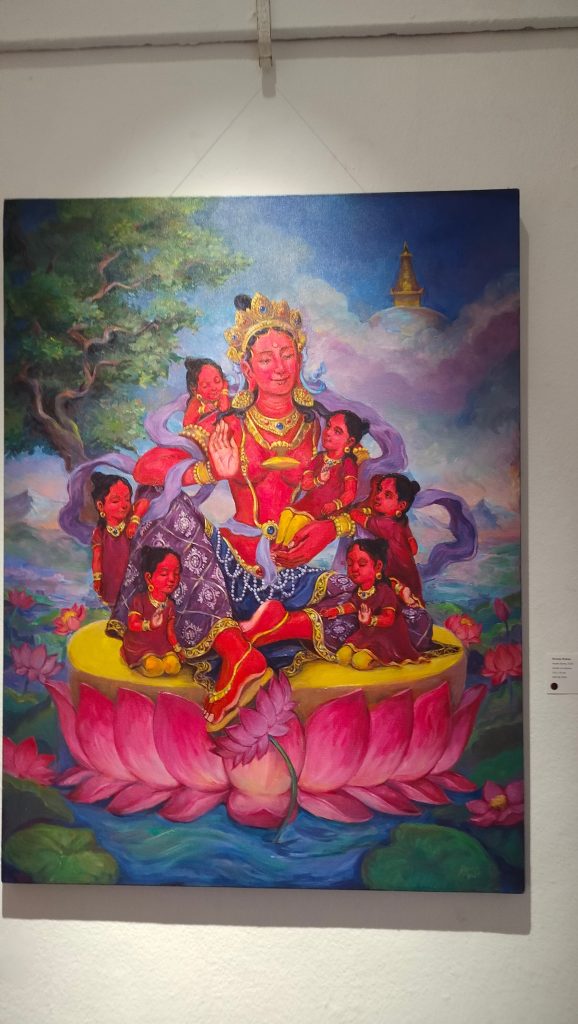
On the upper floor, the focus shifts towards Buddhist traditions. Works depicting Buddha, Green Tara, Arya Tara and other Buddhist deities are placed alongside representations of Milarepa and Himalayan caves and sacred spaces associated with meditation and spiritual practice.
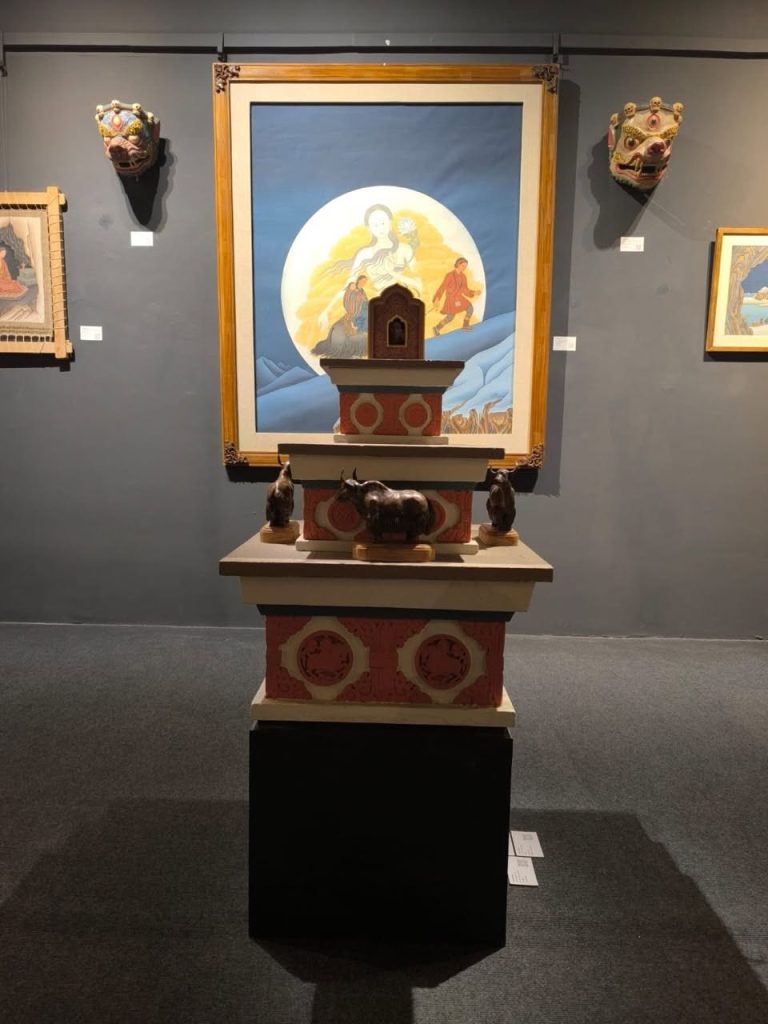
The floor above takes the exhibition beyond individual deities and sacred narratives altogether. Dedicated to the Universe and cosmic energy, it brings the exhibition to its most expansive point. After moving through gods, rituals, festivals, myths, cultural traditions and Buddhist imagery, visitors arrive at a space where divinity is no longer confined to a particular figure or form, but is imagined as part of the larger cosmos and the energy that permeates it.
Weaving diverse faiths and artistic traditions into one narrative
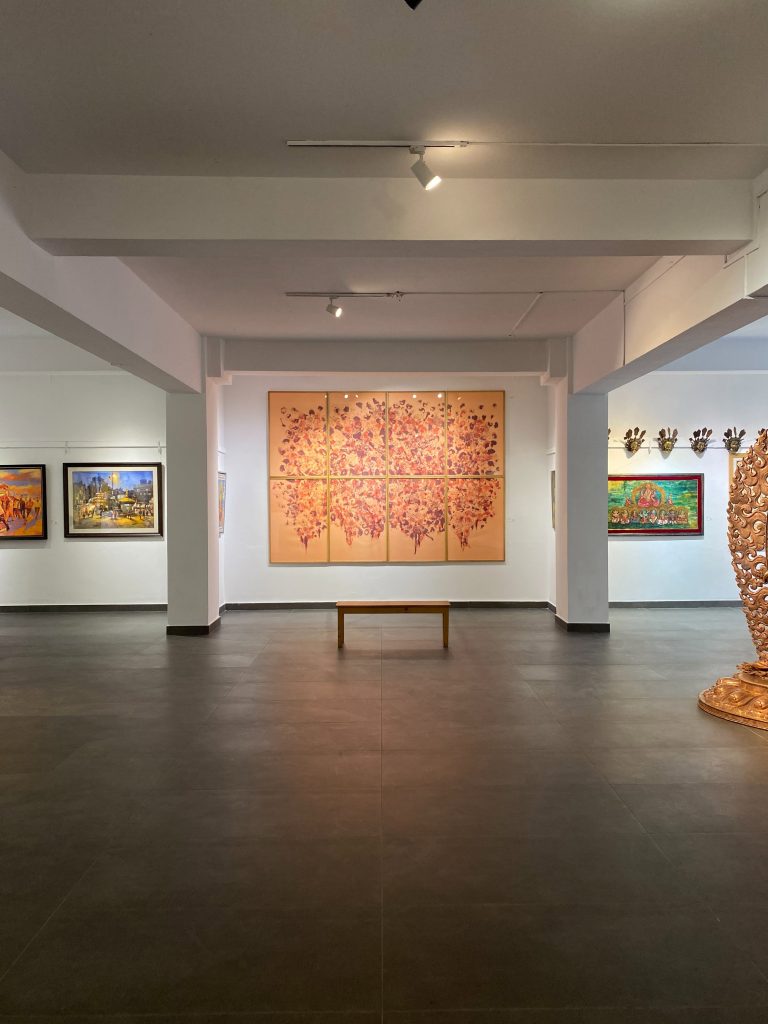
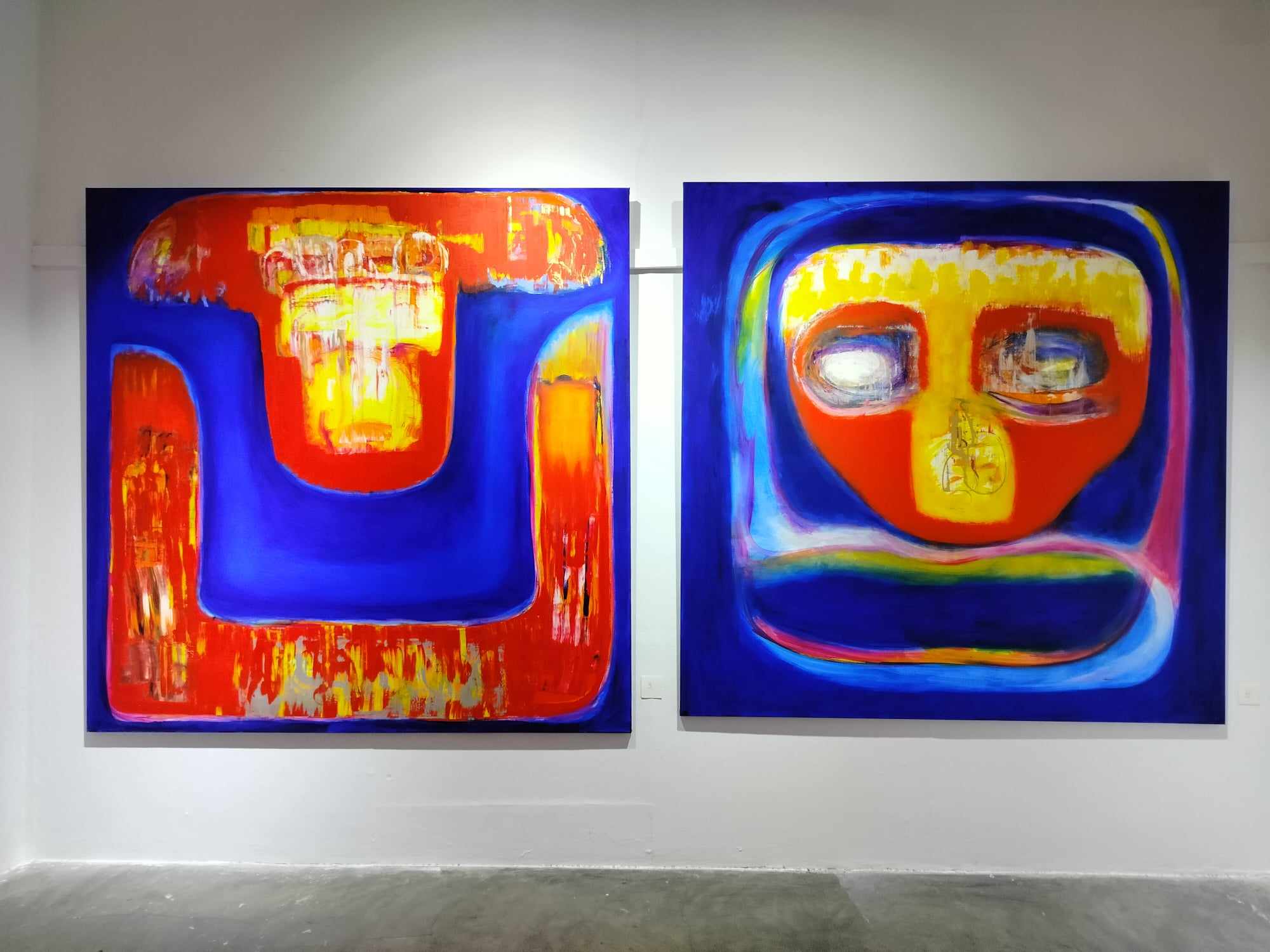
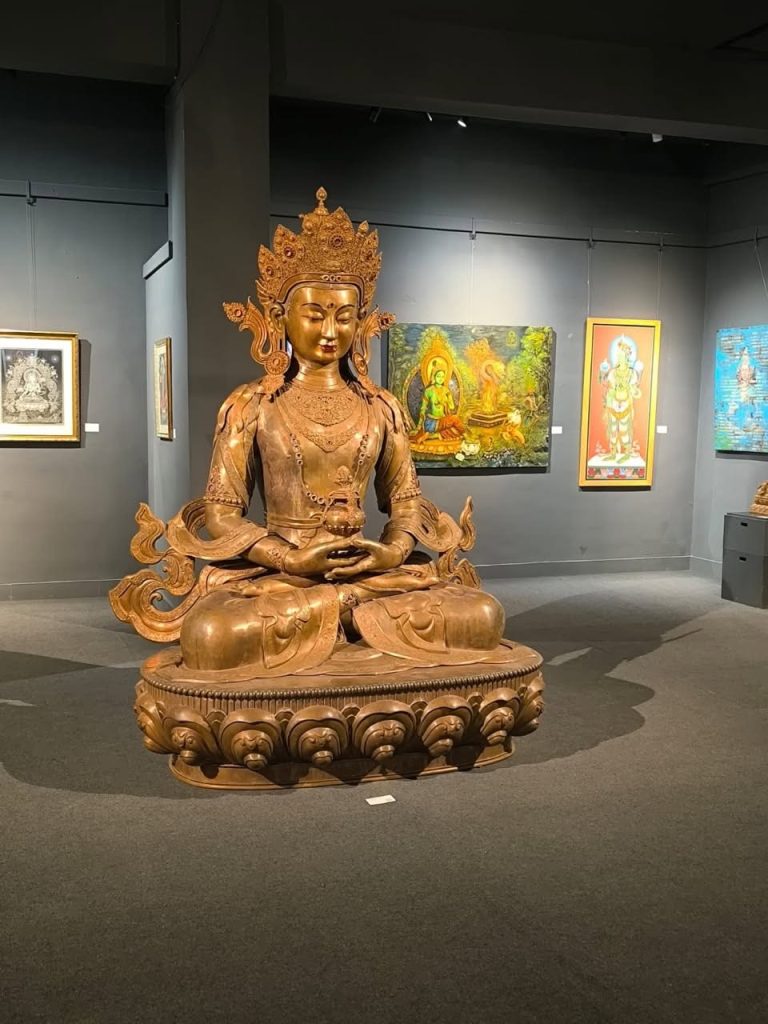
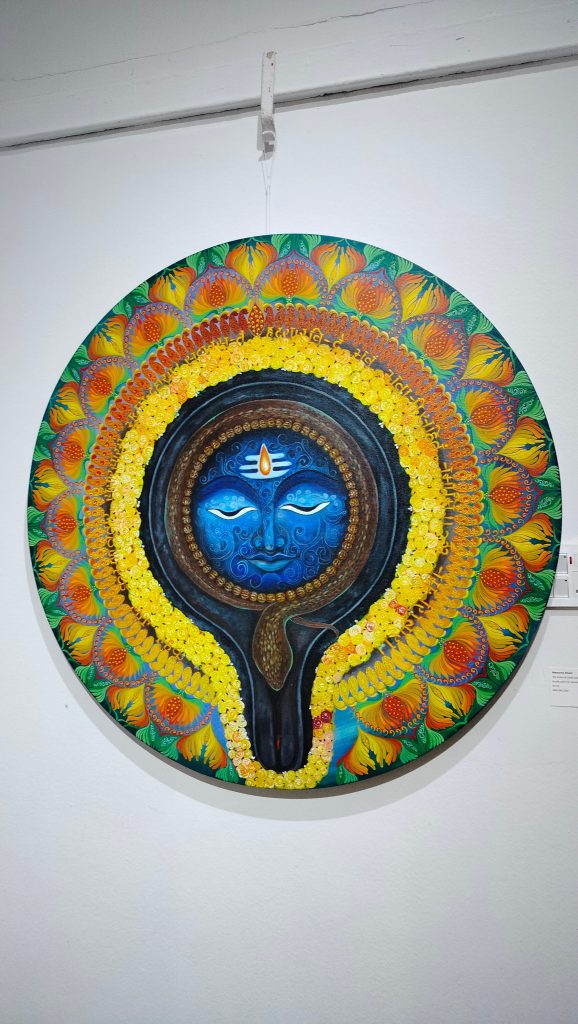
The third edition brings together senior artists, art students and artists who have been practising different forms of art for years. Works by former chancellor of the Nepal Academy of Fine Arts Kiran Manandhar, including Avatar; academy chancellor Erina Tamrakar’s Third Eye series; veteran late artist Krodhakala Shiromani Kalu Kumale’s large copper sculptures of Astamatrikas, senior artist Jimmy Thapa’s Taramandal and Brahmanda; and Rajendra Shakya’s large copper sculpture of Vajrayogini, Late artist Tej Chitrakar’s ‘Dakshinkali’, Lok Chitrakar’s ‘Namasangati’ are among the highlights of the exhibition.
“From this year, we have dedicated space for two veteran artists. This year the exhibition highlights the artwork of Jimmy Thapa and Tenzin Norbu,” says Manandhar. Moreover, talk shows were also part of the exhibition and these veteran artists shared their experiences with the audience.
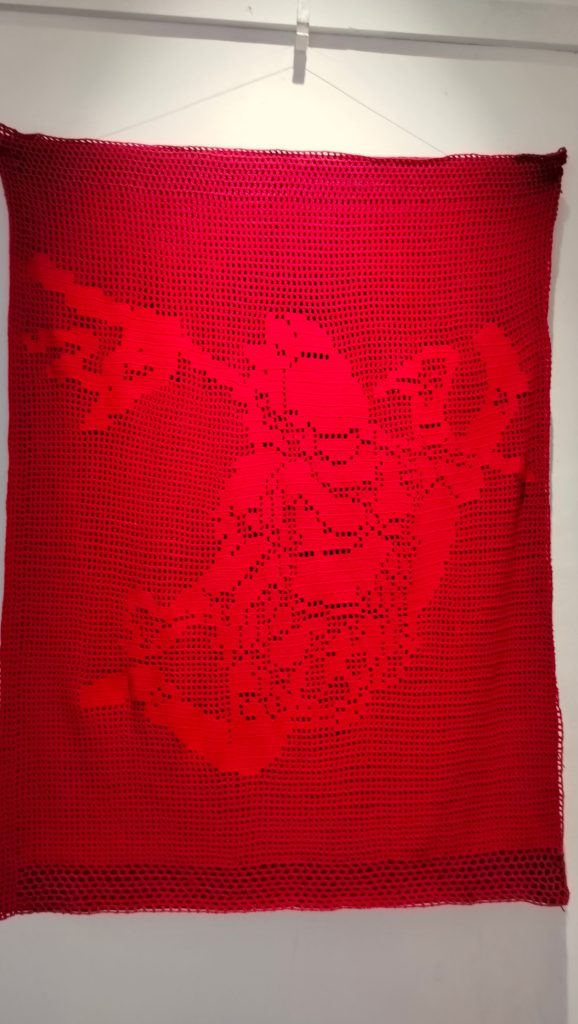
Ultimately, the exhibition becomes more than an exhibition of religious imagery. It creates a space where the distinction between traditional and contemporary art begins to dissolve. Paubhas, sculptures, ritual objects and traditional representations of deities stand alongside contemporary paintings and interpretations without one being presented as more important than the other. Different generations of artists, diverse religious traditions and varied artistic languages come together within the same visual narrative.
In doing so, the exhibition offers a compelling model of coexistence—not only between different faiths and traditions, but also between different ways of making and understanding art. Rather than separating Nepal’s artistic heritage into the categories of old and new, traditional and modern, the curatorial approach allows them to speak to one another. The result is a living exhibition in which tradition is not frozen in the past and contemporary art is not detached from its cultural roots, but both continue to evolve side by side.
If you want to witness it on your own, visit the exhibition, which continues till October 10.
Photos: E-arts and Sangita Shrestha