Kathmandu, October 7
Transfers of several senior Nepal Police officers have been delayed despite them completing the one-year tenure normally prescribed for command positions, with some officers continuing in the same posts for 13 to 14 months.
Under the Nepal Police Regulations, senior officers are generally transferred after completing one year in a command position. The provision applies to officers serving as district police chiefs, battalion and traffic chiefs, provincial police chiefs, training centre heads and commanders of other police units.
However, transfers of inspectors, deputy superintendents of police (DSPs), superintendents of police (SPs) and some senior superintendents of police (SSPs) have not been carried out even after their one-year terms ended.
The latest large-scale transfer of SPs took place on September 16 last year, when 48 SPs were transferred and assigned to command positions in districts and police units. The officers are now approaching 13 months in their current assignments, but the Police Headquarters has yet to announce their replacements.
New SPs have not been assigned to districts including Banke, Morang, Tanahun, Bhaktapur, Kaski, Kailali, Udayapur, Dang and East Nawalparasi.
The tenure of several battalion commanders has also crossed the one-year mark. These include commanders of Nepal Police Armed Police Battalion No. 1 in Naxal, the Nepal Police Special Security Battalion in Sunwal, Rupandehi, the Madhesh Province Police Battalion in Dhanusha, the Special Security Battalion in Ratamate, Makwanpur, the Special Security Battalion in Janakpur and the Special Security Battalion in Tanahun.
The situation is similar among DSPs.
DSPs serving as district and area police chiefs, as well as heads of police circles in the Kathmandu Valley, have also remained in their positions beyond one year. DSPs in districts including Darchula, Dadeldhura, Mugu, Pyuthan, Kalikot and Panchthar have completed their one-year tenure but have not yet been transferred.
Delayed transfers raise career concerns
Police administration experts say prolonged postings can affect officers’ career development and limit their exposure to different types of assignments.
They argue that keeping an officer in the same post for several years can leave them without experience in other areas of police work. Such experience becomes important when officers are later transferred to battalions or headquarters, where they may be expected to handle different responsibilities.
Regular transfers are also considered important for preparing officers for senior leadership roles. Exposure to different assignments allows officers to gain experience dealing with different operational and administrative challenges.
From an administrative perspective, transfers are also viewed as a way of ensuring a “distribution of equal opportunity” within the organisation. Timely and transparent transfers allow officers to receive opportunities across different types of assignments.
The Inspector General of Police has the authority under the regulations to transfer officers up to the rank of SP. Although the IGP can technically make such decisions, police officials say transfers have traditionally not been carried out without the Ministry of Home Affairs giving the go-ahead.
Police Headquarters says transfers are coming soon
Nepal Police spokesperson DIG Abinarayan Kafle said preparations were underway to transfer officers whose tenure had expired.
“Generally, transfers are made after one year. Sometimes there are variations due to various reasons. We are preparing to issue the transfers soon,” Kafle told Onlinekhabar.
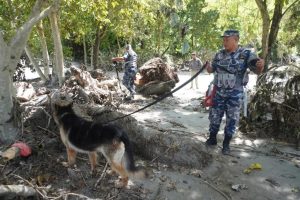
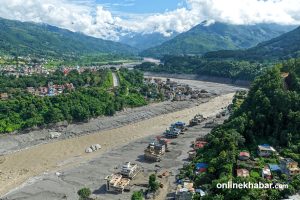
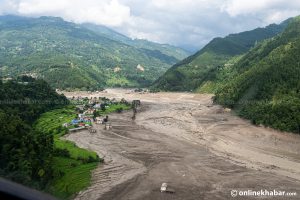
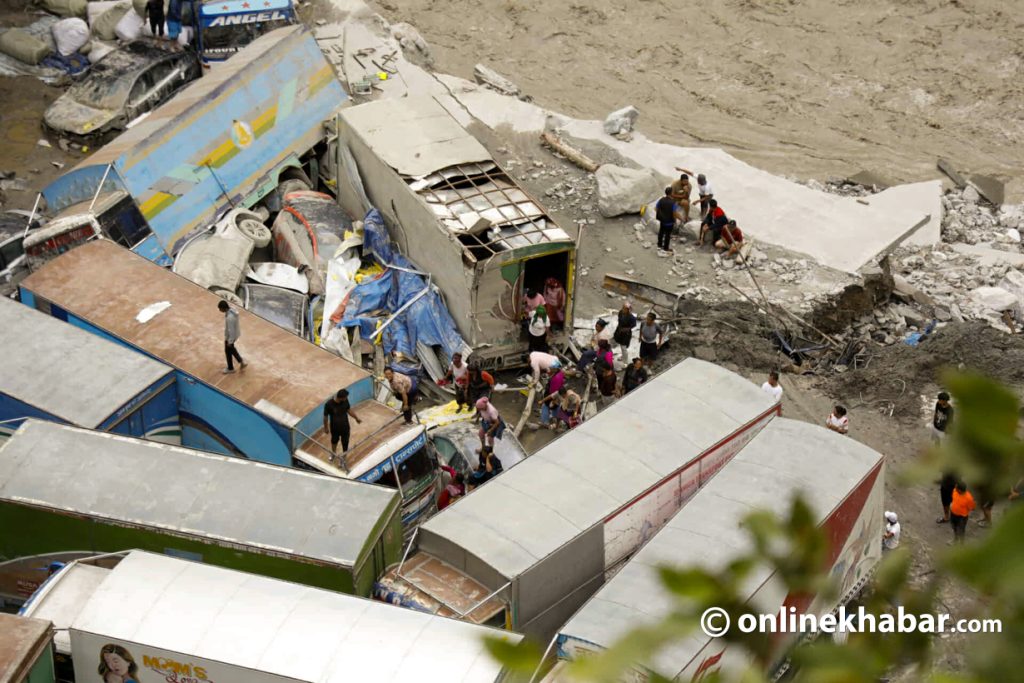
He attributed part of the delay to the deployment of a large number of police personnel for search and rescue operations following the Bhotekoshi floods.
“Personnel have still been focused on flood-related search and rescue operations, which has caused some delay in the transfers. Those who have completed their tenure will be transferred soon,” he said.
However, some police officials say the delay cannot be attributed solely to flood-related deployments. According to them, uncertainty over who will take command of key districts has also contributed to the delay, particularly as decisions on the new postings have yet to be finalised.