

The flood that struck Nepal on the morning of August 26, triggered by the collapse of a glacier in the Himalayas, has caused billions of dollars in damage. So far, more than 1,450 bodies have been recovered, while more than 6,000 people remain missing.
Unlike conventional floods, where forecasts can provide time for evacuation and rescue efforts, this disaster struck suddenly and with little warning. What Nepal witnessed that day was, in many ways, a Himalayan tsunami.
The terrifying wall of water travelled at an estimated speed of 167–193 km per hour and reached a height of around 100 metres. Recent studies have linked the disaster to climate change. Australian tunnel expert Arnold Dix described the Bhotekoshi flood as an unprecedented disaster and one of the toughest challenges he has faced, as multiple rescue operations had to be carried out simultaneously.
The first responders, including the Nepal Police and Armed Police Force, are often the first to reach disaster sites, working around the clock to save lives. One poignant incident occurred when Armed Police Force personnel rescued a child from the rubble after hearing his cries, highlighting the human side of disaster response.
These two security agencies form the backbone of Nepal’s disaster management system. However, when a disaster grows beyond the immediate emergency and begins to affect critical infrastructure, the economy and cross-border connectivity, it becomes a matter of national security.
As climate change warms the mountains, the risks of avalanches and glacial lake outburst floods are increasing. Their consequences extend far beyond immediate loss of life. Sudden floods can destroy strategic roads, bridges and hydropower infrastructure. In the recent disaster, 13 hydropower projects and a 25 MW solar plant in Devighat, Nuwakot, were destroyed.
This requires Nepal to adopt a broader understanding of national security — one that encompasses not only military defence but also disaster preparedness and climate resilience.
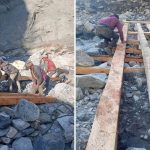
The role of the Nepali Army as a “force of last resort” therefore becomes indispensable. Article 267(4) of the Constitution of Nepal allows the government to mobilise the Nepali Army for development and disaster management. When the Army constructed a bridge in five days in flood-affected Nuwakot, it was widely praised by the public.
The growing challenges posed by climate change raise fundamental questions about national security and require a reassessment of its traditional definition.
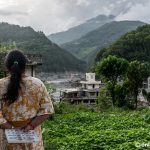
The recent floods have caused extensive devastation and widespread damage to property worth trillions of rupees, creating a serious humanitarian crisis. The government has declared 15 local levels as disaster-prone areas. Many people have been left without their families, homes or basic necessities and are now dependent on the state for shelter and support.
The right to live with dignity has been severely affected. Thousands of children have also been deprived of their right to education and a healthy environment.
The strategically important Kerung border area along the Nepal-China border has suffered severe damage, with significant consequences for the national economy. At the same time, Nepal is taking steps on the climate front, maintaining around 46 percent forest cover, developing a clean energy system based largely on renewable hydropower, and emerging as one of the world’s leading importers of electric vehicles.
Yet Nepal continues to bear the heavy costs of a climate crisis it played little role in creating.
According to an ICIMOD report, glaciers across the Hindu Kush Himalayan region are melting rapidly, with the rate of snowmelt having doubled since 2000. To protect citizens from the growing risks, national security must therefore extend beyond military readiness. It should include proactive measures to mitigate the effects of climate change, timely emergency communication, protection of critical infrastructure and stronger rescue capabilities.
The Nepali Army’s initiatives provide examples of this expanded role. Its “Operation Sankat Mochan” during the 2015 earthquake, the draining of the highly vulnerable Imja glacial lake in the Himalayas, and the use of drones to deliver relief to remote areas during recent floods demonstrate how the military can contribute to disaster preparedness and response.
During the 2015 earthquake, nine out of every ten Army personnel were mobilised for search, rescue and relief operations. Similarly, the draining of Imja glacial lake, located at an elevation of 5,010 metres in Solukhumbu district, took more than six months. The project was part of a United Nations initiative aimed at helping Nepal cope with the effects of climate change.
Nepal still has 21 highly vulnerable glacial lakes that could cause severe damage to downstream communities and the national economy. As the government works to address these risks, it must maintain a strong focus on innovation in disaster preparedness and response.
Greater coordination among government agencies, greater involvement of the military in disaster preparedness and stronger support for resilient communities will be essential to strengthening national security in the face of climate change.
Nepal, situated in the Hindu Kush Himalayan region between China and India and characterised by a fragile and dependent economy, must increasingly view disasters through the lens of national security.
This broader understanding must go beyond traditional military concerns. The growing threat of climate-induced disasters is a wake-up call for Nepal. Protecting citizens from the catastrophic effects of climate change will require rapid response mechanisms, resilient infrastructure and effective strategies to minimise damage and preserve lives.