

Kathmandu, October 6
Before leaving for Japan to participate in the 20th Asian Games (Asiad), Nepal had hoped to win a double-digit number of medals, including gold.
The government had launched ‘Mission-26’ in Magh 2080 with the same target. However, Nepal not only fell short of its goal but returned home with just two bronze medals.
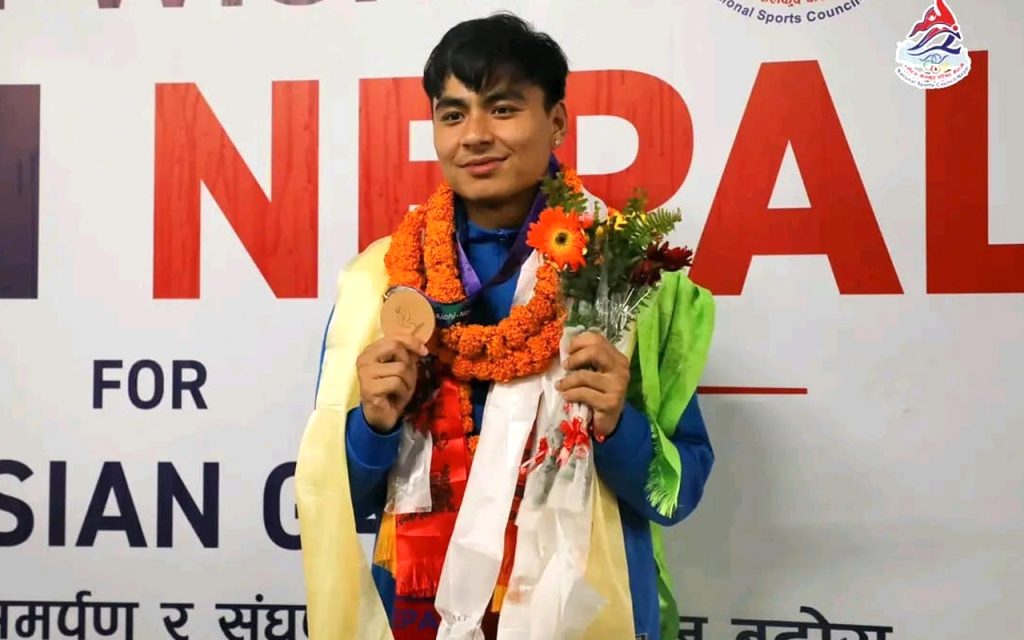
Nepal sent 135 athletes to compete in 21 sports at the Asiad but had to settle for two bronze medals. Karateka Tenzing Sherpa and the women’s kabaddi team saved Nepal’s reputation.
The women’s kabaddi team retained the bronze medal it had won at the 19th Asiad, while Tenzing won Nepal’s first-ever bronze medal in karate. However, karateka Arika Gurung, who had won a silver medal at the 19th Asiad, failed to win a medal this time. Nepal also failed to achieve the expected results in other sports in which it had medal hopes.
Nepal has been participating in the Asian Games for 75 years. However, it has yet to win a single gold medal. Over the past 75 years, Nepal has won three silver and 25 bronze medals. The country remains in a situation where merely participating in the Asiad is considered an achievement rather than winning medals.
Nepal’s performance raises the biggest question about its preparations. Although the government had set a target of winning double-digit medals, athletes’ training was affected for around four months during preparations for the Asiad due to a lack of budget.
Major competitions such as the Asiad require clear planning years in advance, continuous training and adequate funding. However, Nepal has yet to overcome the tendency to intensify preparations only when a major competition is approaching.
Even during the final preparations, athletes did not receive adequate sports equipment and diets. Training alone is not enough for high-level performance; international exposure is equally important. However, some Nepali athletes competed in an international tournament for the first time at the Asiad itself.
India’s women’s kabaddi team, which was preparing for the Asiad, invited Iran to India for a practice match. The Indian team later faced Iran in the Asiad final, where India defeated Iran to win the women’s kabaddi gold medal.
The Nepali women’s kabaddi team prepared for the Asiad in India. During their preparations, the Nepali team played practice matches against Indian state teams and local clubs. India became Nepal’s opponent in the Asiad semi-final.
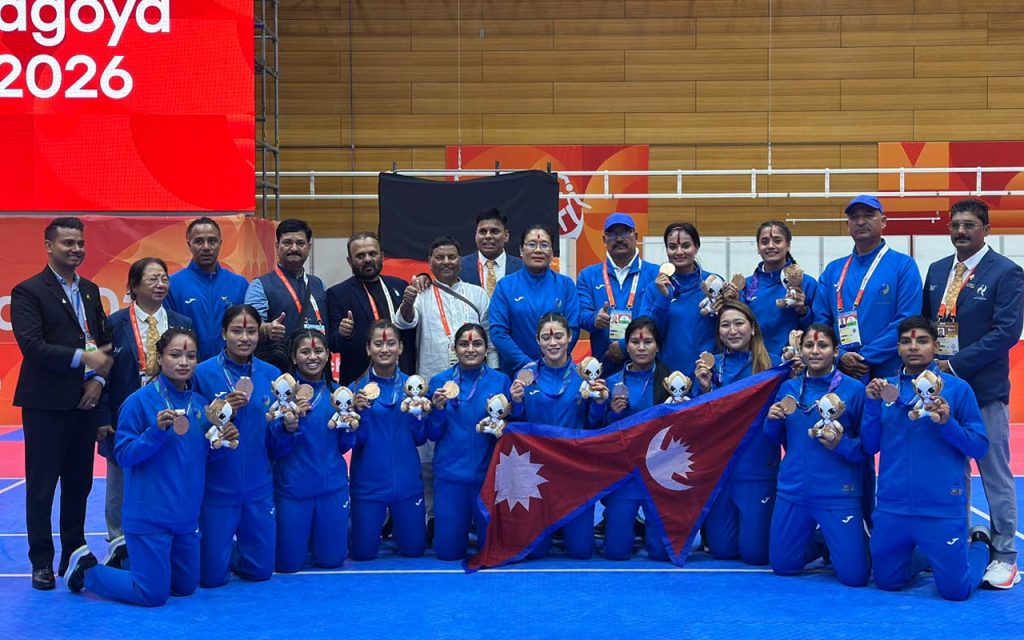
Nepal lost to India in the match and had to settle for bronze. The confidence India had developed by playing practice matches against strong teams was evident. The lack of experience against stronger opponents was also apparent in the Nepali team. This highlights the significant gap between Nepal’s international preparations and those of countries competing for medals.
Regular competition and match exposure against strong nations are essential when preparing for international competitions. This Asiad has demonstrated that simply arranging overseas training or a few practice matches shortly before a tournament is not enough to expect a high-level performance.
For the 20th Asiad, athletes in most sports were not selected through a systematic process starting from the grassroots level. The tendency to form teams from the available pool of athletes was repeated. Had the 10th National Games been held on schedule, outstanding performers there could have been selected and prepared for the Asiad.
National competitions are an important foundation for identifying and selecting athletes and preparing them for competition. The delay in holding the National Games therefore directly affects preparations for international competitions, as this Asiad has demonstrated.
Nepal now needs to be clear about whether it wants to regard mere participation in competitions such as the Asiad as an achievement or develop a strategy aimed at winning medals.
Rather than spending large amounts of resources on sports with little medal potential, the need of the hour is to identify sports with realistic medal prospects and provide them with adequate funding, training and international exposure. The government must be clear about which sports should participate, and why, and which should not.
Successful sporting nations around the world invest in athletes from a young age. Athletes are developed through talent identification, grassroots training, regular competitions and long-term planning. In Nepal, however, such a system remains weak.
The government and sports associations have failed to adequately identify talent at an early age and provide continuous training and opportunities. Many athletes have made significant contributions to Nepali sports through their individual efforts and struggles. However, individual efforts alone cannot create a sustainable foundation for winning international medals. That requires long-term state investment and an institutional system.
Another problem in Nepal is weak coordination between the government and sports associations. The government needs to effectively monitor what activities each association is conducting, how individual athletes are performing, how much investment each sport requires and what preparations are being made for international competitions. Due to disagreements between a sports association and the government, Nepal’s PUBG team, which was considered a medal contender, was selected but was unable to participate in this Asiad.
The preparations and facilities provided to athletes participating in international competitions also need to be reconsidered.
While government employees and representatives receive substantial daily allowances when travelling abroad, athletes at this Asiad had to manage their food, accommodation and preparations within limited daily allowances. If athletes are being sent abroad to win medals for the country, priority must be given to their food and accommodation, as well as training, medical treatment and other essential facilities.
Athlete selection, grassroots development, regular national competitions and international exposure must be integrated into a single plan. Nepal must also adopt available technologies to make athletes’ training more effective.