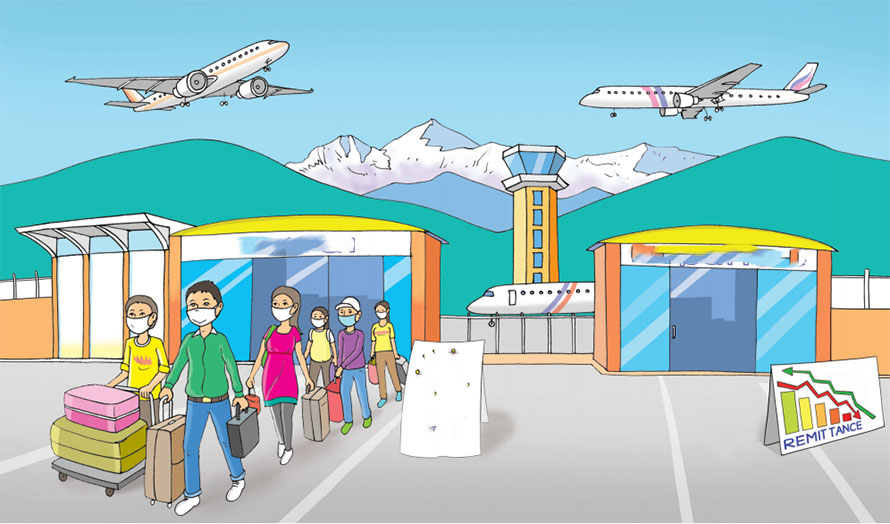
We often talk about brain drain, emigration and the steady stream of Nepali students and workers leaving the country in search of better opportunities. But what really drives them to leave?
It is not simply the absence of jobs. It is the absence of better jobs.
For many Nepali workers, a better opportunity means higher pay. But wages are only part of the equation. Workers also want security, fair treatment, social respect and the assurance that their labour will allow them to live with dignity. Too often, Nepal’s labour market provides none of these adequately.
The consequences are visible in the scale of labour migration. More than 1,500 Nepali migrant workers died abroad in a recent fiscal year. Many work in difficult conditions, particularly in the Gulf and Malaysia. Yet even these risks rarely outweigh the disadvantages of returning to a domestic labour market where wages remain low and working conditions are often insecure.
When work abroad carries more dignity
The decision to migrate is not always driven by money alone. Social attitudes also matter.
A Nepali worker earning money abroad through housekeeping, cleaning, construction or retail is often treated with a degree of respect because of the sacrifice associated with overseas employment. A person doing essentially the same work in Nepal can be looked down upon.
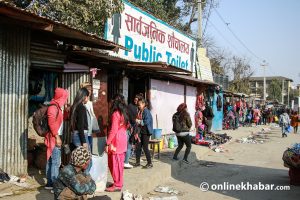
We regularly see street vendors, footpath sellers, domestic workers and other informal-sector workers treated as though their occupations make them less worthy of respect.
This creates a contradiction.
We celebrate the remittances generated by workers performing these jobs abroad, while often failing to recognise the dignity of the same work when it is performed at home.
Why should cleaning a hotel in Dubai be considered respectable but cleaning a hotel in Kathmandu be viewed differently?
Exploitation does not stop at the border
The difficult reality facing Nepali migrant workers is well documented. Recruitment agencies can charge excessive fees, workers can fall victim to fraudulent contracts, and some foreign employers subject migrants to exploitative working conditions.
But exploitation is not exclusively a problem of foreign employment. It is deeply embedded in Nepal’s domestic labour market, particularly in the informal sector.
A joint study by ActionAid Nepal, Nepal Mahila Ekata Samaj and Truth Advocacy Nepal found that 66.2 percent of surveyed informal-sector workers in construction, agriculture, domestic work and brick kilns did not receive their legally prescribed full wages.
The brick industry provides a particularly stark example. Workers, including marginalised communities and migrant families, can become dependent on advance payments or loans that effectively tie them to arduous work across successive seasons in order to repay their debts.
These conditions are not simply economic problems. They are questions of rights and dignity.
Nepal has laws intended to protect workers and prevent exploitation. The Human Trafficking and Transportation (Control) Act provides a legal framework against trafficking, while the government’s National Action Plan on Business and Human Rights for 2024–2028 seeks to promote responsible business practices and fair recruitment.
But legislation alone cannot protect workers. Enforcement remains the crucial test.
What does the Constitution promise?
Nepal’s Constitution recognises labour as a fundamental right. Article 34 guarantees workers the right to appropriate remuneration, facilities and appropriate working conditions. Article 51 also directs the state towards policies relating to labour and employment.
The question is how much of this promise reaches the workplace.
Are workers receiving fair pay? Are overtime rules enforced? Are workplaces safe? Do workers have meaningful protection from dismissal, harassment and exploitation? And perhaps most importantly, are workers treated with dignity?
These questions should not be reserved for policymakers. They should also concern employers, professionals and ordinary citizens.
There is growing public discussion about toxic workplace culture, exploitation and poor management. But it is worth asking whether we are willing to confront exploitation when we benefit from it.
It is easy to condemn an abusive corporate culture when we are the employee. It is harder to examine our own behaviour when we become the employer.
If businesses try to maximise profits by cutting wages, denying overtime, avoiding contracts or shifting risk onto workers, they are contributing to the same culture of exploitation they may publicly criticise.
Labour is not disposable
Labour is one of the foundations of any economy. Nepal needs engineers, doctors, architects, managers and entrepreneurs. But it also needs construction workers, cleaners, drivers, farmers, domestic workers, factory workers and countless others whose labour keeps the economy and society functioning.
A labourer is not simply someone who lifts heavy materials. They build our houses, roads, bridges and workplaces. They clean our offices and care for our homes. They produce and transport the goods we consume.
We expect our buildings to be safe and our bridges to stand. We should expect the people who build them to be safe as well.
A worker’s life should not collapse under the weight of inflation, insecure employment, unpaid overtime, unsafe conditions or social discrimination.
Enforcement must begin at home
The government has an important role to play in changing this reality. Labour laws must be enforced consistently and promptly. Overtime must be properly compensated. Employers who violate labour standards must face consequences, while workers need accessible mechanisms through which they can report exploitation and seek remedies.
The government has also taken steps to examine recruitment practices in foreign employment, including restrictions and arrangements affecting migrant-worker recruitment. Similar scrutiny is necessary within Nepal’s domestic labour market.
Informal employment cannot remain an excuse for weak enforcement.
Employment creation is also about more than establishing industrial parks or opening factories. It means creating workplaces where people can earn a living safely and securely, without having to surrender their dignity in exchange for a wage.
Dignity must be part of the job
Nepal’s labour problem cannot be solved by the government alone. Employers must respect labour rights. Law-enforcement and regulatory agencies must enforce the rules. Consumers and citizens must recognise the value of work that society often takes for granted. And workers themselves must have meaningful avenues to organise, negotiate and seek justice.
The choice facing Nepali workers should not be between low-paid insecurity at home and exploitation abroad. A genuinely successful labour market would give people a reason to stay—not because they have no alternative, but because they can find decent work at home.
Ultimately, employment is about more than earning a wage. It is about being able to work safely, support a family, plan for the future and live with dignity.
Nepal does not merely need more jobs. It needs better jobs—and a society that respects the people who do them.