

When a disaster strikes, the first duty is obvious: save lives, rescue the missing, provide shelter and ensure that affected families have food, medicine and security. But once the immediate emergency is over, a more difficult question begins: is relief enough?
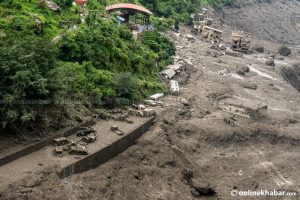
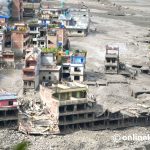
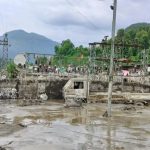
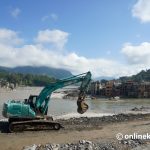
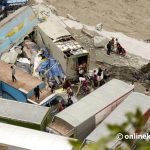
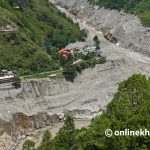
Nepal’s catastrophic August 2026 glacier-related disaster has made that question painfully relevant. Recent scientific analysis indicates that climate change likely contributed to the conditions that destabilised the glacier and surrounding terrain, although scientists have also identified other contributing factors. The disaster has left more than 1,300 people dead and thousands missing, while destroying homes, roads, hydropower infrastructure and livelihoods. If a disaster of this scale is increasingly connected to a changing climate, should our legal and policy response remain limited to distributing relief after the destruction has already occurred?
The first legal question should be directed inward: what does the State owe its citizens before a disaster occurs? Nepal’s Constitution guarantees the right to live in a clean and healthy environment under Article 30 and provides a right to compensation, in accordance with law, for injury caused by environmental pollution or degradation. Nepal also has the Disaster Risk Reduction and Management Act, 2074, which establishes a legal framework for disaster-risk reduction, preparedness, response and recovery. So, when authorities know that glaciers are retreating, rivers are changing, settlements are exposed to floods and landslides, and climate-related hazards are increasing, what preventive responsibility follows? Who is responsible for maintaining monitoring stations? Who must ensure that early-warning systems reach communities? Who decides whether a road, bridge, hydropower project or settlement is sufficiently safe to proceed? A legal system concerned only with compensation after death has occurred is addressing the consequence, not necessarily the duty that preceded it.
This is where the distinction between disaster relief and climate justice becomes important. Relief is immediate and necessary. It may provide food, temporary accommodation, medical assistance or financial support to affected families. Climate justice asks a much broader question: why are particular communities repeatedly carrying the greatest burden of a crisis they did little to create? Nepal’s NDC 3.0 recognises the country’s high vulnerability to climate change and identifies loss and damage as a major concern, including economic and non-economic impacts. The document also recognises the need to strengthen Nepal’s framework for addressing climate-induced loss and damage. This changes the character of the debate.
The affected farmer is not merely someone waiting for relief; the displaced family is not merely a beneficiary of a government program. Their losses form part of a wider question of rights, public responsibility, climate finance and international cooperation.
The international question is even harder. If Nepal contributes only a very small share of global greenhouse-gas emissions, yet faces severe climate-related losses, who should bear the cost of adaptation and recovery? Nepal has now placed climate justice at the centre of its international appeal following the 2026 disaster and has sought substantial external support for recovery. But as lawyers, we should resist the temptation to turn a morally powerful argument into an over-simplified legal claim.
It is one thing to establish that human-induced warming has increased climate risks; it is another to prove that a particular state or corporation is legally responsible for a particular disaster. Questions of scientific attribution, causation, state responsibility, jurisdiction and applicable international law remain complex. That does not weaken Nepal’s case for climate finance and loss-and-damage mechanisms. Rather, it tells us that Nepal needs evidence, not merely rhetoric: systematic records of deaths, displacement, infrastructure damage, livelihood losses, ecological damage and the scientific relationship between climate change and particular hazards.
There is another question that Nepal cannot avoid: when international climate money arrives, does justice actually reach the people who suffered the loss? Nepal’s NDC 3.0 estimates substantial financial requirements for implementing its climate commitments, with a significant portion dependent on international support. But who decides where that money is spent? How much reaches local governments and vulnerable communities? Who audits it? Can affected citizens obtain information about climate-finance allocations? Can they challenge a project that is described as climate-resilient but fails to protect the community for which it was designed? These are not merely questions of administration. They concern transparency, accountability and access to remedies. From the perspective of a law firm in Nepal, climate finance should therefore be viewed not simply as an economic resource but as an area requiring legal oversight, contractual accountability, public procurement scrutiny and meaningful community participation.
The question of equality is equally unavoidable. Does a family that loses its only farmland suffer the same kind of loss as a business that loses a commercial building? Can a person living in a remote mountain settlement recover as quickly as someone with insurance, savings and access to government institutions? And when reconstruction funds are distributed, should every victim be treated identically when their vulnerability and capacity to recover are radically different? Climate justice requires us to look at these differences. Nepal’s climate policy already recognises that climate-related loss is not limited to destroyed physical property; it can involve livelihoods, displacement, social systems, cultural heritage and other non-economic losses. The law therefore needs to move beyond the simple calculation of how many houses were destroyed and ask what was actually lost, who lost it, and whether the proposed remedy is capable of restoring a dignified life.
Ultimately, Nepal needs to change the language of disaster governance. Relief is necessary, but relief cannot be the final measure of justice. The real test begins after the helicopters leave, the temporary shelters close and the headlines disappear. Were vulnerable communities protected before the disaster? Were warnings adequate? Were known risks incorporated into development decisions? Was reconstruction carried out in a way that reduces future risk rather than reproducing the same vulnerability? Were climate funds transparently used? And when a loss cannot realistically be prevented, what mechanism exists to ensure that the affected person is not left to bear the cost alone? Nepal’s climate response must therefore connect constitutional environmental rights, disaster law, scientific evidence, climate finance and international loss-and-damage mechanisms.
A victim should not have to rely solely on charity to rebuild a life destroyed by a climate-related disaster. Relief addresses immediate suffering; climate justice asks who is responsible, who pays, who decides and what must change before the next disaster. That is the legal conversation Nepal can no longer postpone.