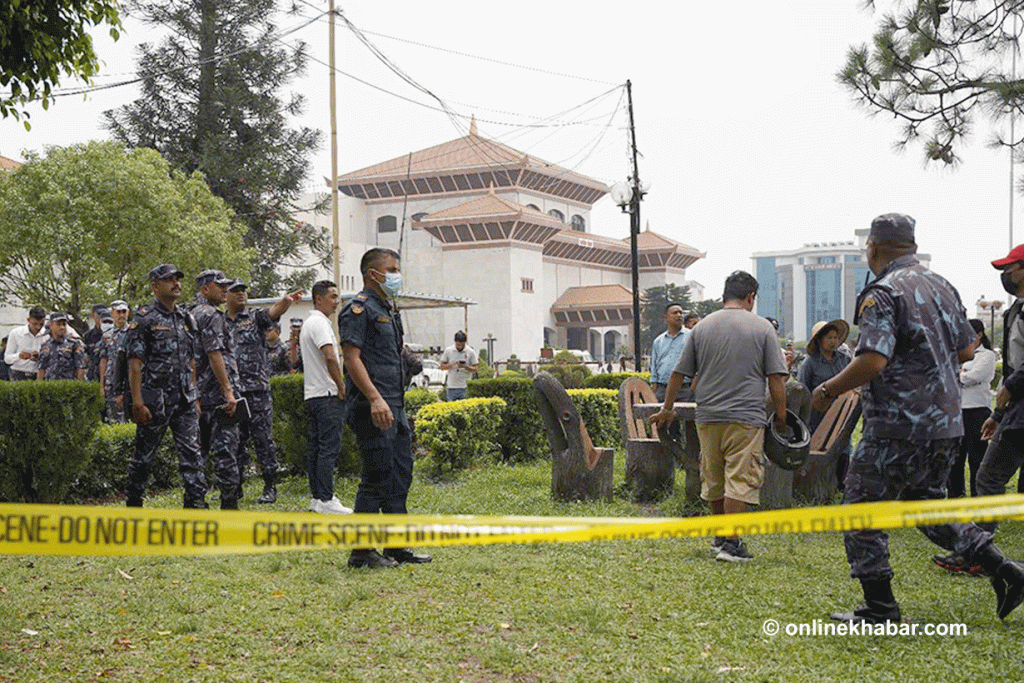
Nepal has witnessed several deeply disturbing incidents involving suicide and self-immolation in recent months. In July, the deaths of Ganesh Nepali and Ashwin Raut generated significant public attention, followed by the case of Suresh Chandra Shrestha. On September 21, another incident occurred in Tripureshwar involving 25-year-old bus driver Dawa Lama, who set fire to the bus he was driving while it was empty. Police said an investigation was underway into the circumstances surrounding the incident.
These cases are not identical. Their backgrounds, circumstances and personal histories differ. It would therefore be inappropriate to reduce them to a single explanation. However, their recurrence raises an important question: What happens when an individual tragedy becomes part of a broader social narrative, particularly when vulnerable people are repeatedly exposed to such incidents? For a country already struggling with limited access to mental-health services, this is a question that deserves serious public discussion.
Looking beyond the final trigger
Public discussions surrounding suicide often focus on the event immediately preceding a person’s death: a financial dispute, family conflict, relationship breakdown, legal problem, humiliation or another acute crisis.
Such events can certainly be significant. However, psychologically, a triggering event should not automatically be treated as the sole cause of suicide. A person may already be experiencing financial stress, loneliness, family conflict, trauma, hopelessness, social pressure, relationship difficulties or previous suicidal thoughts. An additional crisis may then become the immediate trigger within a much longer history of distress.
The World Health Organisation describes suicide as a complex phenomenon influenced by interacting psychological, social, economic and cultural factors. It cannot generally be explained by one event or one characteristic of an individual.
This distinction is important because focusing only on the final incident can prevent society from recognising the suffering that existed before it. If we ask only, “What happened that day?”, we may fail to ask the more important question: “What was happening in this person’s life before that day?”
The risk of imitation and contagion
There is another issue that deserves attention: the possibility of suicide contagion and imitation.
This does not mean that one person simply decides to copy another person’s actions. Rather, research has identified circumstances in which exposure to suicide, particularly repeated, sensationalised, or highly detailed exposure, can increase risk among vulnerable individuals.
This makes the role of the media and social media particularly important. A tragic incident can quickly move from a news report to a social-media post, then to a short video, a discussion thread and thousands of comments. In the process, the person who died can become a symbol, while the circumstances of the death can become a dramatic public narrative.
This creates an ethical responsibility for journalists, content creators and social-media users. The World Health Organisation recommends avoiding sensational reporting, explicit descriptions of suicide methods and unnecessary repetition, while encouraging reporting that promotes hope, recovery and help-seeking. The purpose of journalism should be to inform the public, not unintentionally romanticise or amplify a person’s final act.
The message we send through our response
The response that follows a death also deserves examination.
Following the death of Ganesh Nepali, his family and authorities reached a nine-point agreement that included measures such as an independent investigation, employment support for his wife, educational support for his daughter and financial assistance.
Supporting a grieving family is necessary and humane. Families should not be abandoned because they have lost someone. However, such responses also raise a broader policy question: Are comparable forms of support available before a person reaches a point of severe crisis? The concern is not that families should receive less support after a death. Rather, the concern is whether sufficient support exists before the death occurs.
A person facing financial hardship should not have to reach a point of irreversible crisis before assistance becomes visible. A family experiencing severe distress should not have to lose a member before institutions respond. The message of prevention should therefore be clear: People should be able to access support while they are still alive and asking or even struggling, to be heard.
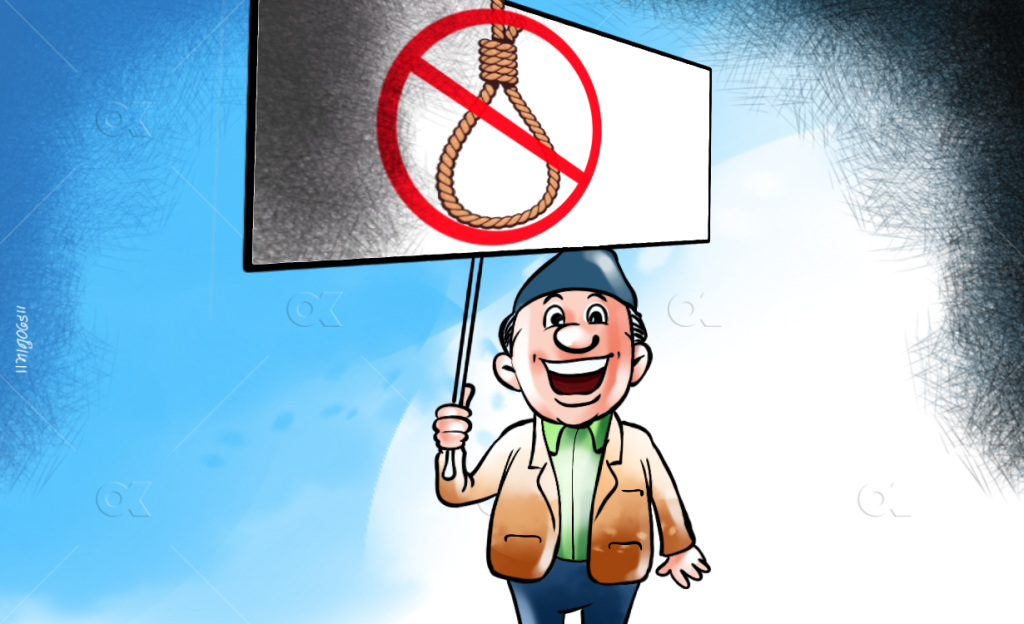
Suicide prevention cannot consist only of slogans such as “Suicide is not the solution.” For someone experiencing severe psychological distress, a slogan does not address the circumstances that have made life feel unbearable. Nepal needs stronger systems of early intervention.
Local governments and municipalities are closest to communities and therefore have an important role in prevention. Accessible psychological first-response services could provide people experiencing severe emotional, family, financial or occupational distress with an immediate point of contact. Mental-health support should not be treated as a luxury available only to those who can afford private counselling.
Training frontline workers
Police officers, teachers, health workers, community workers, ward representatives and employers frequently encounter people experiencing distress.
They do not need to become psychologists. However, they can be trained to recognize warning signs, communicate safely, de-escalate difficult situations and connect individuals with appropriate professional services. Sometimes recognizing that a person’s apparent anger is actually a sign of severe distress can become an important opportunity for intervention.
The media has a particularly important role in suicide prevention. Repeatedly displaying graphic images, describing methods in unnecessary detail or turning a person’s final moments into viral content can create risks beyond the original tragedy. Responsible reporting does not mean avoiding the subject. It means reporting it carefully. Journalists can discuss the circumstances surrounding an incident while avoiding unnecessary details that may contribute to sensationalism. They can also include information about available mental-health and crisis-support resources.
Psychologists should not be limited to private counselling rooms. Their expertise can contribute to schools, universities, workplaces, municipalities, police training, community programmes and public-health campaigns. Mental-health education should also extend beyond discussions that occur after a suicide.
Communities need opportunities to learn about emotional regulation, coping with failure and humiliation, problem-solving, interpersonal conflict, financial stress, help-seeking and crisis management before an emergency occurs.
From reaction to prevention
Every major tragedy generates public concern. Statements are released. Investigations are announced. Political discussions follow. Social media becomes active. Then, eventually, public attention moves elsewhere. Prevention requires more than this cycle of reaction.
Nepal needs better data and systematic research into the circumstances surrounding suicide and suicidal behaviour. Which populations are most vulnerable? What circumstances commonly precede a crisis? Where are people seeking help? Where are they unable to access it? How does social-media exposure affect vulnerable individuals? Which interventions are effective in Nepal? These questions require sustained research rather than temporary attention following individual tragedies.
It is important not to judge people who die by suicide. None of us can know the complete psychological experience of another person, and reducing a death to a single argument, financial problem, government decision or family conflict oversimplifies an extremely complex phenomenon.
At the same time, acknowledging complexity should not prevent us from examining the possibility of social influence.
When suicide receives repeated and sensational public attention, vulnerable individuals may be affected by what they see and hear. This is why responsible reporting and preventive mental-health systems must be considered together.
Perhaps the most useful question is therefore not simply:
“Who is to blame?”
It is:
“What could have happened earlier that might have changed the outcome?”
Could someone have recognised the warning signs?
Could a family member have known how to respond?
Could a police officer have de-escalated a crisis?
Could a local government have provided immediate psychological support?
Could the media have reported the incident differently?
Could professional help have been accessible before the crisis became overwhelming?
These questions shift the conversation from reaction to prevention.
Suicide prevention is not about predicting who will die. It is about creating enough opportunities for a person experiencing a crisis to find another path. Nepal’s response must therefore move:
From reaction to prevention, from blame to understanding, from sensational coverage to responsible conversation. And from asking only “Why did this happen?” to asking “What could have been done before it happened?”
By the time a society is discussing compensation, investigations, protests and accountability, a life may already have been lost. The greater responsibility is to build systems that intervene while there is still time to save it.
Prevention must begin before tragedy becomes the only reason we pay attention.