
Pokhara, September 22
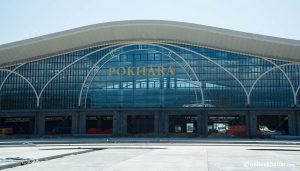
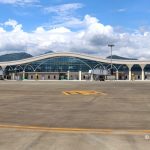
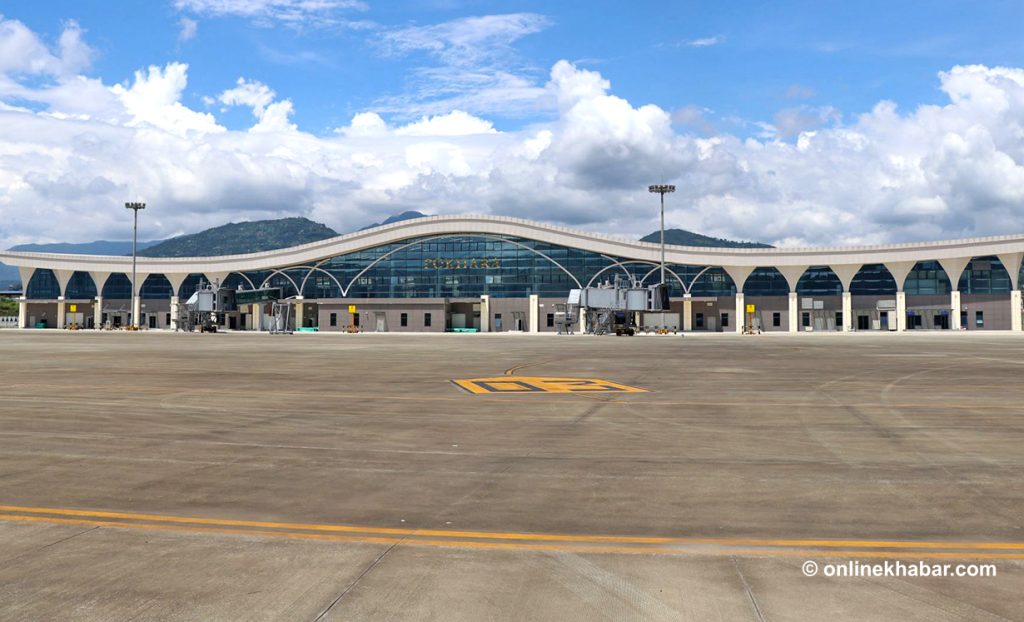
In daylight, the main terminal building of Pokhara International Airport is an attractive landmark. Visitors often stop to take photographs with the building in the background. But after sunset, the same structure tells a very different story.
The western section of the terminal glows with lights, while the eastern section remains dark. The illuminated side serves domestic passengers, with people moving through its arrival and departure halls. The eastern side, designated for international passengers, remains closed. Its doors are locked, its lights are switched off, and there is little sign of the international activity for which the airport was built.
For Pokhara, the contrast has come to symbolise the airport itself: half bright and half dark. Built after decades of pressure, agitation and lobbying for an international gateway, the airport was expected to connect Pokhara directly with cities beyond Nepal. Instead, regular international flights failed to materialise, leaving the airport largely dependent on domestic operations. The grand opening brought celebration, but the absence of international flights soon turned that excitement into disappointment—not only among Pokhara residents but also among those who had fought for the airport and businesses that had invested in anticipation of increased international tourism. Now, nearly four years after its inauguration, a new possibility is beginning to change that mood.
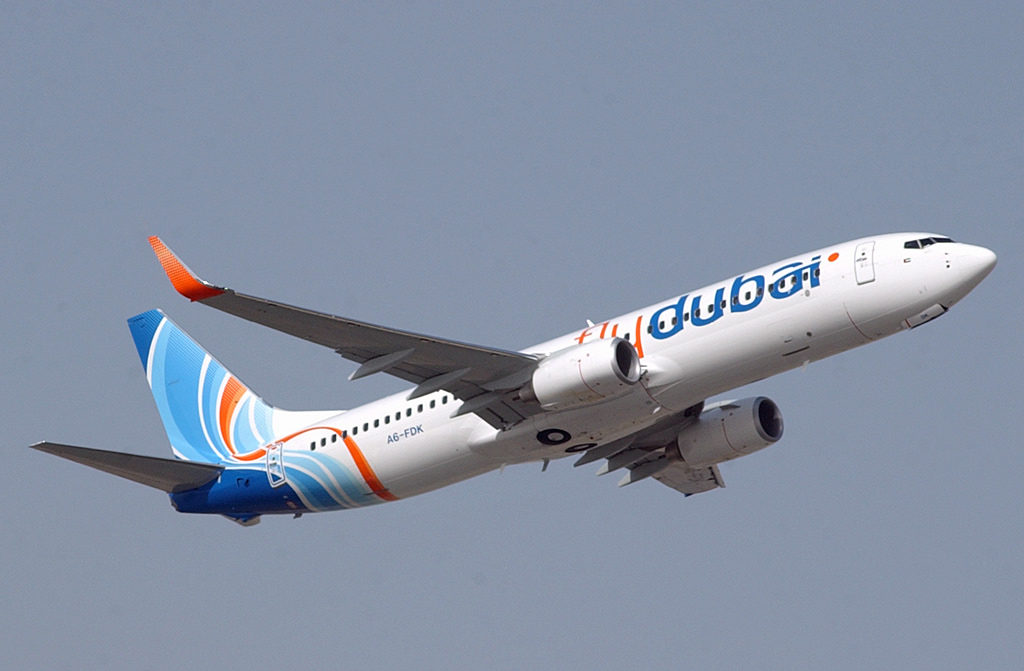
On September 23, Flydubai is scheduled to begin a daily flight between Pokhara and Dubai, with ticket bookings open for at least six months. The planned service has generated renewed enthusiasm among residents, tourism entrepreneurs and business organisations. For a city that has spent years waiting for its international airport to function as intended, the flight is being viewed as a possible turning point.
The optimism is not simply about Dubai. Dubai is seen by local business leaders as a major international transit point and a potential gateway to destinations across the world. According to former Federation of Nepalese Chambers of Commerce and Industry president Anand Raj Mulmi, if the Dubai connection can be sustained, it could eventually create opportunities for connections with India, China and other South Asian countries.
He describes the Flydubai service as a small but important step toward overcoming the obstacles that have prevented Pokhara from achieving international connectivity. Dubai, he argues, can serve as a link between Pokhara and a major international city.
Flydubai has also been actively promoting the Pokhara route. It has opened an office in Pokhara and has been holding discussions and promotional activities in partnership with local stakeholders. The airline has opened ticket bookings from September 23, with daily flights planned. The airline’s Nepal general manager, Navaraj Shahi, says fares from Pokhara are at least Rs 5,000 lower than those from Kathmandu and that Flydubai and Emirates view Pokhara as a long-term opportunity.
The first flight is scheduled to land at Pokhara International Airport at 6:15 pm on September 23 and return to Dubai an hour later. The government granted permission for the daily service on May 25, and airport authorities say the flight schedule will remain the same each day.
Local tourism officials are preparing to welcome the first passengers with a water salute. Tourism entrepreneurs say the initial flights are already showing strong interest, with information that tickets for the first few flights of the 166-seat aircraft have been sold out. Hotels, restaurants, trekking agencies and ticketing companies are preparing packages aimed at supporting the new service and attracting visitors.
A long-awaited international gateway
The anticipation surrounding Flydubai has to be understood against the long history of Pokhara’s airport dream. The idea of an international airport in Pokhara dates back to around 1974, when land at Chhinedanda was acquired under the leadership of then-zonal administrator Shankar Raj Pathak. Yet it took more than five decades for the city to see the airport become a reality. In the intervening years, the project was affected by political debates, investment questions, competing interests and allegations of corruption and geopolitical complications.
In 2012, Pokhara residents, businesspeople, industrialists and social workers intensified their campaign for an international airport. The movement included a relay hunger strike, with local stakeholders putting pressure on the federal government to move the project forward.
Construction eventually took shape after the Civil Aviation Authority of Nepal signed an agreement with China CAMC Engineering in 2014. In 2016, Nepal and China Exim Bank agreed on a $216 million loan for the airport, while CAMC was tasked with constructing it as a turnkey project. The foundation stone was laid by then Prime Minister KP Sharma Oli in 2016, with completion initially targeted for July 2021. The COVID-19 pandemic delayed the project. The airport was finally inaugurated on January 1, 2023, by then Prime Minister Pushpa Kamal Dahal.
But the opening did not bring the international traffic that local businesses had expected. Some international charter flights operated after the inauguration. Sichuan Airlines connected Chengdu with Pokhara through 26 charter flights. Bhutan Airlines and Druk Air also operated charter flights. Himalayan Airlines conducted flights between Pokhara and Lhasa, completing 52 arrivals and 52 departures—104 movements in total—but the service was eventually suspended because of insufficient passengers. A Chinese military aircraft also landed in Pokhara carrying relief supplies during the Jajarkot earthquake.
These flights demonstrated that international aircraft could use the airport. What remained elusive was a sustained commercial connection. The airport had received more than Rs 22 billion in Chinese investment, according to the report, making the absence of regular international operations a source of continuing frustration.
The lesson from Bhairahawa
For local stakeholders, the arrival of Flydubai brings excitement, but also caution. They have watched international services at Gautam Buddha International Airport in Bhairahawa begin with similar expectations and subsequently struggle to become sustainable.
Jazeera Airways started a direct Kuwait-Bhairahawa service on May 16, 2022, the first foreign airline to operate there, but the service did not become regular. Himalayan Airlines, Nepal Airlines, Thai AirAsia, Flydubai and Qatar Airways also operated or announced services linking Bhairahawa with international destinations under different circumstances, including periods of maintenance at Kathmandu’s Tribhuvan International Airport and government incentive packages. Yet Bhairahawa failed to sustain the expected international traffic.
Mulmi says Pokhara must learn from that experience. He has warned against a situation in which Flydubai begins operating and later stops because the route cannot sustain itself commercially. For him, the challenge is not merely bringing one international airline to Pokhara but creating conditions under which the airline can cover its costs and continue operating.
That requires more than enthusiasm. It requires improvements in airport services and facilities, sustained promotion of Pokhara and active efforts to attract passengers, he says. Pokhara should also promote itself in Dubai rather than simply wait for passengers to discover the destination.
Can Dubai become Pokhara’s gateway?
The attraction of the new route lies partly in its potential reach. Through Flydubai and Emirates, passengers travelling via Dubai could potentially connect with 250 destinations. For a city whose international airport has struggled to establish its first regular overseas route, that network is being viewed locally as an opportunity to expand beyond a single destination.
For Pokhara’s tourism industry, the possibilities are particularly significant.
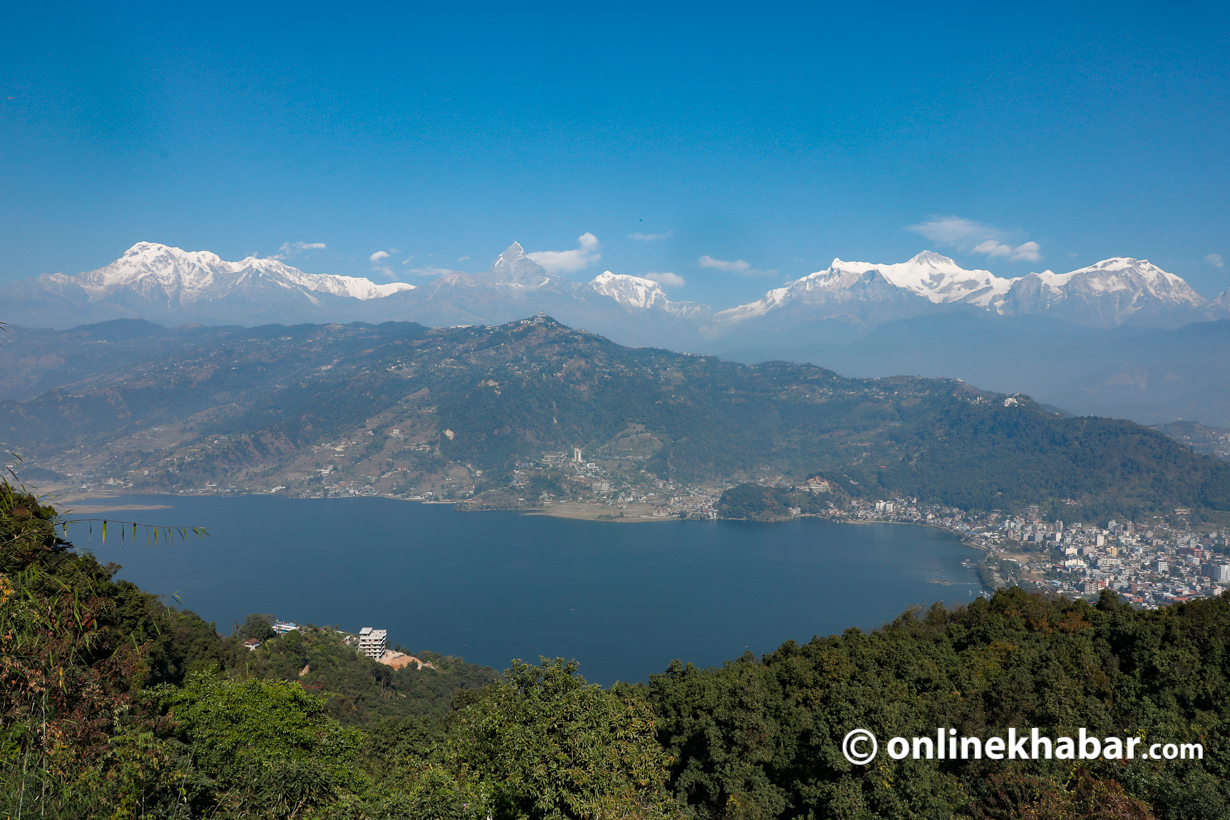
Tourism entrepreneurs point to the city’s natural and adventure attractions, including its proximity to high mountains and trekking routes. Tourism Council Pokhara president Hari Bhujel says the city can market the opportunity to visitors who would be able to travel directly to Pokhara and experience the mountains from the city.
The tourism industry is also looking towards visitors from the Gulf. Trekking Agencies’ Association of Nepal Gandaki president Krishna Acharya says Dubai has adventure-oriented visitors who may be attracted to activities such as cycling, motorbike riding and paragliding. The direct connection could make it easier to market Pokhara as an adventure destination.
The hotel industry is watching closely. Hotel Association Pokhara president Laxman Subedi says businesses invested in the city partly with the expectation that the international airport would bring more visitors. Pokhara has around 1,200 hotels and more than 15,000 people employed in the sector, according to the report. Yet businesses have faced difficulties, including the effects of recent disasters and uneven tourist seasons.
For Subedi, the success of the Flydubai service will depend on whether businesses and other stakeholders are prepared to support it. His warning is direct: businesses cannot continue operating at losses. If the new service is not sustained, he says, Pokhara could face a situation similar to Bhairahawa.
Restaurant and Bar Association of Nepal Pokhara president Basanta Gautam also sees the flight as significant beyond Pokhara itself. With Nepal relying heavily on a single international airport, he says the opening of another international gateway could strengthen visitors’ confidence. Pokhara already has international-standard hotels, restaurants and tourism services, but international flight connectivity has remained a missing component.
Preparing the airport for international passengers
Authorities say preparations for the Flydubai operation have been completed. The Civil Aviation Authority has made arrangements for the necessary services. Nepal Airlines has completed preparations for ground handling, while Solti Hotel has received permission and certification to provide flight catering services. Around 200 Civil Aviation Authority employees, including service providers and permanent staff, are working at the airport. Nepal Police has deployed 104 personnel and the Nepal Army 80 personnel for security. Customs and immigration offices have also deployed the required staff.
Local tourism organisations have also been preparing. The Nepal Association of Tour and Travel Agents Gandaki says it has trained 163 member companies in connection with the Flydubai service. Businesses are working together to develop tourism packages, while travel companies have been encouraged to bring their relatives and visitors to Nepal through Pokhara.
The broader business community is similarly calling for government involvement. Pokhara Chamber of Commerce and Industry president Shobha Gautam, who recalls the earlier campaigns for an international airport, says the government needs to take the issue seriously if the Dubai connection is to lead to further international routes. She says the chamber will continue coordinating with stakeholders and putting pressure on the government to maintain the service.
One immediate issue raised by Mulmi is visa access. If passengers travelling from Pokhara have to go to Kathmandu to obtain visas, he argues, the inconvenience could discourage potential travellers. He has called for mechanisms that would allow passengers in Pokhara to obtain the necessary visa-related services locally.
A test of whether hope can become habit
The optimism surrounding Flydubai is therefore tempered by an understanding that the first flight is not the destination. For Pokhara, September 23 represents the possibility of turning an international airport from a largely unrealised promise into an operating gateway. But sustaining that gateway will depend on passengers, tourism promotion, business cooperation, airport facilities and continued government support.
Tourism Council president Bhujel describes Flydubai as a potential milestone after years of struggle. Yet he also acknowledges the central challenge: ensuring that the service remains regular in the long term and using its success to attract other airlines.
Former tourism council president Pomanarayan Shrestha similarly sees Flydubai as only a beginning. Dubai has a large Nepali workforce, a significant Indian population and attracts wealthy international visitors. If Pokhara can bring some of those visitors directly to the city, he believes the benefits could extend across Gandaki Province and the wider Nepali tourism sector.
For years, the international terminal at Pokhara’s airport has remained a physical reminder of an unfulfilled promise: a building designed for international passengers but often left without them. Now, as Flydubai prepares to land, the dark eastern half of the terminal may finally begin to see more activity.
Whether that light remains on, however, will depend on what happens after the welcome ceremony, after the first flight and after the initial excitement fades.
For Pokhara, the real measure of success will not be that an international aircraft lands once. It will be whether the city can keep its international gateway open, active and connected and turn a long-awaited flight into a sustainable link with the wider world.