Kathmandu, September 1
Thirty-one civil rights activists have criticised the federal government for sidelining local governments in rescue, relief and rehabilitation efforts following the devastating flood in the Bhotekoshi and Trishuli rivers.
In a joint statement issued on Tuesday, the activists said disaster management and rehabilitation efforts could not be effective without the participation of local governments.
Criticism of federal role and one-door system
The activists accused the federal government of failing to play an effective coordinating and responsible role in search, rescue and relief distribution, while also pointing to administrative hurdles and delays.
They said the Nepal Army‘s controlling role in the collection and distribution of relief could further burden flood victims.
The statement also criticised the government’s “one-door system”, saying it had not been effective and that the system should not be used to restrict the role of civil society organisations.
Recalling the effective role played by local governments during the COVID-19 pandemic, they called for local governments to be given a leading role in the current disaster response.
Call for parliamentary and all-party mechanisms
The activists called for a special mechanism to ensure that funds collected in the Prime Minister’s Disaster Relief Fund are managed transparently, responsibly, accountably and fairly.
They also suggested that an all-party political mechanism could help make disaster management more effective and transparent.
They urged the Speaker of the House of Representatives to take the initiative to form a parliamentary committee to monitor the overall process.
Concerns over scale of damage and public health
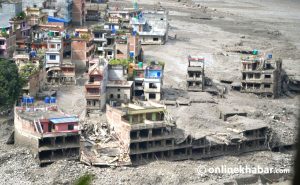
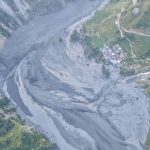
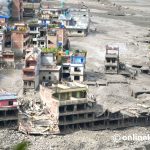
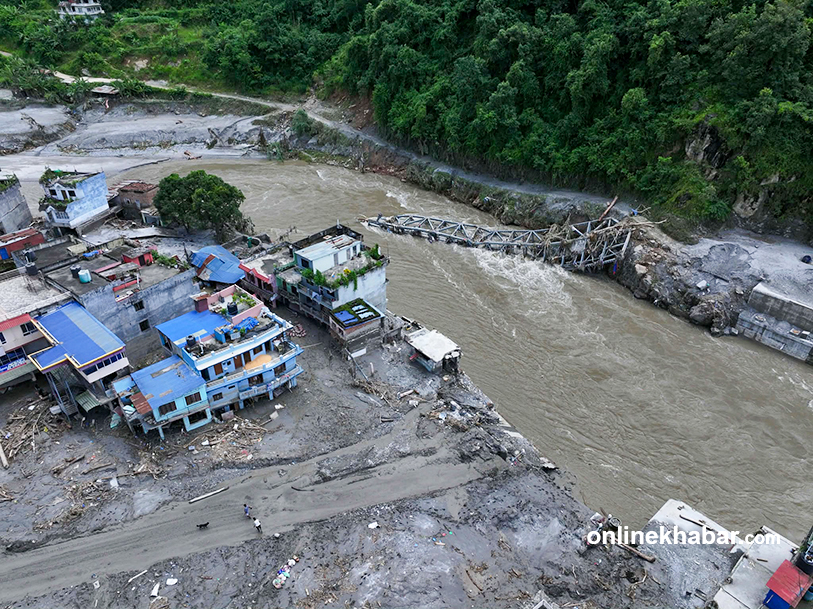
The statement said the August 26 flood had killed hundreds of Nepali and foreign nationals, left thousands missing and caused damage worth billions of rupees.
Citing data from the National Disaster Risk Reduction and Management Authority, the activists said that by the morning of August 31, around 900 bodies had been recovered, while thousands had been injured or remained missing.
Nearly 21,000 security personnel have been mobilised for rescue and relief operations, according to the statement.
The flood also swept away around a dozen hydropower projects with a combined capacity of about 900 MW, 50 kilometres of roads, thousands of houses and dozens of concrete bridges.
The activists said the government’s decision to bury unidentified bodies was understandable from a public-health perspective, but stressed that the right of grieving families to mourn must also be respected.
They urged the authorities to take immediate measures to prevent infectious diseases that could spread through contaminated water and decomposing bodies, and to pay particular attention to the health and psychosocial needs of women, children and senior citizens affected by the disaster.
Call for stronger Nepal-China information mechanism
The activists also called for an integrated information system to prevent the spread of misinformation and urged the government to ensure that domestic and foreign media can report from affected areas without unnecessary restrictions.
They further called for Nepal and China to strengthen the existing cross-border information-sharing mechanism and make it more scientific and effective, citing the risks posed by numerous glacial lakes across the Hindu Kush Himalaya region.
The statement was signed by 31 civil rights activists, including Kanak Mani Dixit, Dr Bimala Rai Paudyal, Sushil Pyakurel, Subodh Pyakurel, Dr Gopal Krishna Siwakoti, Shobhakhar Budhathoki, Dr Padma Prasad Khatiwada and Asmita Sapkota.