

Kathmandu, August 27
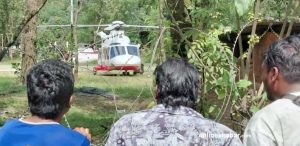
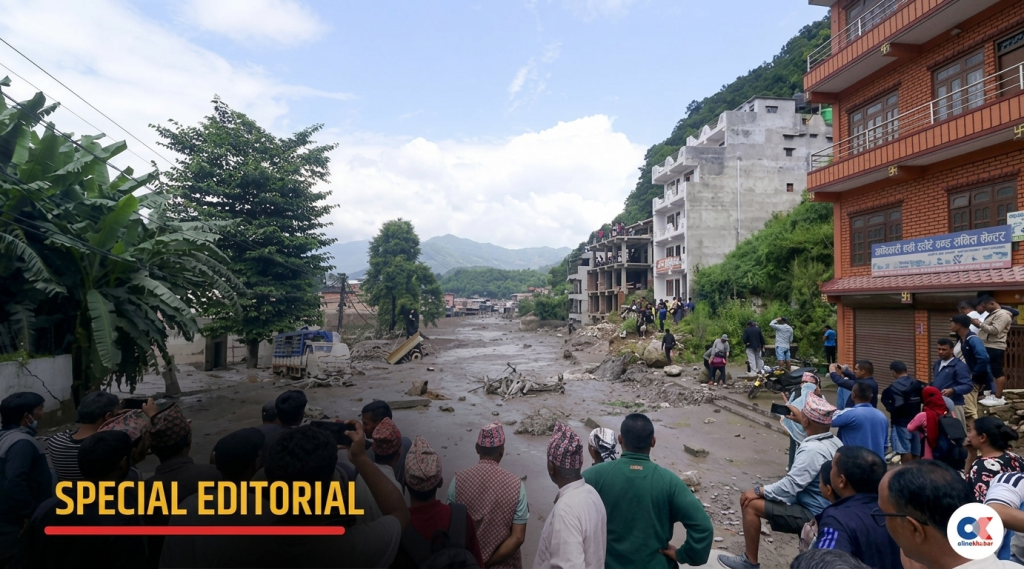
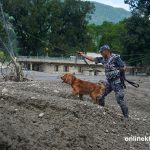
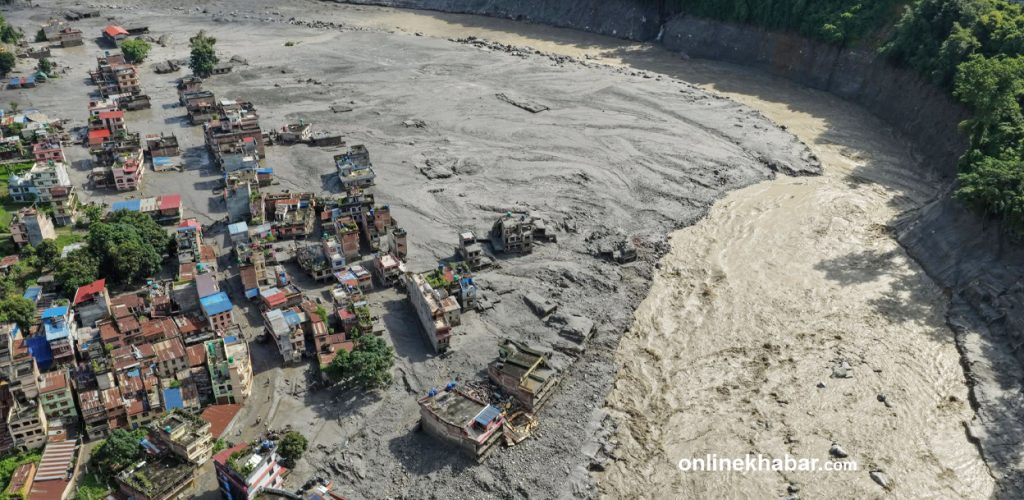
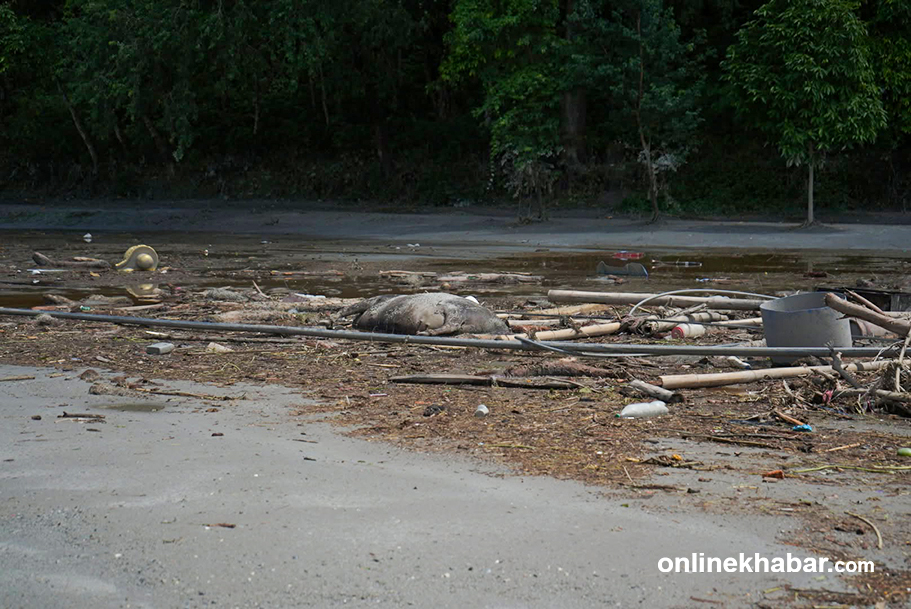
The bodies of 289 people swept away by the Rasuwa flood have so far been recovered. The recovery of bodies is continuing. While the fact that bodies have been carried long distances has made the search operation difficult, a shortage of adequate cold storage facilities has created an additional challenge in managing the remains.
Health facilities in Chitwan have a combined capacity to store a maximum of 50 bodies. However, the number of bodies recovered has already exceeded several hundred. According to Dr Gopal Chaudhary, a senior forensic expert at Tribhuvan University Teaching Hospital, bodies should not be cremated hastily as soon as they are recovered during a major natural disaster. There are international standards and guidelines for managing human remains during disasters.
Detailed information about each body, along with photographs and other evidence related to identification, must be collected and preserved before the remains are managed. “The first and most important thing is to ensure that the bodies are preserved safely,” Dr Chaudhary said. “All details must be systematically recorded, including where the body was found, the condition in which it was found, and what identifying features it has.”
According to Dr Chaudhary, most hospitals in Nepal do not have cold storage facilities capable of holding hundreds of bodies at once. “When a large number of bodies arrive, the regular infrastructure of hospitals cannot cope,” Dr Chaudhary told Onlinekhabar. “During a disaster, the state must make arrangements for alternative and temporary storage of human remains.”
Similarly, senior forensic expert Dr Harihar Wasti said the bodies must first be preserved safely and then identified through scientific procedures. “The bodies must first be kept safe. It is not possible to identify everyone immediately. It takes time. Relatives will also come looking for their loved ones. Therefore, the state must immediately arrange facilities to preserve the bodies,” Dr Wasti told Onlinekhabar.
Bodies can be temporarily buried for preservation
According to forensic expert Dr Chaudhary, when a large number of bodies are recovered, temporarily burying them in a safe location using scientific methods could be an effective way to preserve them. He said government-owned or other secure land located at a safe distance from water sources and settlements should be identified for this purpose. He suggested that the bodies could be systematically placed in pits dug to an appropriate depth.
“When bodies are kept underground, the decomposition process is slower than when they are exposed to the outside environment,” Dr Chaudhary said. “In a major disaster, bodies can be temporarily buried using scientific methods for preservation. Once relatives arrive and the bodies are identified, they can be exhumed, matched with the relevant records and handed over to the families.”
According to Chaudhary, each body must be assigned a separate number and tagged before burial. Photographs, the location and time where the body was found, clothing, jewellery and distinctive physical features must also be documented and preserved. There must also be a clear record of where and in what order the bodies were buried.
Bodies can decompose rapidly because of the hot weather. Identification becomes even more difficult when bodies have been severely damaged by the flood, when limbs have been separated or when the remains have been in water for a prolonged period. According to Dr Wasti, bodies can also be temporarily buried for preservation. However, he said this requires specific procedures and proper management.
“Bodies can be kept for some time by burying them. But a location must be arranged, and pits must be dug. Everything must be properly recorded,” Dr Wasti said. “Bodies cannot be managed in just any way. There is a specific protocol for this. Experts are needed.”
Refrigerated containers another option
According to Dr Chaudhary, if possible, large containers normally used to transport goods could also be converted into temporary cold storage facilities. “A temporary morgue can be created by installing the necessary refrigeration system in a container,” Dr Chaudhary said. “A large container can be arranged to hold around 50 bodies.”
However, he said it would not be easy to establish such facilities immediately everywhere, so areas where large numbers of bodies are likely to be recovered should prepare for temporary management of the remains at the local level.
Need for disaster victim identification team
According to Dr Wasti, who has extensive experience in the field, managing bodies after a major disaster cannot be handled by a single hospital, doctor or local administration alone. A separate Disaster Victim Identification (DVI) team should be formed for this purpose, he said.
Such a team should include forensic doctors, police personnel, dentists, fingerprint experts, DNA specialists and other necessary personnel, he said. “A specialised forensic team must be formed. A DVI team is necessary. How can one doctor, one individual or one hospital handle such work alone?” Dr Wasti said. “All bodies must be managed through a single-window system.”
The process of transporting bodies from the location where they are found to the morgue, assigning each body a separate number, collecting photographs and other details, and conducting necessary examinations should all be carried out through a single coordinated system.
Identified bodies to be handed over to families
Not all bodies recovered after being swept away by the flood are in the same condition. Some remain identifiable by their faces and physical features. Others may have begun decomposing after remaining in water for a long time or may be severely damaged. According to Dr Chaudhary, bodies that remain identifiable can be recognised directly by family members or identified based on tattoos, distinctive marks on the body, clothing, watches, jewellery or other personal belongings.
However, if the condition of the body has deteriorated or the face cannot be recognised, identification must be carried out through dental examination, fingerprints and, as a last resort, DNA testing. “A severely decomposed or badly damaged body cannot be identified simply by looking at it,” he said. “In such cases, dental records, fingerprints or DNA testing must be used. The body should be handed over to the respective family only after identification through DNA.”
Dr Wasti also said that conducting a post-mortem alone is not sufficient to identify a body. All available identifying information must be collected from the remains. “Information obtained from the post-mortem must be compared with the information available about missing people,” Dr Wasti said. “If fingerprints can be obtained, they should be collected immediately. Identification can then be made by comparing them with the records of missing persons.”
In the case of small tissue samples or unidentifiable human remains, a legal record must be prepared, and the process must proceed in accordance with the existing guidelines for the management of human remains.
Hasty cremation could lead to mistakes
Dr Chaudhary said identifying bodies after a major disaster is itself a lengthy and complex process. Therefore, he warned that handing over bodies without sufficient identification due to pressure from relatives or emotional circumstances could result in one family mistakenly taking the body of another person. “Families want to perform the final rites according to their traditions,” Dr Chaudhary said. “But if a body is handed over hastily without certain identification, there is a risk that one family could take the body of another person.”
According to Chaudhary, the identification of bodies after a disaster can sometimes continue for months or even longer. Citing examples from major disasters around the world where the identification of human remains has continued for extended periods, he said scientific procedures should also be given priority in the case of the Rasuwa flood. “The best approach is not to rush, to preserve all evidence and to hand over the body to the family only after certain identification has been established,” Dr Chaudhary said.
State must immediately establish safe temporary body storage facilities
As bodies from the Rasuwa flood have begun to be recovered in various districts stretching from Chitwan to Nawalparasi, it is no longer possible for a single hospital or institution to manage them all. Local hospitals also lack sufficient morgue and cold storage facilities, as well as forensic testing capabilities. In such circumstances, Dr Chaudhary has suggested that the federal government coordinate with local and provincial governments to establish safe temporary storage facilities for human remains.
Experts say secure government land should be identified, particularly in areas where large numbers of bodies are likely to be recovered, and temporary storage facilities should be established with the necessary security, record-keeping and forensic arrangements. “In my experience, when a large number of bodies need to be managed, temporarily burying and preserving them through scientific methods can be an effective solution,” Dr Chaudhary said. “The state must provide a secure location. Detailed information about every body must be recorded, and the remains must be preserved systematically.”