
Kathmandu, August 26
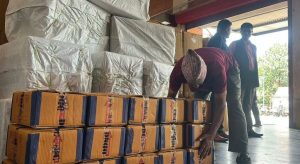
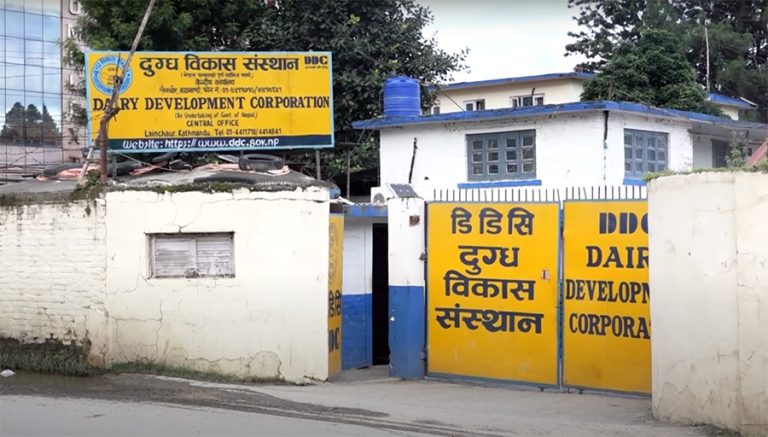
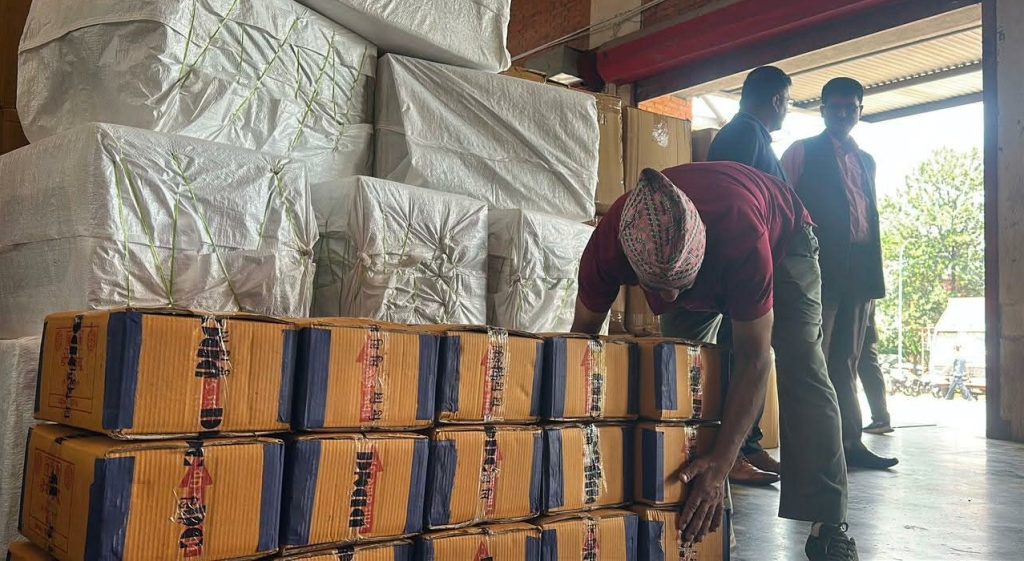
The ghee export drive of the state-owned Dairy Development Corporation (DDC) has gained momentum after the corporation sent its first 500-kilogram consignment to Dubai last Friday.
The shipment, sent via a Nepal Airlines flight, was presented as an important step in taking a Nepali dairy brand to international markets.
DDC now plans to expand its ghee export market to Japan, South Korea and Tibet in China, with the corporation saying it has already reached a commercial agreement to export 50,000 kilograms, or 50 tonnes, of ghee this year.
During a meeting of the House of Representatives on August 18, Agriculture, Forest and Environment Minister Geeta Chaudhary said sales of DDC dairy products had increased by 35 percent and that preparations were also underway to export DDC ghee to China.
DDC General Manager Dr Sharan Pandey said the corporation has signed an agreement with private company Rato Ra Chandra Surya International Pvt Ltd for the annual export of 50 tonnes of ghee.
He said exports to Japan, South Korea and Tibet are expected to begin from November.
“We have started by sending 500 kilograms of ghee to Dubai. An agreement has been reached to export 50,000 kilograms annually,” Pandey said on the day of the Dubai shipment.
The corporation plans to increase the volume of ghee export as domestic production grows.
However, behind the enthusiasm surrounding the export is a more complicated picture. DDC is currently under pressure to meet domestic demand while its stocks are gradually declining.
Ghee export begins during Nepal’s lean milk season
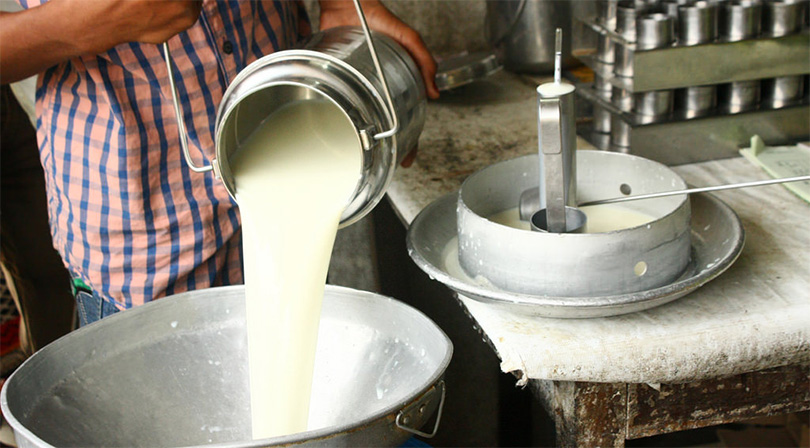
Milk production in Nepal follows a seasonal cycle commonly divided into the flush season and lean season.
Milk production generally rises from October to February, when weather conditions and the availability of green fodder are favourable. This is known as the flush season. Production falls from March to September during the warmer and drier months, creating the lean season.
Nepal is currently approaching the end of the lean season, when milk production is at its lowest.
DDC traditionally processes surplus milk collected during the six-month flush season into butter and milk powder and stores these products for use during the lean season.
DDC Information Officer Nilkantha Gautam described the Dubai shipment as a market test rather than a major expansion of its international business.
“The 500 kilograms we have sent is only a test in the international market,” Gautam said. “Demand for our ghee is already so high in the domestic market that our existing stock is expected to reach zero by October.”
Figures presented by Agriculture Minister Chaudhary also indicate that DDC’s stocks are limited. As of August 17, the corporation had around 150 tonnes of milk powder and 130 tonnes of butter worth approximately Rs 240 million.
Since butter contains around 20 percent moisture, DDC says only about 80 percent becomes pure ghee after clarification. Based on the current butter stock, this translates to roughly 100 tonnes of ghee.
With major festivals such as Dashain, Tihar and Chhath approaching, domestic demand for ghee is expected to rise significantly.
This raises questions over whether DDC can simultaneously meet domestic demand and sustain its planned ghee export of 50 tonnes annually to Dubai, Japan and South Korea.
DDC suspends plans for new outlets
The pressure on supply is also reflected in DDC’s decision to suspend plans to open new outlets.
The corporation had planned to open 30 new service counters across the country to clear old stocks and expand its market. However, after opening eight outlets, it has now suspended further expansion until further notice.
“We have stopped opening outlets for now because we have started facing a shortage of raw materials,” Gautam said. “There is no shortage of ghee at outlets across the country at present, but it will become difficult for us unless milk collection increases.”
The decision has raised questions about DDC’s simultaneous efforts to explore foreign markets while struggling to guarantee a consistent supply in the domestic market.
Gautam, however, said the Dubai shipment should not be interpreted as DDC aggressively pursuing international markets.
“DDC itself is not looking for foreign markets. A private exporter, Rato Ra Chandra Surya International, is taking the ghee from Nepal to test it in the market there,” he said.
He said the response from foreign consumers and Nepalis living abroad would determine whether demand develops.
Even if substantial foreign demand emerges, DDC currently lacks the capacity to meet it, according to Gautam.
“We are currently collecting only around 40,000 to 50,000 litres of milk daily across the country,” he said. “If collection from farmers does not increase, we will not be in a position to meet foreign demand. Our first priority will always be the domestic market and consumers here.”
Ghee export depends on farmers
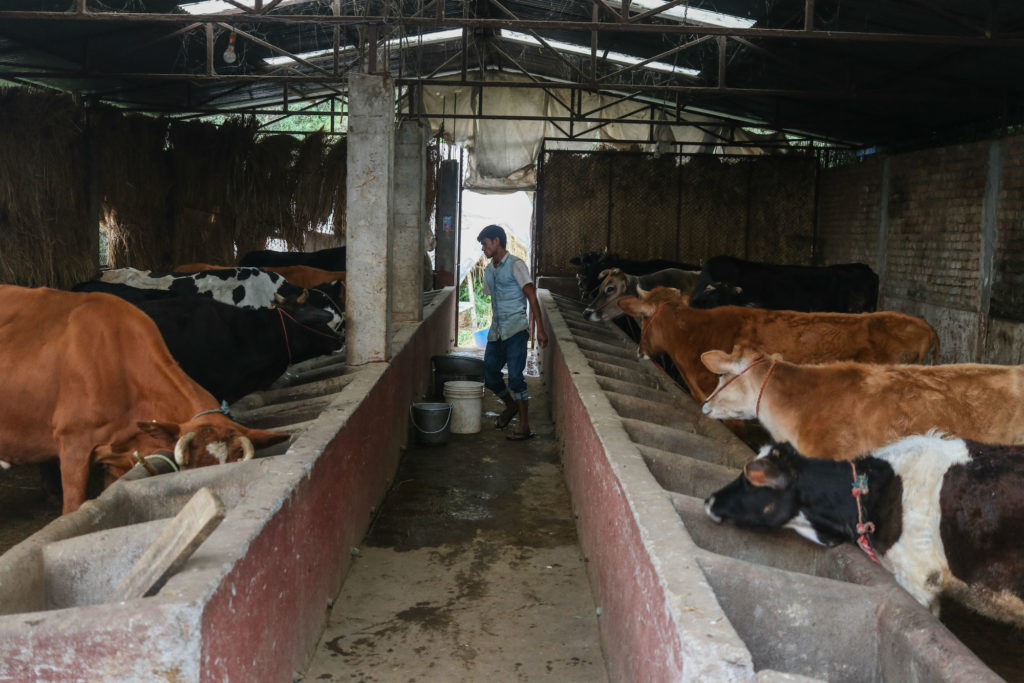
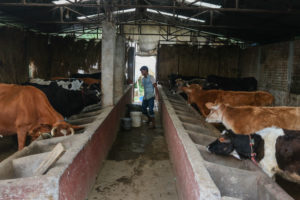
Another major challenge for DDC’s ghee export ambitions lies at the foundation of its supply chain: dairy farmers.
DDC collects milk from around 1,200 dairy cooperatives across 45 districts. However, farmers supplying milk to the corporation have repeatedly complained about delayed payments.
DDC’s outstanding payments to farmers had previously reached around Rs 900 million. According to Gautam, the amount has now fallen to around Rs 450 million, but some farmers are still waiting for payments dating back three months.
Farmers argue that it is difficult for a corporation to build a sustainable export business when it cannot pay producers on time.
Delayed payments can force farmers to sell their cattle or reconsider dairy production, they say.
“If we stop producing milk, DDC’s machines alone cannot make ghee,” farmers have said.
Following Prime Minister Balendra Shah’s promotion of DDC products on social media and a subsequent increase in consumer interest, the corporation has begun selling its old stock and using the proceeds to clear outstanding payments to farmers.
But sustaining ghee export in the long term will depend on strengthening the domestic supply chain, particularly by ensuring farmers receive fair prices and timely payments.
Higher and more reliable payments could encourage farmers to increase production, creating the supply needed to support exports to markets such as Japan and South Korea.
Ghee export is a promising start, but not yet a breakthrough
DDC produces a wide range of dairy products, including fresh milk, standard milk, cow milk, yak cheese, yoghurt, buttermilk, ice cream and rasbari.
The corporation has also built consumer trust in the quality of its products, giving it an existing advantage as it explores opportunities among Nepali communities overseas.
DDC had exported small quantities of ghee and butter to Japan and Tibet five to seven years ago, but those efforts were not sustained.
The latest 500-kilogram shipment to Dubai is therefore a modest commercial beginning rather than a major breakthrough.
The ghee export initiative could eventually provide DDC with an opportunity to expand its international market and strengthen the value chain for Nepal’s dairy sector.
For that to happen, however, the corporation will first need to ensure adequate supplies for the domestic market, improve milk collection and settle farmers’ outstanding payments.
Until consumers at home can reliably find DDC ghee, farmers receive timely payment for their milk and the corporation substantially increases its milk collection capacity, the promise of large-scale ghee export risks remaining more publicity than a sustainable business strategy.