


Nepal’s IT companies are estimated to export software and other IT services worth around Rs 150 billion, with more than 100,000 skilled workers employed in the sector. The IT industry also produces IT services worth more than Rs 100 billion for the domestic market.
Yet, instead of relying on this growing private sector, the government has decided to establish its own software development company.
The Cabinet recently approved the Software Development and Operations Committee Formation Order, paving the way for the establishment of a government office dedicated to developing, upgrading and maintaining software used by public agencies.
The new entity, called the Software Development and Operations Centre, will have six officials and 30 employees, according to the formation order.
The move has raised questions about the government’s approach to the country’s IT industry.
On one hand, government policies and budget statements have repeatedly described information technology as a strategic sector, promised incentives for software exports and announced plans to promote Nepal as a global digital economy hub.
On the other, the government has now chosen to develop software itself rather than depend on Nepal’s private technology companies.
Industry stakeholders say the contradiction exposes a gap between the government’s policy promises and its actions.
Policy promises, a different reality
The government has announced tax incentives for IT service exports, loans for new entrepreneurs and measures to promote software, digital services, cloud services, cybersecurity, green computing and AI-related exports.
Presenting the budget, Finance Minister Dr Swarnim Wagle had said the government was providing a 50 percent tax exemption on income earned from exporting IT services as part of its plan to make the IT industry a new economic engine for the country.
The government also announced financial incentives for IT export businesses.
But only a few months later, the decision to establish a government-run software centre has left the private sector questioning those commitments.
Gauravraj Pandey, president of the Nepal Association of Software and IT Services (NAS-IT), said the decision shows that the government does not trust technology companies operating in Nepal.
He said the move could discourage the industry at a time when Nepali companies are trying to establish themselves in international markets.
“Making big promises is not enough. If the state itself does not trust its own citizens and private sector, how can foreign investors or other countries trust us?” Pandey said.
According to him, the government’s role should be to establish clear rules and quality standards and create an environment in which private companies can compete and provide services to the state.
“Instead, the government seems to have forgotten its role as a facilitator and is trying to directly compete with the private sector,” he said.
Government wants to build its own systems

The new centre will be based in Kathmandu Valley and will develop, upgrade and maintain software as requested by public agencies.
It will also be responsible for upgrading and maintaining software systems developed by the centre itself, as well as legacy systems currently being used by government agencies.
According to a senior official at the Office of the Prime Minister and Council of Ministers, the initial concept behind the centre was for the government to become self-reliant in the software it needs.
Informal discussions had even considered employing around 200 software engineers at the centre, the official said.
“The purpose of this institution is to collect the technology requirements of government agencies and develop software accordingly. This could require hiring even more professional software engineers than those currently available,” the official said.
The government’s argument is that keeping software source codes, security systems and data within the state would help it remain sovereign over sensitive government systems.
But even officials within the government have questioned why the state does not trust Nepali companies with such work.
“I cannot understand why the government can give sensitive work such as licence and passport-related printing to foreign companies but does not trust companies here,” the official said.
“This either means the government believes Nepali companies do not have the capacity, or it does not trust them. Either way, it is harmful for us. I am not satisfied with this approach myself.”
The budget had promised something else
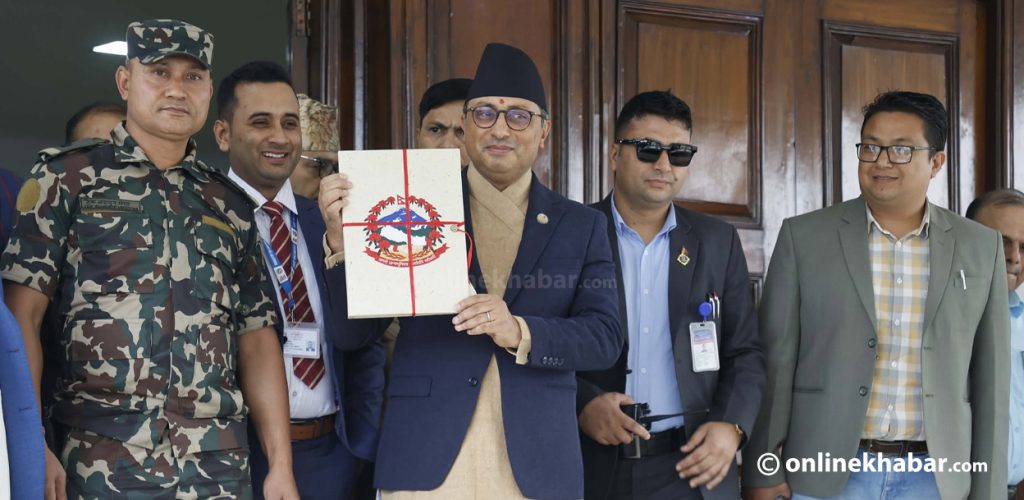
The government’s budget had not specifically promised to build software itself.
Instead, it had said the process for purchasing software for government agencies would be made more systematic.
The budget stated that arrangements would be made for software used by government agencies to be procured through a single agency.
Pandey said the government’s decision now appears inconsistent with that commitment.
He said NAS-IT has been working to promote Nepal’s IT industry internationally, including through road shows in Europe and other countries.
“We are going abroad and telling the world that Nepal is strong in technology service exports. But when our own government does not trust us, it naturally makes things difficult,” he said.
‘Government should not compete with startups’
Entrepreneur Alok Subedi said the government’s decision resembles an outdated model in which the state attempts to control the entire system rather than allowing the private sector to drive production.
He said the government’s responsibility should be to regulate the market and create standards rather than build software itself.
Subedi also questioned the timing of the decision, arguing that the rapid development of artificial intelligence has already made the global software business increasingly challenging.
“At a time when work coming from abroad is already declining, the government should be giving companies more work and creating an environment of trust. Instead, it is discouraging them further,” he said.
“Whatever the government says through its budget and policy programmes, its actions do not match. This is the opposite direction.”
Information technology researcher Amrita Sharma also questioned the government’s approach.
She said establishing a unit to set software standards, guidelines and quality assurance could be justified. But employing engineers to develop software and compete with startups and established technology companies would be a mistake.
“Having a regulatory unit for software standards, guidelines and quality assurance can be justified. But moving ahead with the intention of hiring engineers and competing with startups is wrong,” Sharma said.
She said the government risks focusing on managing employees within a small institution while losing sight of the larger goal of digital transformation.
Nepal already has established IT companies employing large numbers of skilled professionals, she said, and competing with them would send a message that the state does not trust its own technology sector.
“Such an inconsistent policy not only creates uncertainty for businesses within the country, but could also create distrust among foreign companies that outsource work to Nepal,” she said.
Who is responsible if government-built systems leak data?
Stakeholders have also raised concerns about security and legal responsibility.
If the government develops and controls software systems containing sensitive citizen information, including national identity data, questions could arise over who would be legally responsible if such information were leaked.
Subedi said the formation order does not clearly address such questions.
“When private companies do the work, they can be held accountable through laws, contracts and service agreements,” he said.
“But if sensitive personal information or national identity data leaks from systems developed by a government agency or committee, who will bear the legal responsibility?”
He also questioned the government’s ability to handle the security risks involved.
“We have not even been able to fully secure government website data. There are frequent reports of data being leaked onto the dark web,” he said.
“If the government now says it will handle everything itself, the risks could increase further. On one hand, businesses are discouraged; on the other, there are security risks. This approach does not appear mature or practical.”
For Nepal’s rapidly expanding IT industry, the debate is therefore no longer simply about who develops government software. It is also about whether the state sees the domestic technology industry as a partner in building the digital economy—or as a competitor.