Kathmandu, August 24
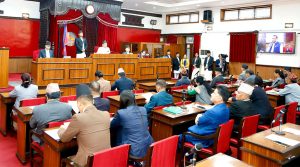
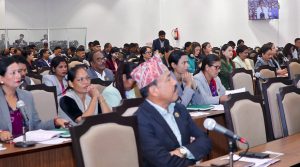
Lawmakers speaking at Monday’s meeting of the House of Representatives called for laws imposing severe punishment, including the death penalty, on those convicted of rape.
They argued that although the death penalty may conflict with Nepal’s Constitution and its international human rights commitments, Parliament should have the capacity to address such legal constraints.
Lawmakers called for amendments to existing laws in line with current circumstances, citing the rape and murder of three-year-old Garima Chaudhary as well as several similar incidents in the past.
According to police, three-year-old Garima Chaudhary of Dasdhure Tol in Jitpur Simara Sub-Metropolitan City-1 went missing from her home on the morning of August 15. Her mother, Manmati, informed the Simara and Pathlaiya police after she had not seen her daughter for around three and a half hours. Police told her they would search for the girl.
The girl’s body was found two days later.
Raising the issue in Parliament, lawmakers said laws needed to be strengthened to ensure severe punishment for rapists.
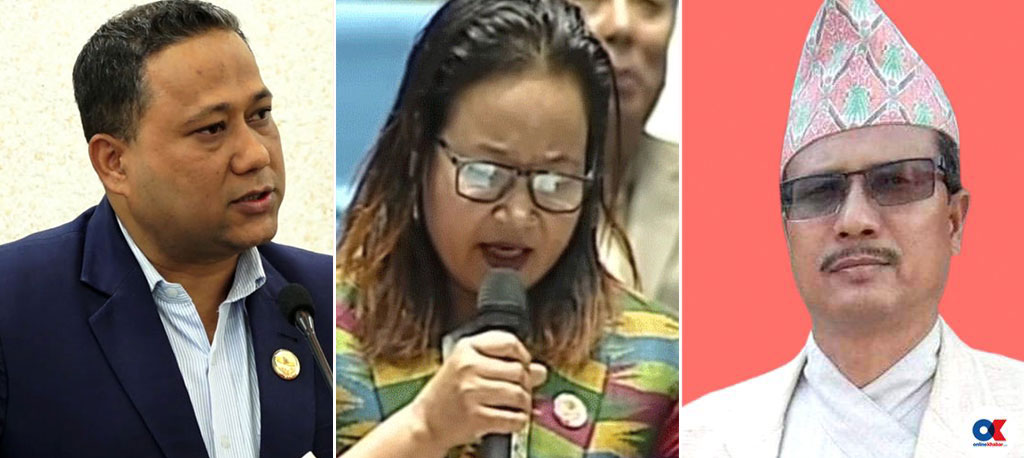
Rastriya Swatantra Party (RSP) lawmaker Prakash Pathak also raised the murder of 25-year-old Laxmi Rajbanshi, a permanent resident of Bhadrapur, Jhapa, who had gone to Japan for studies and was killed in her own room.
He also said that 12-year-old Rebika Bishwakarma, a seventh-grade student from Haldibari-2, Jhapa, had been missing for two days. He urged the Ministry of Home Affairs to immediately intensify efforts to locate her.
“Whether in Nepal or abroad, our daughters are unsafe everywhere,” he said. “Only those who experience it know what such pain feels like. How long must our daughters continue to become Laxmi Rajbanshi, Nirmala Pant and Garima Chaudhary?”
He suggested that authorities needed to examine whether flaws in existing policies and laws were contributing to the rise in such brutal incidents.
“Article 16(2) of the Constitution guarantees the right to live with dignity. But that does not mean criminals and murderers should be protected,” he said. “Unless murderers, rapists and other criminals are punished severely, our daughters will continue to fall victim to predators everywhere.”
He then called for the introduction of harsher punishments.
“Whether it is the constitutional restriction against introducing a death penalty law that conflicts with the fundamental law, or the human rights treaties and agreements to which Nepal is a party, these provisions now need to be reconsidered. This House must have the capacity to do so,” he said.
He proposed that the state should immediately introduce a law providing for the death penalty for convicted murderers and rapists instead of keeping them in prison at the taxpayers’ expense.
RSP lawmaker Ranju Darshana said efforts to address the problem should begin at the school level, noting that girls remain unsafe even in a society that traditionally worships daughters.
Nepali Congress lawmaker Shahjahan Khatun also called for measures to prevent such incidents from continuing.
Congress lawmaker Ninukumari Karn stressed that the state must be able to control such incidents.
Radhika Ramtel of the Shram Sanskriti Party demanded that the government provide answers on the issue. She urged the government to introduce strict punishments and take measures to prevent similar incidents.
RSP lawmaker Harimohan Bhandari said the government should not continue to provide for those convicted of serious and heinous crimes. “We are ready to make whatever law is necessary for this purpose,” he said, urging the government to introduce a stringent bill.
RSP lawmaker Ashika Tamang said the law should provide for the death penalty for rapists if possible. “If that is not possible, the law should provide for the amputation of the body part used to commit the rape,” she said.