
Kathmandu, August 23
The government has introduced the Mining and Mineral Resources Bill 2026, seeking to clarify the powers and responsibilities of the three levels of government over the conservation, exploration and extraction of minerals under Nepal’s federal system.
The proposed bill, which contains 63 sections, aims to make the conservation, exploration and extraction of mineral resources more systematic, scientific and sustainable.
However, while the bill seeks to clarify the division of authority over mineral resources, several of its key provisions leave important matters to be determined later through regulations, directives, procedures or standards made by the government.
The bill is intended to replace the existing Mines and Minerals Act 1985, which predates Nepal’s current federal democratic republican system.
It introduces separate provisions for ordinary construction minerals, minerals of strategic and national security importance, and radioactive minerals.
But the proposed legislation uses phrases such as “as prescribed” and “as specified” extensively, effectively allowing the government to determine important aspects of mineral governance after the bill becomes law.
38 provisions leave matters to be prescribed later
Of the bill’s 63 sections, the phrase “as prescribed” appears in 18 places. Another 17 provisions refer to matters being determined through a prescribed format, conditions, time limit or fee.
The word “prescribed” itself appears three times.
Excluding the definition section, the bill therefore contains references to matters being “prescribed,” “specified” or decided “as prescribed” in 38 places.
The bill itself defines “prescribed” or “as prescribed” as matters specified or determined under the Act or rules made under it.
This means that once the law is enacted, the federal government would retain substantial authority to determine several important aspects through subordinate legislation.
Key powers also left to government
Section 5 of the bill states that the authority to extract mineral resources will remain with the federal government.
However, subsection 4 allows provincial governments and local levels to extract or arrange for the extraction of minerals that the federal government specifies through a notice published in the Nepal Gazette.
Subsection 5 further states that other matters relating to mineral extraction will be “as prescribed.”
The Constitution places mining and mineral extraction under the federal list in Schedule 5, while mining and mineral resources are also included among the concurrent powers of the federal, provincial and local governments under Schedule 9.
The bill therefore appears to be attempting to accommodate the constitutional division of powers. However, the proposed provision means that provincial and local governments would require the federal government to specify which minerals they can extract.
A similar arrangement has been proposed for mineral conservation.
Under Section 6, local governments would be responsible for conserving mines and mineral resources located within their respective geographical areas.
However, the federal government would retain responsibility for minerals it specifies through a notice published in the Nepal Gazette.
The bill also states that other matters concerning mineral conservation will be “as prescribed.”
Unclear division over exploration
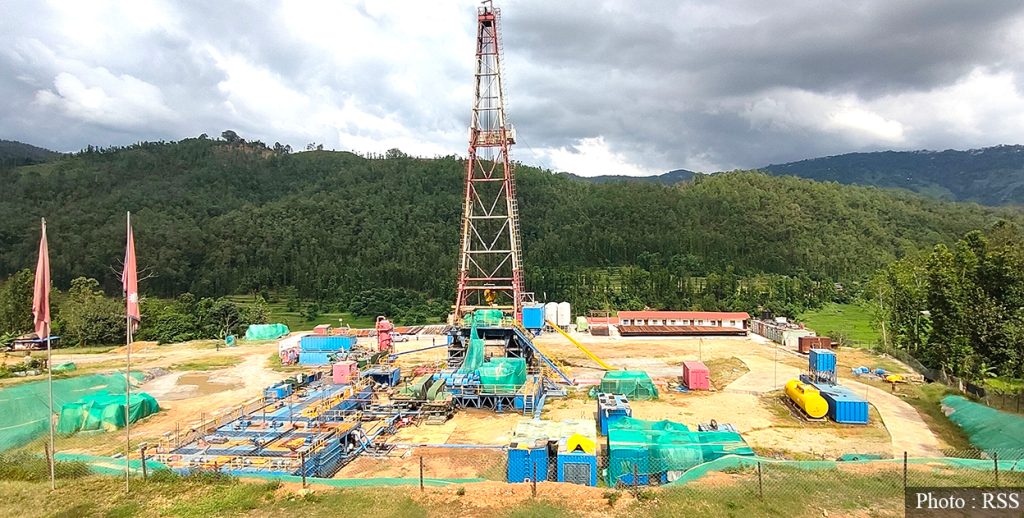
Similar questions arise regarding mineral exploration.
Section 12 provides that exploration licences will be issued under provincial law. At the same time, it allows the federal government to direct that exploration of particular minerals be carried out through the Department of Mines and Geology.
The bill does not clearly establish the circumstances under which the authority over exploration would shift from the provinces to the federal government.
It also leaves several important matters to be determined later, including the format of exploration licences, the area covered by a licence, the technical and financial qualifications of companies seeking licences, conditions to be followed by licence holders, facilities and concessions, and the maximum number of exploration licences that may be issued.
These matters would be determined through subordinate legislation rather than being clearly established in the Act itself.
Royalty rates and local mineral fees
The bill also leaves several aspects of royalties and local mineral-use fees to be determined later.
Section 52 requires companies holding extraction licences to determine the quantity of extracted minerals before transporting them and pay royalties to the authority that issued the extraction licence, based on the type and quality of the mineral.
The bill proposes that an amount equivalent to 10 percent of the royalty be paid to the concerned local government as a local mineral-use fee.
It also provides that the federal government will review royalty rates at least once every five years.
However, subsection 4 of Section 52 states that other matters concerning royalties and local mineral-use fees will be “as prescribed.”
Thus, while the bill establishes the broad framework for royalties and periodic review, the federal government would still determine matters such as the payment process, reporting format, deadlines and late fees through regulations.
Who gets to decide?
The proposed legislation therefore leaves several fundamental questions unanswered within the Act itself.
Which minerals can be extracted by which level of government? Which government has authority over a particular area? What qualifications should companies meet to obtain exploration or extraction licences? What should be the technical standards? And what are the precise limits of the state’s responsibilities and powers?
Under the proposed framework, many of these questions would be answered later by the federal government through regulations, directives, procedures and standards.
Section 60 also proposes allowing changes to the schedules through a notice published in the Nepal Gazette.
Section 61 gives the government the power to make rules under the Act, while Section 62 allows directives, procedures and standards to be formulated under those rules.
If Parliament passes the bill in its current form, many of these decisions would therefore ultimately be made by the federal government.
A longstanding problem in lawmaking
The practice of using phrases such as “as prescribed” to leave substantial matters to the government is not new in Nepal.
The issue has increasingly attracted attention within and outside Parliament, with the National Assembly’s Legislation Management Committee documenting concerns about the practice.
Its annual report for fiscal year 2080/81 noted that explanatory notes, comments on delegated legislation and financial notes accompanying bills were often incomplete or inadequate.
The report also raised concerns that provisions delegating legislative authority were often drafted in abstract language without clearly defining their scope, limits and potential impact.
The parliamentary committee has sought to address the issue by urging that substantive matters be incorporated directly into bills wherever possible.
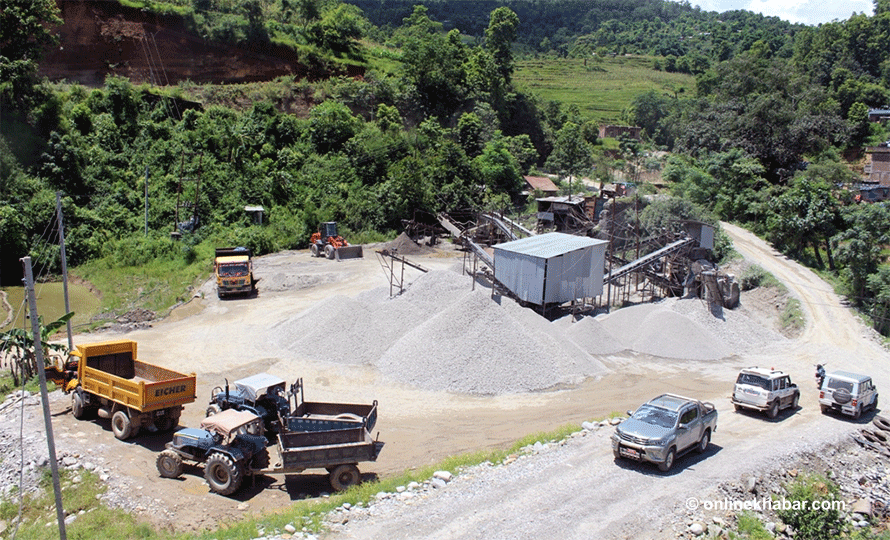
It has also suggested that matters genuinely requiring delegated legislation should be clearly listed in one place, with the bill specifying the areas in which the government can make rules.
The National Assembly has a Public Policy and Delegated Legislation Committee, which examines the delegation of legislative powers to the government and evaluates the implementation of laws.
Sanjay Dahal, secretary of the committee, has said there has been increasing discussion over the tendency of governments to seek broader delegated powers.
“However, there has been no control over it,” he has said.
Under the Delegated Legislation Act, matters involving delegated legislation are required to be registered with the Ministry of Law, Justice and Parliamentary Affairs within one year of the relevant law coming into force. Dahal said the provision has also not been fully implemented.
Former chair of the parliamentary committee Ram Narayan Bidari has previously argued that the extensive use of “as prescribed” provisions means that a large portion of Nepal’s laws are effectively made by the government rather than Parliament.
“Looking at this chain of ‘as prescribed’ provisions, it appears that on average 80 percent of the law is made by the government and only 20 percent by Parliament,” Bidari told Onlinekhabar in May 2024.
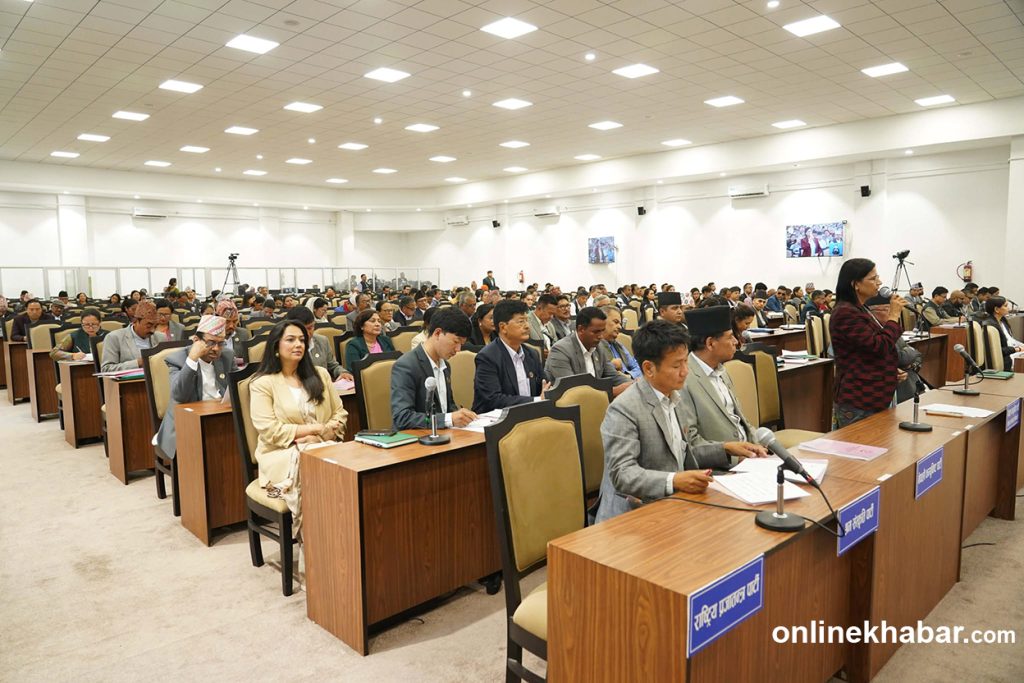
The proposed Mining and Mineral Resources Bill has once again brought the longstanding debate over delegated legislative authority to the fore.
A former official at the Ministry of Law, Justice and Parliamentary Affairs said the government often seeks delegated authority even on matters that could be dealt with directly in legislation.
“Whether the government is taking powers that belong to Parliament is something Parliament itself must check,” the former official said, adding that lawmakers sometimes remain silent either because of political support for the government or because they lack sufficient understanding of the issue.
The bill now places the responsibility on Parliament to determine how much authority should remain in the law itself and how much should be delegated to the government.