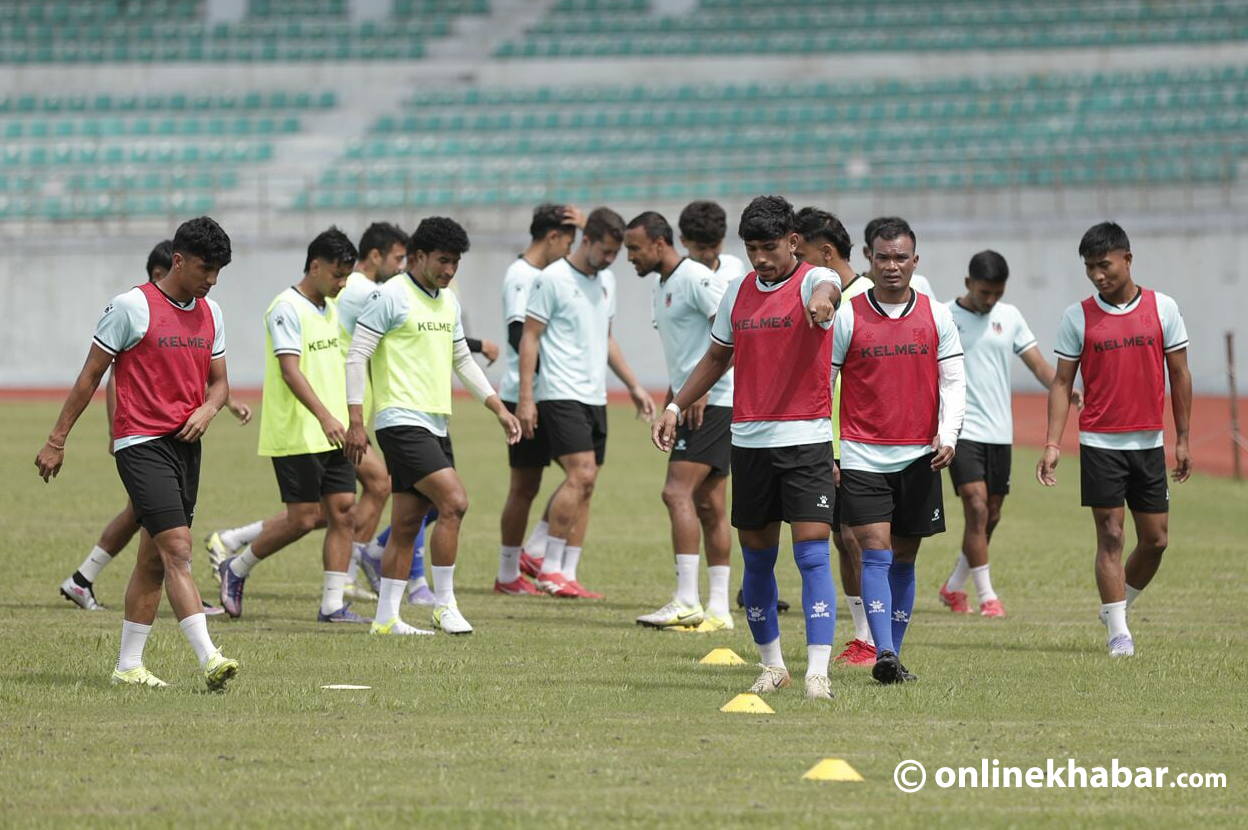


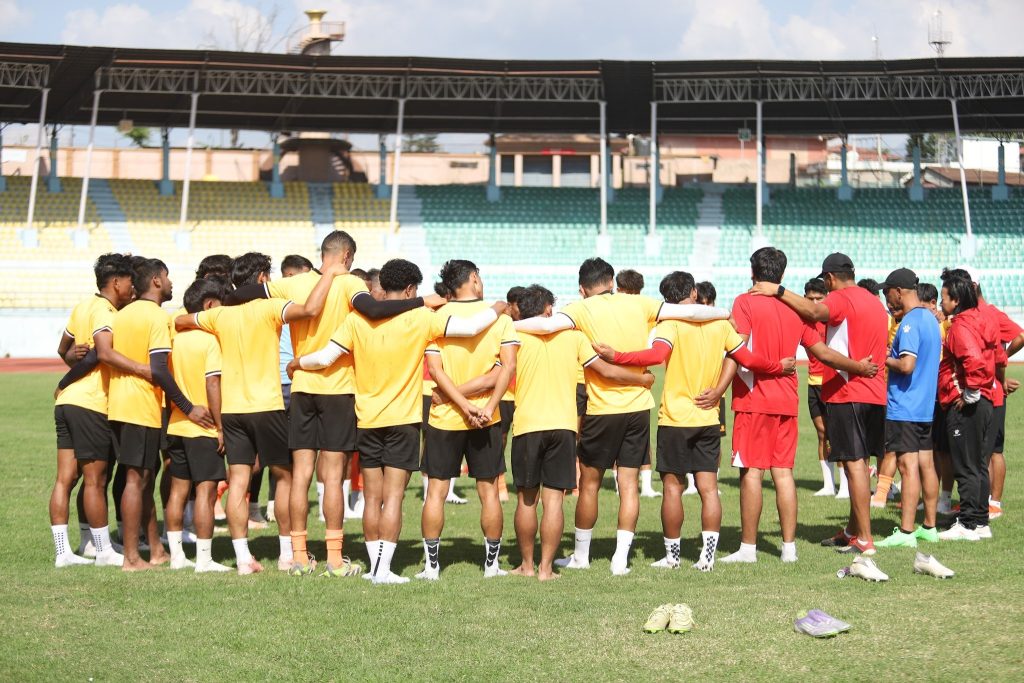
Lately, the life of Nepali football players has completely changed. There is neither regular play nor practice. The passion they once had is nowhere to be found now. There is only one reason for this: they are not getting to play, either for the country or for their clubs.
This is supposed to be the time when Nepali football players would be busy preparing for the SAFF Championship in Bangladesh and other international competitions. But the reality is far from that.
With no matches being played on the field, Nepali football has not just reached zero but has slipped into the negative.
After FIFA, world football’s top governing body, suspended the All Nepal Football Association (ANFA), the national team players who became jobless made a public appeal through a video a few days ago, asking people to save Nepali football, a scene that was quite heartbreaking.
Right now the players have just one wish: to step onto the field and play again. But nobody knows when that wish will come true.
With no resolution in sight for a return to the field, not just the players but coaches, referees, and everyone else connected with the sport have effectively become unemployed, left with no option but to wait and see when football will resume regularly. Since ANFA’s suspension by FIFA, players have not been able to play, and no other football-related activities outside the field have taken place either.
For players, the game is not just a matter of income and career. They train for years, work hard, and prepare themselves for competition. That is why getting to play is more than a celebration for them. Stepping onto the field, playing for their team, and showing their ability is a player’s greatest motivation.
Right now, some footballers have reached a point where they are running academies, while others are choosing different paths altogether.
Around a dozen players from the women’s team are currently playing in leagues abroad. On the men’s side too, some players are playing in Bhutan and Bangladesh, though this is more out of necessity than choice.
Besides this, some players are playing local-level football in various parts of India.
This situation is especially serious for women’s football.
Regular competition is extremely important for advancing women’s football. The more they play, the more experience grows, new players emerge, talent develops, and the confidence of the new generation building careers in football also increases.
“In recent times, Nepali women’s football has been improving. Families were increasingly coming to believe that daughters could also play football and build their future through the sport. Family support was also gradually growing,” says one member of the women’s team.
But if domestic competition stops for a long time again, there is a risk of returning to the situation they faced in the past. The mindset of “what’s the point of a daughter playing football” could grow strong again. That could stop many talented players of the new generation from entering the sport.
So rather than assigning blame right now, the players believe all concerned parties should sit together and find a solution as quickly as possible.
This is not the problem of a single player alone. It is an issue tied to the future of Nepali football.
“For us players, football is not just a game. Football is our passion, our dream, and our celebration. Stepping onto the field to play for our country, our club, and our team is our greatest joy,” she says.
She adds, “All concerned parties must work seriously and urgently to create an environment where domestic football can resume soon. Players need the field, the new generation needs opportunity, and Nepali football needs continuity.”
Inactivity harms athletes
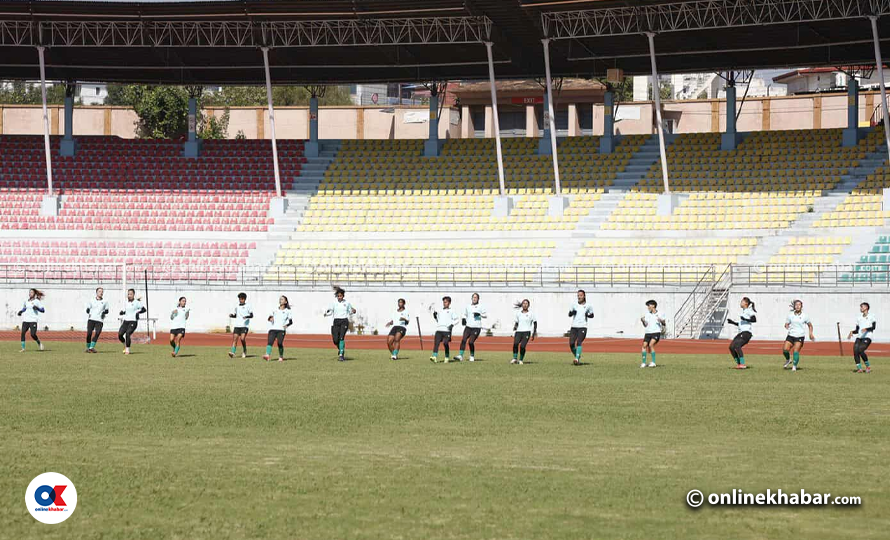
Physiotherapist Suraj Bhusal warns that extended inactivity or detraining severely weakens an athlete’s overall fitness.
“Under these conditions, cardiovascular endurance drops,” says Bhusal.
He adds that muscle flexibility and power deteriorate quickly. Furthermore, returning after a prolonged layoff significantly increases injury risks.
Research shows that 30% of sports injuries involve 1 to 3 weeks of inactivity.
Research has also found that mitochondrial activity (energy production) in cells begins to decrease rapidly after roughly two weeks of training cessation. Eventually, it can harm body tissues, cause severe diseases, and lead to extreme tiredness.
Football is an intermittent, high-intensity sport, requiring both aerobic and anaerobic processes for energy release, as well as relying on technical, tactical and psychological input. Aerobic capacity is known to be highly important and a major contributor (70-80%) of maximal capacity
Within days of training cessation, aerobic capabilities can drop by 5-12%. As a result, the body becomes less efficient at taking in, transporting and using oxygen during physical activity, causing players to become fatigued and breathless more quickly than before. In practical terms, a person’s heart, lungs, blood vessels, and muscles can’t sustain exercise as easily as before.
Left unaddressed, prolonged inactivity leaves athletes vulnerable to non-communicable conditions like hypertension, high blood sugar, and cardiovascular disease, he adds.
“A player’s duty is regular training and performance. Neglecting this routine also threatens mental health as well,” Bhusal explains.
Suspension’s hidden toll
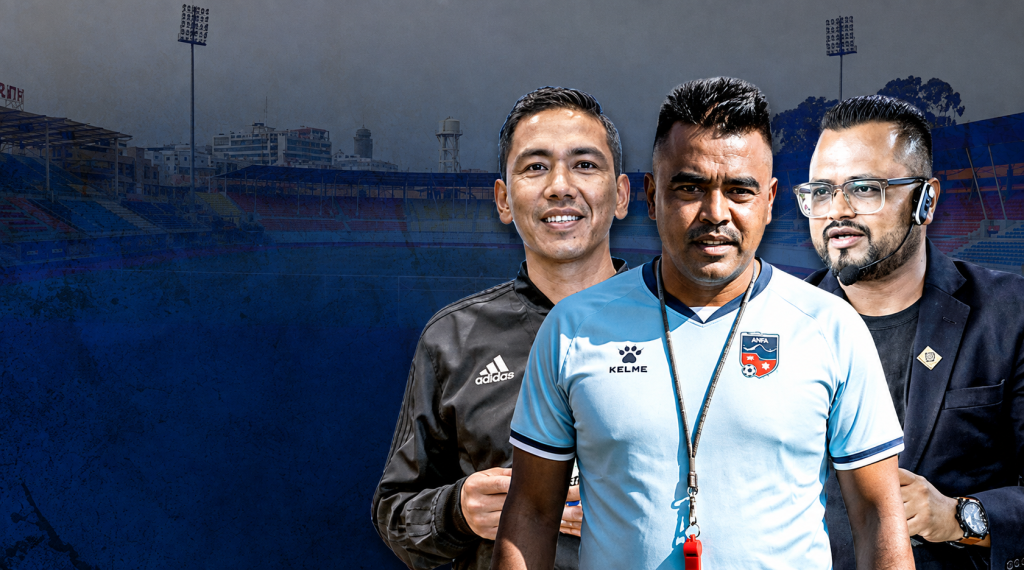
Mental health experts say that for footballers, the sport has become an important part of their identity. People know them because of the sport they play, and being away from matches for a prolonged period can lead to an identity crisis.
“Sport is their priority, and the uncertainty created by others can provoke anxiety,” says clinical psychologist Hashana Shrestha. “If they do not have adequate support, they can become hopeless, which can affect their mental health.”
Women’s national team head coach and former national player Nabin Neupane notes that prolonged inactivity impacts not just players, but coaches and referees as well.
This hiatus takes a physical, mental, financial, and emotional toll on everyone involved.
“Coaching skills decline without active practice,” says Neupane.
He further adds that football relies on teamwork. Long breaks erode coordination among players, ultimately affecting entire team performance.
If the suspension continues, Nepal’s referees will also face a ban from international competition. The Asian Football Confederation (AFC) holds an annual referee course for the new elite referees each September, but Nepali referees will miss it if the suspension remains.
“The AFC course provides high-level training for the new elite referees. Missing it would be devastating for our referees,” says Prakash Nath Shrestha, football referee.
This year, two new elite referees of Nepal are set to attend the course in Malaysia; however, due to the current situation, their participation is uncertain.
Nepali referee Prajwal Chhetri officiated the last SAF Games final. Without a lifted suspension, local referees cannot take part in future regional tournaments.
Shrestha noted that an extended absence from officiating can affect a referee’s decision-making skills. He recalled that, “After the COVID-19 pandemic, returning to the field following a long break had hampered the decision-making ability of referees.”
Research also backs Shrestha’s statement.
Research on football referees during the COVID-19 pandemic suggests that prolonged interruptions affected their preparation, particularly decision-making training, and were associated with a perceived reduction in refereeing quality.