Syangja, August 18
The number of farmers opting for artificial insemination for livestock in Syangja has been increasing every year. Farmers have been increasingly turning to artificial insemination due to its role in improving breeds, reducing costs, and the declining number of farmers raising buffalo bulls and oxen.
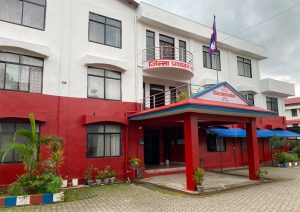
The Veterinary Hospital and Livestock Services Office, Syangja, has been providing artificial insemination services at various locations across the district in coordination with local governments. According to office chief Dr Rupesh Shrestha, buffaloes account for the highest number of artificial inseminations in the district. The service has subsequently been expanded to cows, goats and pigs.
According to office data, artificial insemination was carried out on 6,695 livestock in the fiscal year 2082/83. Of them, 5,330 were buffaloes, 1,218 cows, 97 goats and 51 pigs. In the previous fiscal year, 2081/82, artificial insemination was carried out on 5,040 livestock. That year, the service was provided to 3,828 buffaloes, 1,018 cows, 116 goats and 15 pigs.
Similarly, 3,840 livestock received artificial insemination in fiscal year 2080/81. Dr Shrestha said the service was provided to 2,677 buffaloes, 1,122 cows and 41 goats that year. The three-year data shows a significant increase in the number of livestock receiving artificial insemination services in Syangja. In particular, 1,655 more livestock received the service in the latest fiscal year compared with the previous year.
Andhikhola records highest number
Among the local governments, Andhikhola Rural Municipality recorded the highest number of artificial inseminations in fiscal year 2082/83, with the service provided to 1,794 livestock. The lowest number was recorded in Biruwa Rural Municipality, where 56 livestock received the service, according to the office.
Similarly, artificial insemination was carried out on 1,127 livestock in Galyang Municipality, 813 in Waling Municipality, 777 in Putalibazar Municipality, 754 in Arjunchaupari Rural Municipality, 523 through the Veterinary Hospital and Livestock Services Office, 404 in Bhirkot Municipality, 152 in Chapakot Municipality, 115 in Fedikhola Rural Municipality, 95 in Harinas Rural Municipality and 85 in Kaligandaki Rural Municipality.
According to the office, the service is being operated in various local governments across the district, targeting livestock farmers. Office chief Dr Shrestha said artificial insemination services are being provided based on farmers’ demand in coordination with local governments.
Breed improvement also reduces costs
Dr Shrestha says improved livestock breeds are a major reason for the growing interest among farmers in artificial insemination. He said artificial insemination aimed at producing improved breeds can help increase productivity from livestock farming.
Similarly, the declining number of farmers raising buffalo bulls and oxen is another reason for the increased use of artificial insemination. The office said artificial insemination is comparatively more convenient for farmers when livestock farming costs and management requirements are taken into consideration.
In Syangja, artificial insemination services for pigs were introduced only from the previous fiscal year. Although the service had already been available for other livestock, it was newly expanded to pigs, Dr Shrestha said.
The increasing number of artificial inseminations indicates that farmers in the district are also becoming more interested in commercial livestock farming, according to the office. Increasing productivity through breed improvement could also help increase farmers’ income from livestock farming.