

Until Grade 7, children dutifully memorise the anatomy of a keyboard, trace the rectangular outlines of monitors in their notebooks, and memorise abstract definitions of “software” and “operating systems.” Yet, for a vast majority of these students, the actual machine remains a phantom. They have read the books, but they have never pressed a key. They have passed the exams, but they have never touched a screen.
This is the stark reality of the digital divide in Nepal’s capital. While private school students navigate tablets and coding platforms, children of the urban poor are subjected to a bizarre, purely theoretical form of computer literacy. It is an educational systemic failure that does not merely delay a child’s integration into the modern economy; it structurally bars them from it.
The policy myth: Why computer education is not compulsory

To understand why a capital city in 2026 cannot provide basic hands-on computer access to its public school students, one must look at the structural design of the curriculum and school infrastructure.
While the Ministry of Education, Science, and Technology has long touted its Information and Communication Technology (ICT) in Education Master Plan, the implementation at the grassroots level tells a different story. In the national curriculum, computer science is largely categorised as an optional or non-compulsory subject in higher grades or treated as a secondary attachment to the main curriculum in lower grades.
The reasons for this are systemic:
- The ghost lab phenomenon: Data from the Economic Survey and educational reports indicate that while a significant percentage of public schools are nominally recorded as having internet access, less than 30% have expanded, functional ICT labs. Even in Kathmandu, many public schools possess computers that remain locked away in storage rooms, wrapped in plastic.
- The chronic teacher shortage: Public schools face a severe lack of qualified, state-funded computer teachers. Under current regulations, teacher-student ratios are strictly bound to traditional subjects like Mathematics, Science, and English. Because the government does not systematically provision or fund dedicated salaries for specialised computer teachers, school administrations are left helpless. A school might receive a grant of 10 desktops, but without a technician to maintain them or a teacher to boot them up, those machines simply sit as administrative ornaments.
- The financial impossibility for the urban poor: Kathmandu is a city built on the backs of internal migrants. Families move from all 77 districts in search of labour, working in low-wage sectors like construction, domestic help, and daily wage labour. In a city with an agonisingly high cost of living, surviving on a bare-minimum income makes purchasing a laptop, tablet, or home Wi-Fi connection an unimaginable luxury.
When survival is the daily baseline, computer education falls off the ledger. As these children grow older, the economic ecosystem of the family forces them into part-time jobs—working in local tea shops, digital printing houses (ironically), or informal labour—leaving them zero time to seek out informal digital literacy on their own.
The generational cost: A society divided by the screen
The consequence of this educational neglect is a permanent, compounding impact on both the students and the national social fabric.
Instead of cultivating competent, tech-savvy youth ready for an increasingly digital global workforce, the public education system is generating structurally disadvantaged students. To enter any modern sector—whether it is finance, logistics, administration, or creative media—basic computer competence is the baseline. By withholding practical training, the state is effectively capping the socio-economic mobility of public school students at the level of unskilled labour.
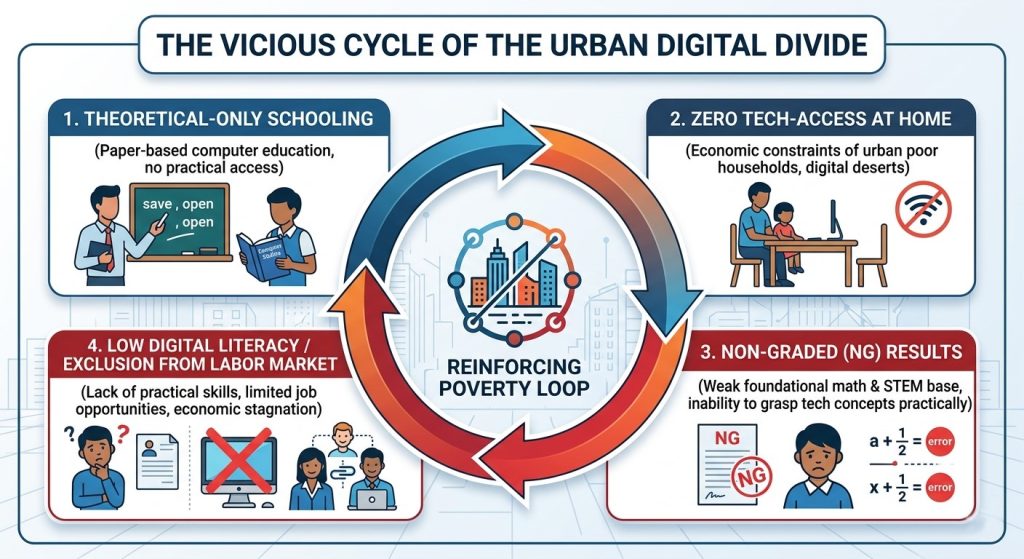
Societally, this deepens an already volatile class divide. The census and educational quality reports highlight a sobering reality: out of all students moving into higher education in Nepal, only a microscopic 1.2% pursue computer and information technology. The path to IT careers is heavily monopolised by those who went to private schools. The resulting workforce polarisation ensures that the wealthy remain digital creators and economic drivers, while the urban poor remain digitally illiterate, locked out of the modern economy.
Dismantling the barrier: Inside VOW Media’s TechnoHub
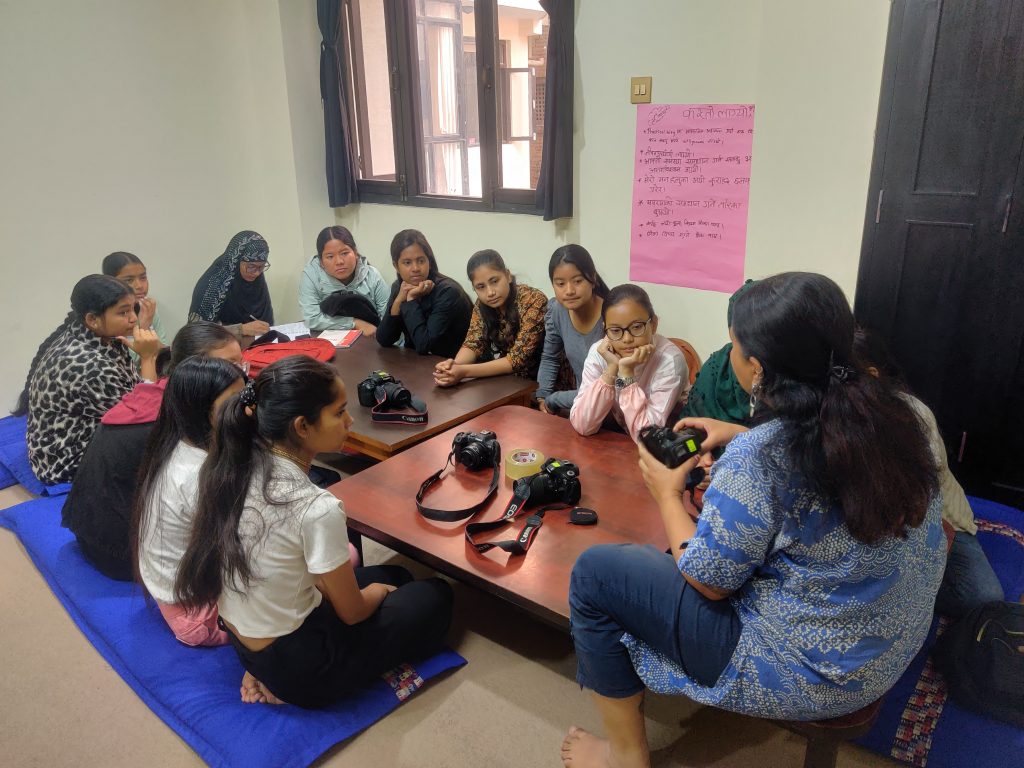
Where the formal public education system fails, grassroots, community-centred interventions are stepping in to rewrite the narrative. Prominent among these is the TechnoHub program run by Voices of Women Media (VOW Media).
Operating right in the heart of Kathmandu, TechnoHub directly targets the demographic most vulnerable to this systemic exclusion: young high school girls from local government schools who belong to low-income, inner-city families.
TechnoHub directly addresses VOW Media’s foundational vision:
“Everyone should have the opportunity to acquire the necessary skills and knowledge to understand, participate actively in, and benefit fully from society and the economy. Literacy and universal education are key factors for building a fully inclusive society, paying particular attention to the special needs of girls and women.”
A sandbox for STEM, leadership, and subversive art
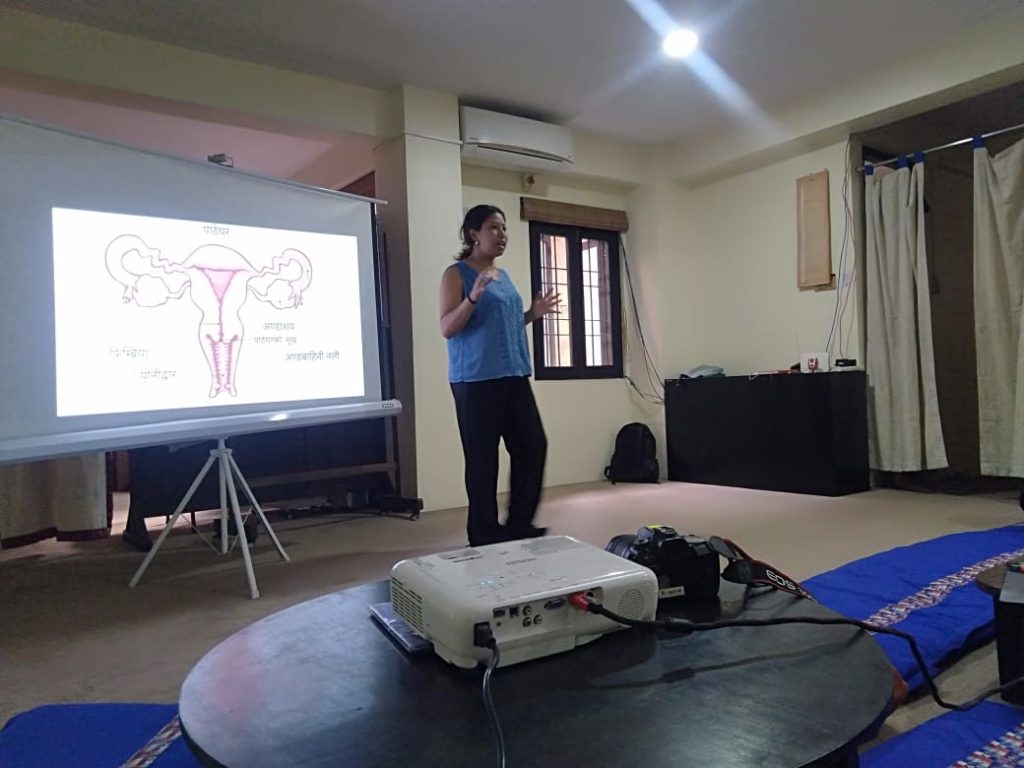
“TechnoHub is not a standard typing class. It is an intensive, holistic sanctuary where technical education is deliberately fused with social justice, creative expression, and radical leadership.” Asmita Badi, who leads the Techno Hub project, states, “While their schools cannot provide a single hour’s worth of screen time, the girls at Techno Hub receive a robust, practical multi-media education.”
While their schools cannot provide a single hour’s worth of screen time, the girls at TechnoHub receive a robust, practical multi-media education:
- Multimedia & Digital Storytelling: The girls are equipped with professional tools and taught concrete methodologies. They learn the mechanics of audio recording to produce independent radio programs. They master the intricate six-photo narrative structure to execute visual storytelling, and they are trained in the fundamentals of filmmaking.
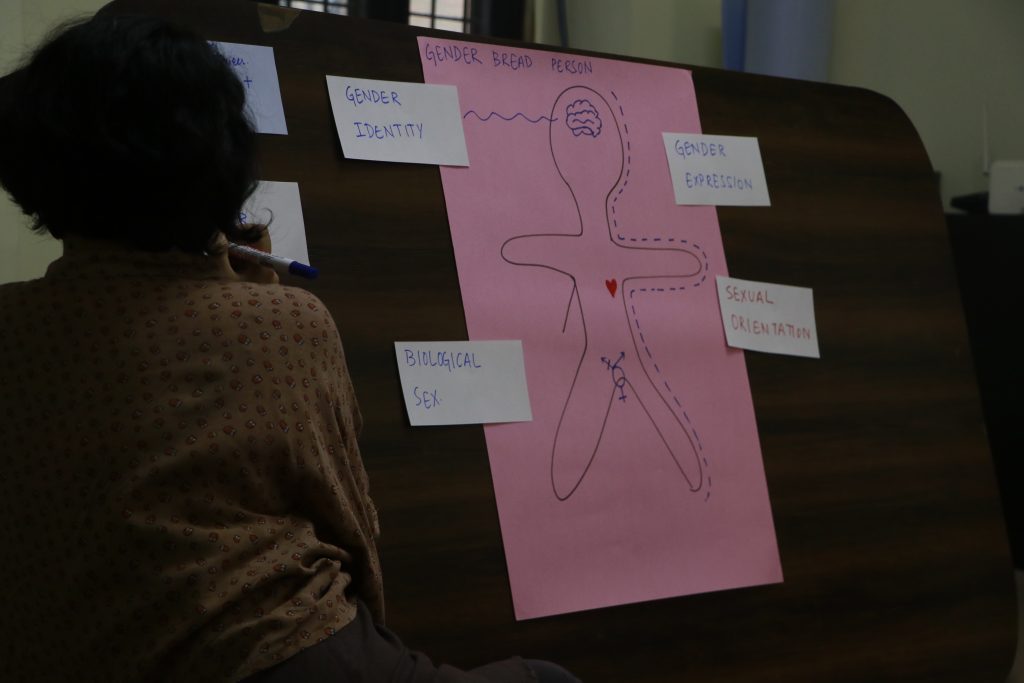
- Tackling Social Taboos: What makes TechnoHub truly distinct is that these technological tools are not learned in a vacuum. The girls use their new skills to document, highlight, and confront the acute societal issues they navigate daily. The space hosts critical workshops on feminism, identity, choices, sexual and reproductive health and rights (SRHR), right to safe mobility, and systemic taboos like menstruation.
- Rights-Based Education: Through “Know Your Laws” workshops, the curriculum bridges the gap between digital literacy and civic literacy, ensuring that when these young women step out into the world, they know both how to code a narrative and how to claim their legal rights.
From passive listeners to digital creators

In public school classrooms, students are culturally conditioned to be passive listeners—a silence born from systemic under-resourcing and rigid pedagogies. TechnoHub actively breaks this conditioning.
VOW Media Director Pooja Pant says, “By taking the camera, the microphone, and the keyboard out from behind locked administrative doors and placing them directly into the hands of young women, the program does something revolutionary: it transforms them from consumers of an unequal system into active digital creators.”
For the girls of Kathmandu’s inner-city government schools, programs like TechnoHub are not merely extracurricular classes. They are the only bridge across a massive digital chasm, transforming overlooked students into leaders capable of looking at a world that silenced them and saying, “This is my story, and this is how I tell it.”