

While Nepali cinema is broadening its horizons into national and international festivals, the question of control versus freedom in cinema and artistic expression continues to linger.
Films focused on political histories, violence, nudity, sexuality, gender identities, ethnic representation, and other societal issues have often found themselves under heightened scrutiny in our society, with debates surrounding censorship repeatedly surfacing in Nepal’s film industry.
There is a constant dilemma and debate on where to draw the line when it comes to regulating a film to protect societal harmony or certain cultural values, and on the other hand, avoiding excessive intervention so as to protect cinema’s ability to express, question, critique, and reflect reality.
Nepal’s history of film censorship reveals a recurring pattern. Films touching on politics, monarchy, ethnicity, sexuality, or religion have repeatedly attracted scrutiny. Yet many of the themes once considered controversial are now openly discussed in mainstream media and public discourse. This raises an important question: Are censorship mechanisms adapting to social change, or are they lagging behind it?
This discussion recently took centre stage at the 23rd edition of the Kathmandu International Mountain Film Festival (KIMFF), where director and Central Film Examination Committee member Manjoj Pandit, producer Rabindra Singh Baniya, and film critic Reena Moktan came together for a panel discussion on What’s in a Story? Cinema and Censorship.
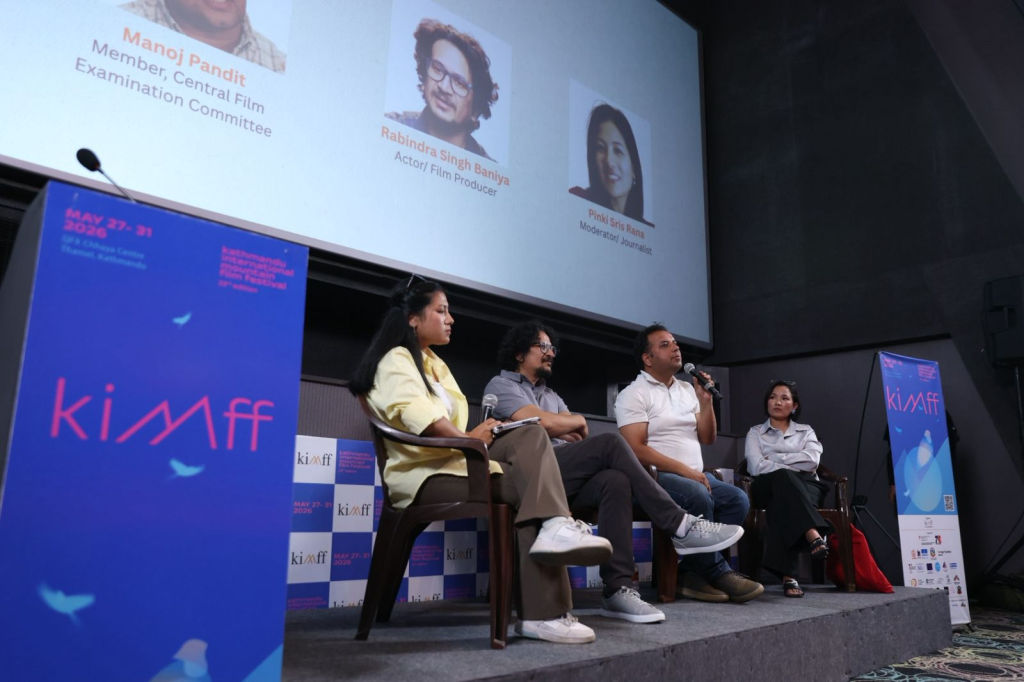
“Society and the state want to censor a lot of things, but a film needs to be made in full freedom,” said Pandit.
To him, the word “censorship” itself carries a psychological weight that often influences public and institutional perception before a discussion even begins. Language is powerful, and over time, the word has come to evoke fear, restriction, and suspicion, shaping how individuals and institutions approach cinema.
The state has historically tended to view films as catalysts of societal disruption and chaos rather than spaces of artistic expression that encourage dialogue and reflection. This assumption easily triggers social disorder and has created a narrative that films must be perceived as threats to be managed; hence, the censorship.
Film critic/ journalist Reena Moktan argued that the challenge lies within the very structure of the system tasked with regulating cinema. Rather than creating safeguards against genuinely harmful content, Moktan questioned whether existing regulations have evolved into mechanisms that seek to control filmmaking as a whole.
“There is a lot of interference across multiple levels of the filmmaking ecosystem, especially from people who understand films at all. The regulation should be done by people who can engage with cinema critically; the leadership should be informed and accountable,” she added, drawing from her observations from nearly a decade of experience covering the industry.
From development committees to regulatory bodies, she has witnessed how administrative intervention can shape creative decisions long before audiences can encounter the film. The discussion highlights that reforming institutional power surrounding filmmaking is just as important as defending artistic freedom when it comes to cinema and censorship.
The panel further dwelled on how filmmakers struggle to experiment with more nuanced narratives and socially complex themes when everything gets either flagged by the state or protested by the people. They shared their experiences of facing legal battles to societal criticisms with films like Dasdhunga (2010) and Lalibazar (2026) recently.
Rabindra Singh Baniya, who’s an actor in Lalibazar, spoke on the subtle ways creators often regulate their own work long before it reaches any examination committee. “Directors and producers routinely consider the nature of their subject matter, the target audience, and the potential reaction their work might provoke, which influences decisions about what is shown, implied, and how certain stories are told,” he added.
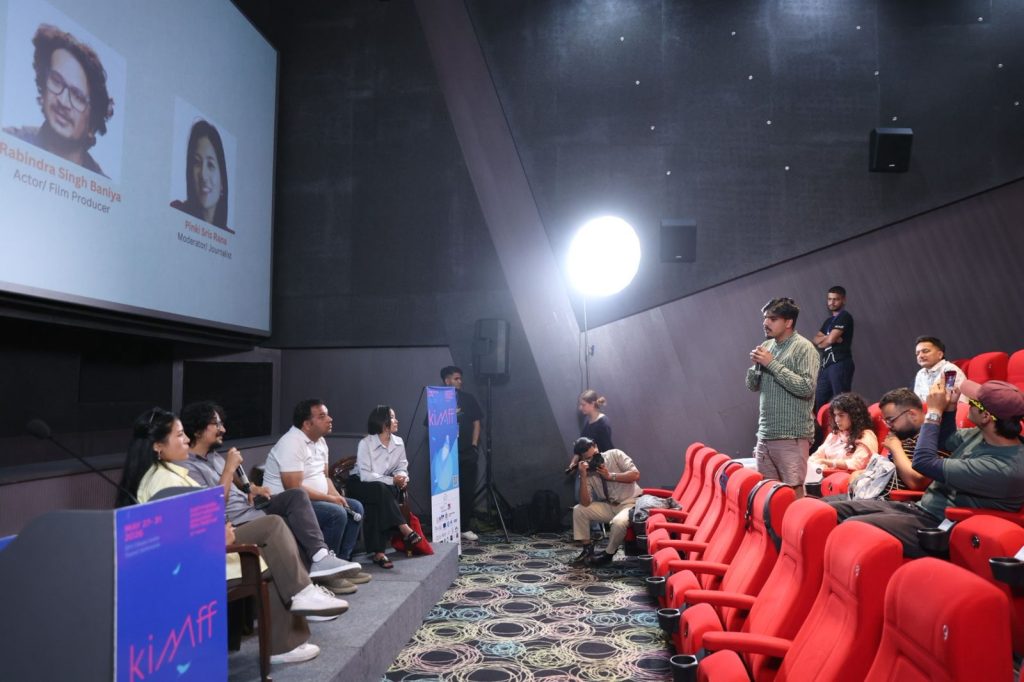
In that sense, self-censorship emerges from a filmmaker’s own awareness of social sensitivities, cultural context, and audience expectations. Baniya argued that, however, the responsibility does not solely lie with filmmakers; audiences should be responsible in engaging with films critically and in context as well.
Viewers should pay attention to contextual cues, disclaimers, age classifications, and the broader discussions films seek to generate. Audiences are quick to react to isolated scenes or excerpts without engaging with a work in its entirety. The responsibility of audiences matters because the audience holds power.
“The state might undermine the audience by thinking they cannot make their own judgement, but the audience holds power, especially the new generation, ” said Manoj Pandit.
Looking ahead, Pandit expressed optimism about the future of Nepali cinema as the state is gradually moving toward a more liberal social and cultural context. The shift is further reflected in ongoing conversations about film classification and grading systems.
Unlike traditional censorship models that focus on restricting or removing content, grading frameworks seek to guide audiences by categorizing films accordingly and help audiences as well to make informed choices.
Many democracies have gradually shifted from censorship models toward classification systems. Rather than deciding what citizens can watch, authorities should focus on providing information through age ratings and content warnings. Nepal’s ongoing discussion about film grading suggests a similar transition may be necessary.
“When pure grading is promoted, all films can reach their audiences,” Pandit noted.
Censorship in Nepali cinema is a complex negotiation involving filmmakers, regulators, critics, and audiences alike. Yet, if Nepali cinema is to continue growing, the focus should not be on banning films or cutting scenes, but on encouraging audiences to engage with them critically and form their own opinions. A mature society should be able to discuss difficult or controversial issues rather than avoid them.
Ultimately, the future of Nepali cinema depends not only on filmmakers making bold films, but also on whether institutions and audiences are willing to evolve alongside the artists creating them, and whether authorities trust audiences to decide for themselves what to watch.