
The digital economy is often sold to us as a story of freedom, flexibility, and opportunity. Young people can earn through apps. Workers can connect to jobs across borders. Technology companies promise innovation and inclusion. But for many workers from Nepal, the reality behind the screen looks very different.
Today, Nepali workers are increasingly present across the global platform economy as food delivery riders in the Gulf and logistics workers in expanding e-commerce systems. Yet despite powering one of the fastest-growing sectors of the global economy, many remain trapped in exploitative conditions with few protections and almost no voice.
This year, governments, employers, and trade unions are gathering at the International Labour Conference in Geneva to negotiate what could become the world’s first international labour standards on platform work. These negotiations matter enormously for Nepali workers and their families.
Platform exploitation is no longer just about ride-hailing apps in wealthy countries. It is increasingly tied to migration, subcontracting, recruitment debt, and outsourced digital labour systems that heavily affect workers from countries like ours.
When leading investigations in Nepal and coordinating our work across Asia and the Gulf, I have spent years documenting these realities directly from workers themselves. Our recent research on migrant delivery riders in Saudi Arabia and the United Arab Emirates found widespread indicators of forced labour among workers from Nepal and other countries. Workers described deceptive recruitment practices, crushing debt, withheld wages, excessive working hours, unsafe conditions, and constant fear of retaliation or deportation.
Many had paid huge recruitment fees before leaving home. Some arrived to find their promised salaries reduced. Others discovered that the company they thought they were working for was not actually their employer at all.
This matters because the platform economy increasingly operates through layers of subcontractors and labour suppliers. In the Gulf, most delivery riders are not directly employed by the app companies that consumers recognise. Instead, they are hired through third-party logistics companies that absorb legal responsibility while the platform companies continue to control the work through algorithms, targets, ratings, and surveillance systems.
Workers are managed by apps, disciplined by apps, and can lose their livelihoods because of apps, and yet the companies behind those systems often deny responsibility.
We are now seeing similar patterns spread globally.
Our investigations into working conditions for content moderators and data workers in countries including Kenya, Colombia, and the Philippines show how some of the world’s richest technology companies rely on outsourced labour chains to perform the hidden work that keeps social media and artificial intelligence systems running.
These workers spend long hours reviewing graphic violence, hate speech, child sexual abuse material, and other traumatic content. Many experience severe mental health consequences, including anxiety, depression, panic attacks, insomnia, and trauma. Yet because they are often hired through outsourcing firms or temporary contracts, they struggle to access adequate protections, healthcare, or remedies.
This should concern all of us. Unless governments act now, we risk recreating some of the oldest forms of labour exploitation in new technological forms.
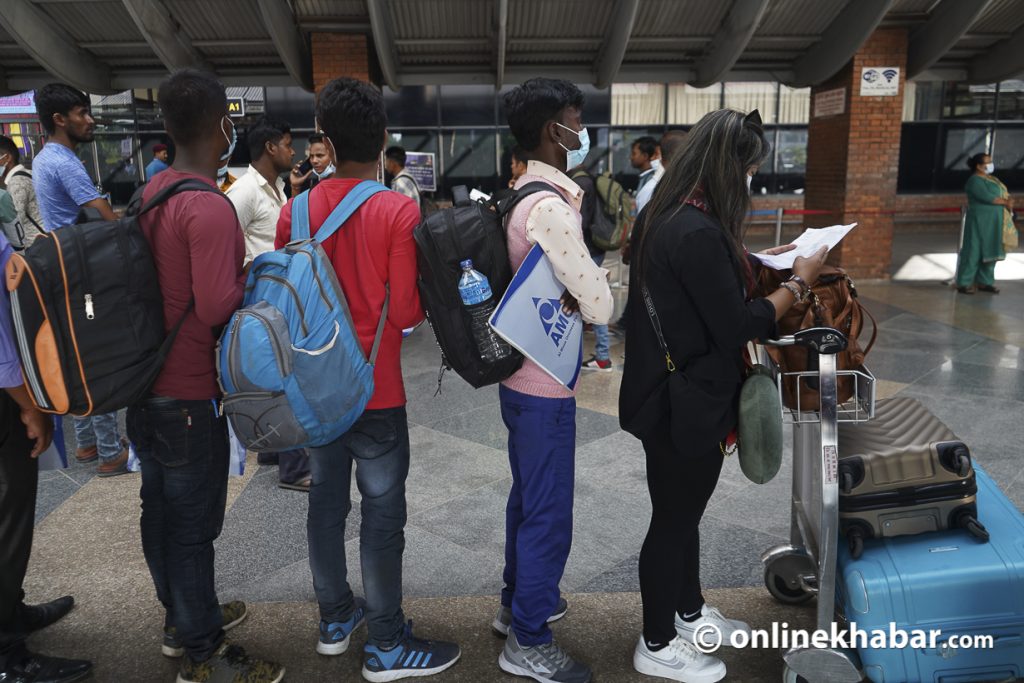
For Nepal, this is particularly urgent because migration and precarious labour are already central to our economy. Every year, hundreds of thousands of Nepalis leave home in search of work abroad. Increasingly, many are entering platform-driven sectors such as logistics and delivery work. Without stronger protections, the digital economy could deepen cycles of debt, insecurity, and exploitation that migrant workers already face.
The good news is that change is possible. The proposed international labour standards being negotiated at the ILO could establish critical global protections for platform workers. These include protections against unfair deactivation, stronger transparency around algorithms, safeguards on working hours and occupational safety, and rights to organise and collectively bargain.
The negotiations must go further. International standards must recognise that platform work is often hidden behind subcontracting chains. Lead platform companies cannot be allowed to escape accountability simply by outsourcing workers through labour suppliers or third-party contractors. Workers also need stronger protections against recruitment debt and migrant exploitation. No worker should have to pay large fees simply to access work. And no worker should lose their rights because their employment is disguised through complex contracting arrangements.
Governments in countries like Nepal also have an important role to play. Labour migration policies must adapt to the realities of platform work. Recruitment agencies must be regulated more effectively. Bilateral labour agreements should include protections for platform workers. And Nepal must ensure that workers who leave the country to participate in the digital economy are not abandoned once they cross the border.
The digital economy is not virtual only. Its human costs are real. Behind every food delivery, every AI system, and every social media platform are workers whose labour makes these technologies possible. Many are young. Many are migrants. And many come from countries like Nepal.
Their rights should not disappear simply because their boss is an app. As the world debates the future of work in Geneva, Nepal must ensure that the voices and experiences of our workers are part of that conversation. The future digital economy should be built on dignity and rights, not exploitation hidden behind technology.